Skills Matrix: who can run what, with the evidence behind it
Concept Specified and mocked up, not yet deployed. Every plant, person, and figure in the screens is fictional.
- Role
- Concept and interface design
- Year
- 2026
- Tools
- Concept deckInterface mock-ups
Overview
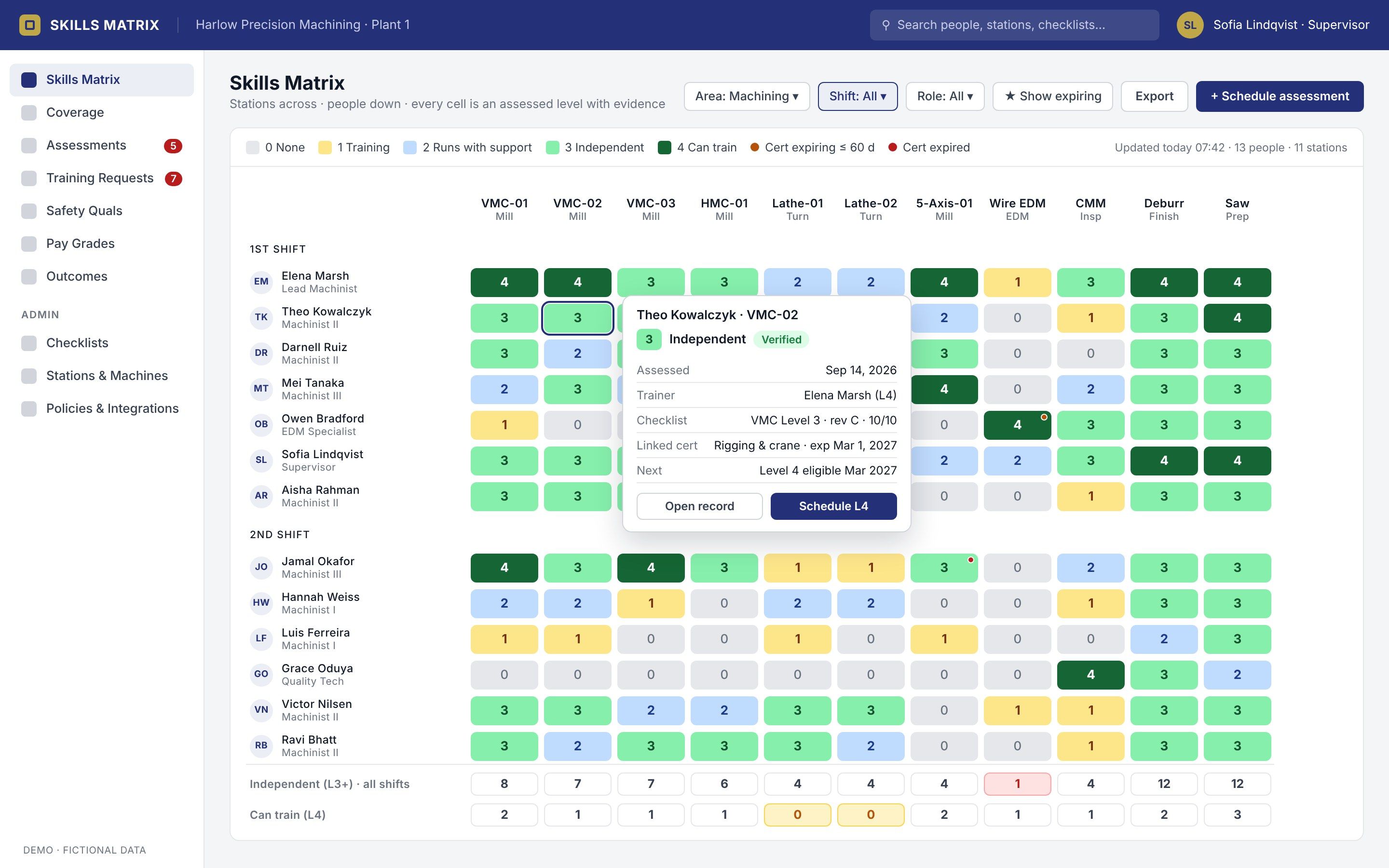
One record per person per station, a level from 0 to 4 earned by a signed assessment, and views for employees, supervisors, and trainers from the same data.
Problem
Coverage lives in people’s heads and a spreadsheet nobody has opened in a year.
One person is the only independent operator on a machine, and the gap shows up the day they are out. “Trained” means someone said so, months ago, with no date, no trainer, no checklist, and nothing to show an auditor or a customer. Operators ask to learn a station out loud, and the request has no queue, no owner, and no clock. Coverage shortfalls are solved with overtime and rushed cross-training, and the cost is never attributed to the cause.
Approach
One record per person per station, with a level that is earned rather than typed in, feeding every view from the same data.
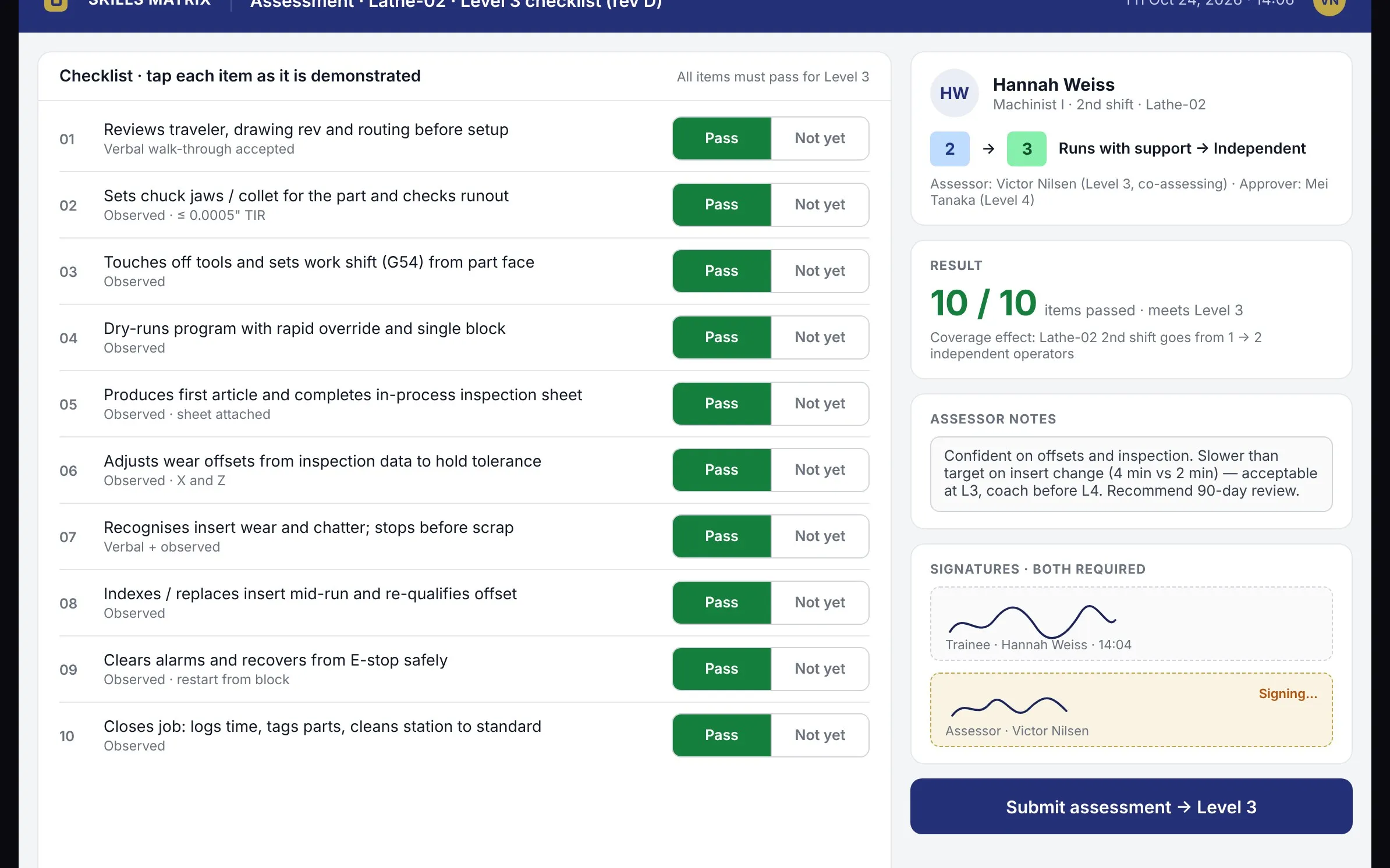
Five levels, zero to four, with one fixed meaning each on every station: none, training, runs with support, independent, can train. Level two is the minimum to run alone; coverage counts level three and above; only level four can assess. Every level change is a checklist assessment on a tablet, versioned by letter so a level three from one year is comparable to one from the next, and the record locks when both the trainee and the assessor sign. A linked certification carries an expiry, and the level is suspended rather than deleted when it lapses.
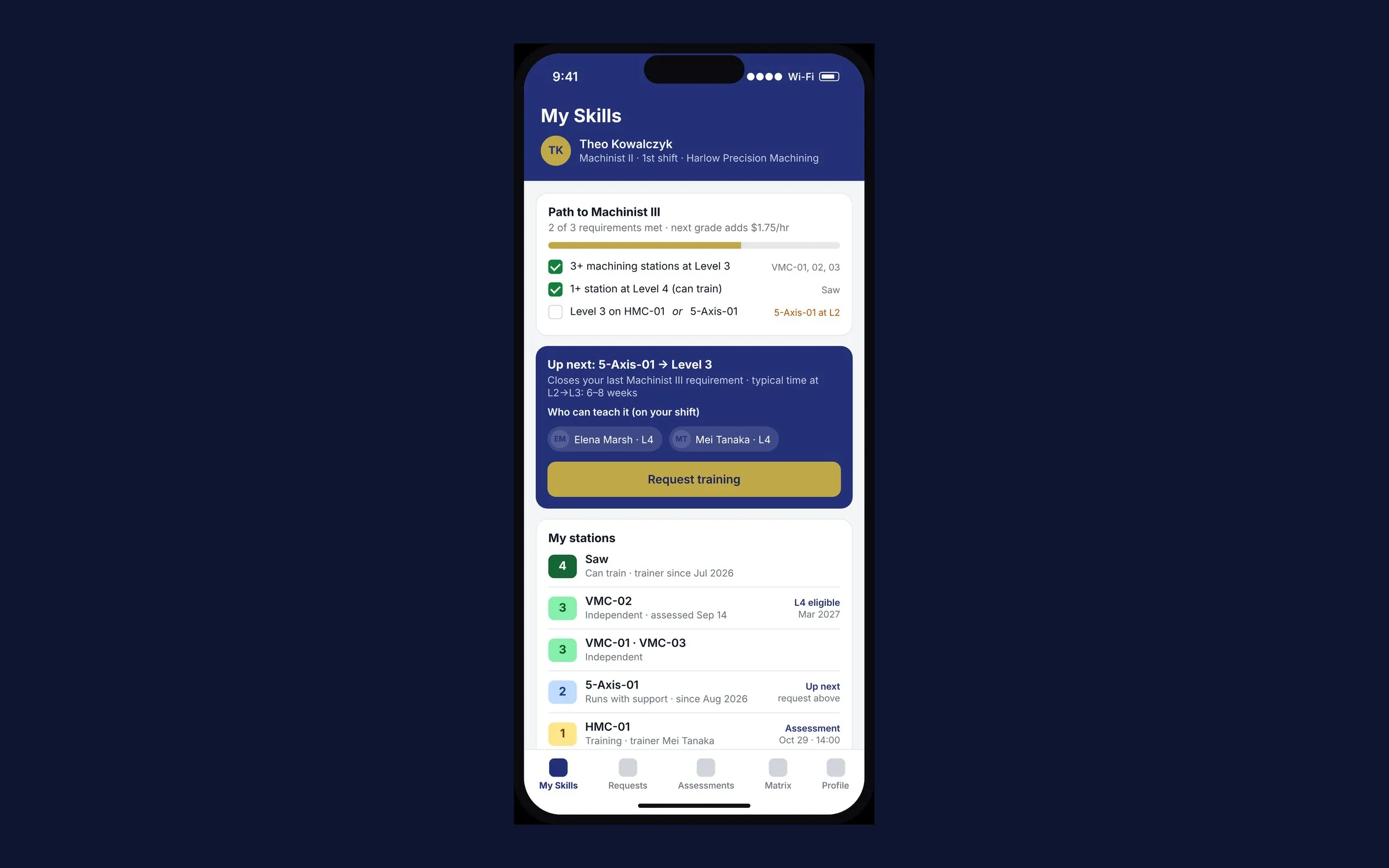
The employee sees their stations and levels on their phone, the single station and level that moves them forward, who on their shift can teach it, and a request-training button that creates a dated request with an owner and a thirty-day clock. Where pay grades exist, the requirements for the next grade are checkboxes against the matrix, so the path is explicit instead of a conversation with HR.
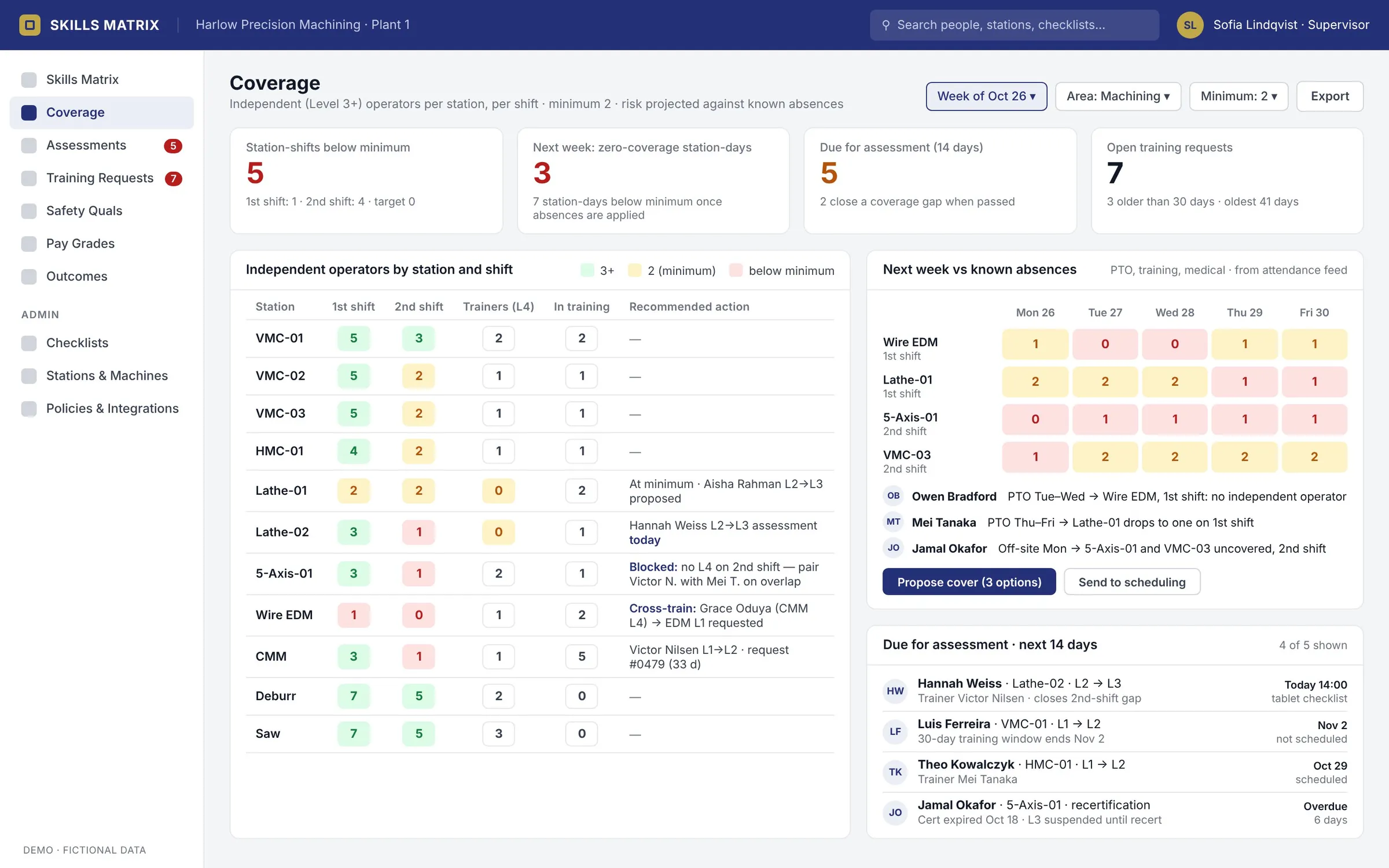
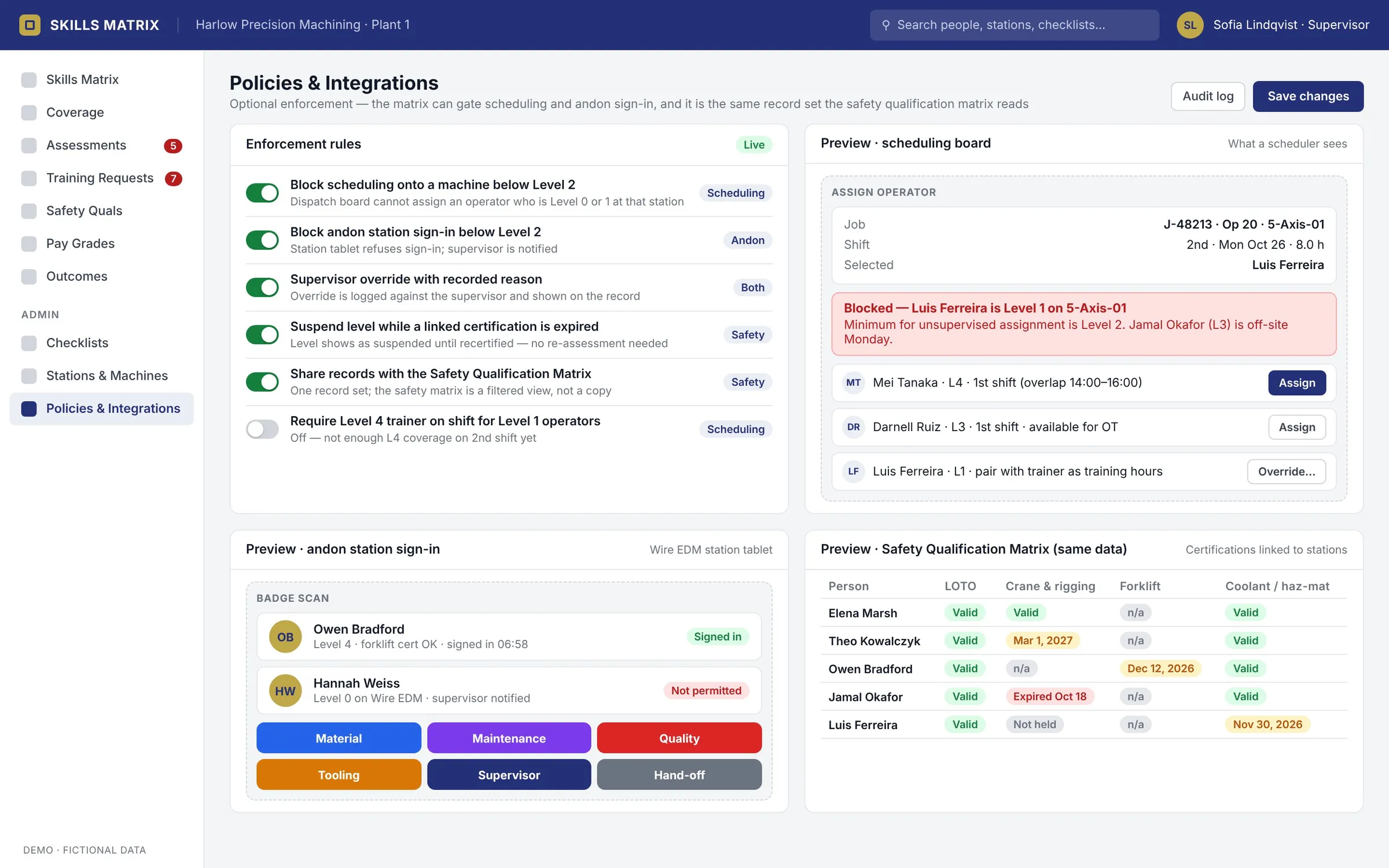
Supervisors see coverage per station per shift against a minimum of two, who is due or overdue for assessment, and next week’s risk with known absences applied day by day. Enforcement is optional and off by default: when a rule is on, the dispatch board refuses an assignment below level two and offers alternatives, and the andon tablet refuses the badge and logs any override. The safety qualification matrix, with lockout, crane, forklift, and hazmat, is a filtered view of the same records rather than a second spreadsheet.
Outcome
| Metric | Result |
|---|---|
| Status | Concept, in development |
| Levels | 0 to 4, one fixed meaning each |
| Evidence | Date, trainer, checklist revision, two signatures |
| Coverage | Two independent operators per station per shift |
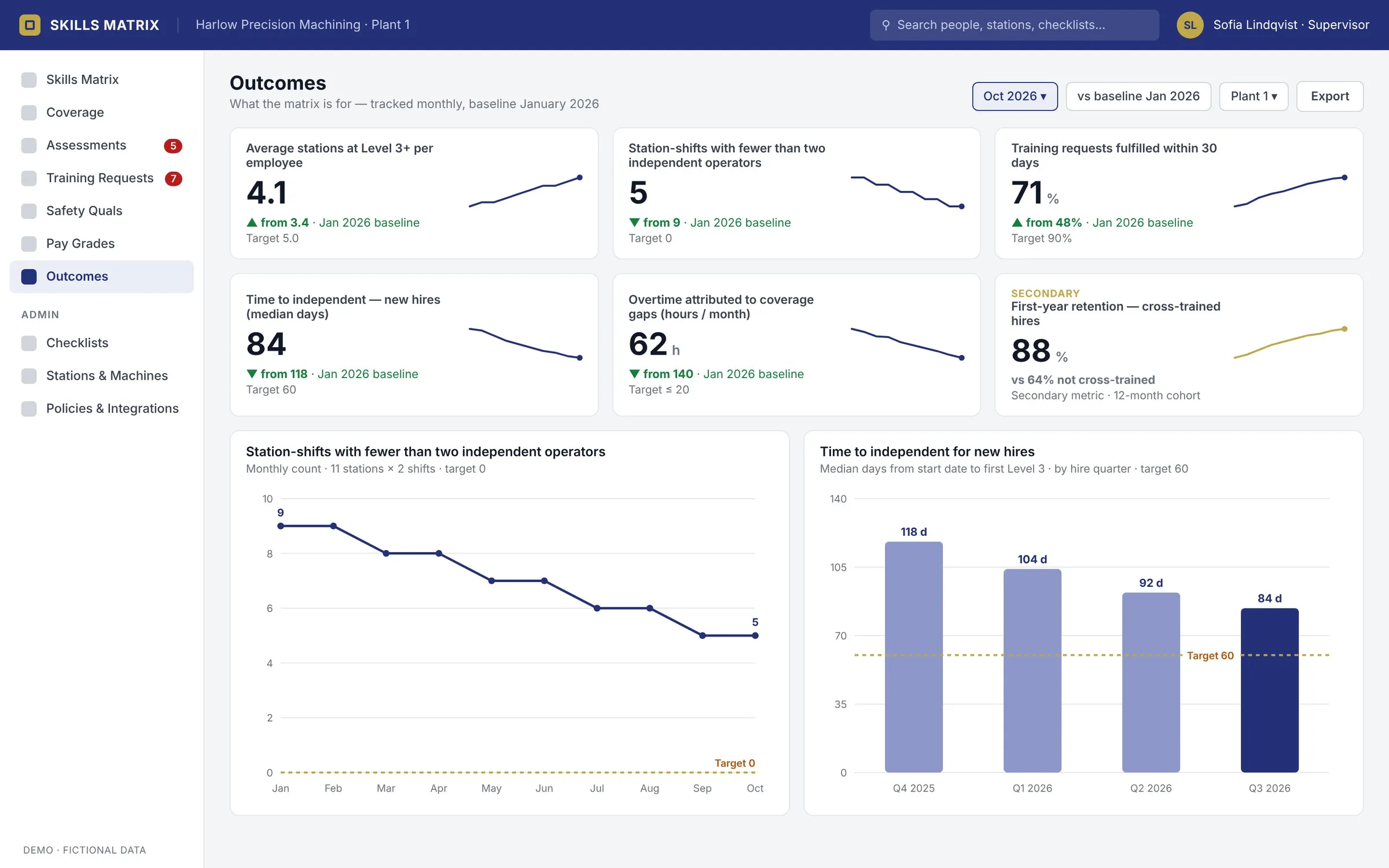
Built to move five numbers monthly against a baseline, and to watch a sixth.
Average stations per employee at level three, up. Stations with fewer than two independent operators per shift, down to zero. Training requests fulfilled within thirty days, up. Time to independent for new hires, down. Overtime caused by coverage gaps, down and finally attributed to its cause. First-year retention of cross-trained hires is the one to watch.
Nothing here has run on a floor yet. The screens are a specification with fictional data, and the numbers on them are placeholders.
Gallery
-
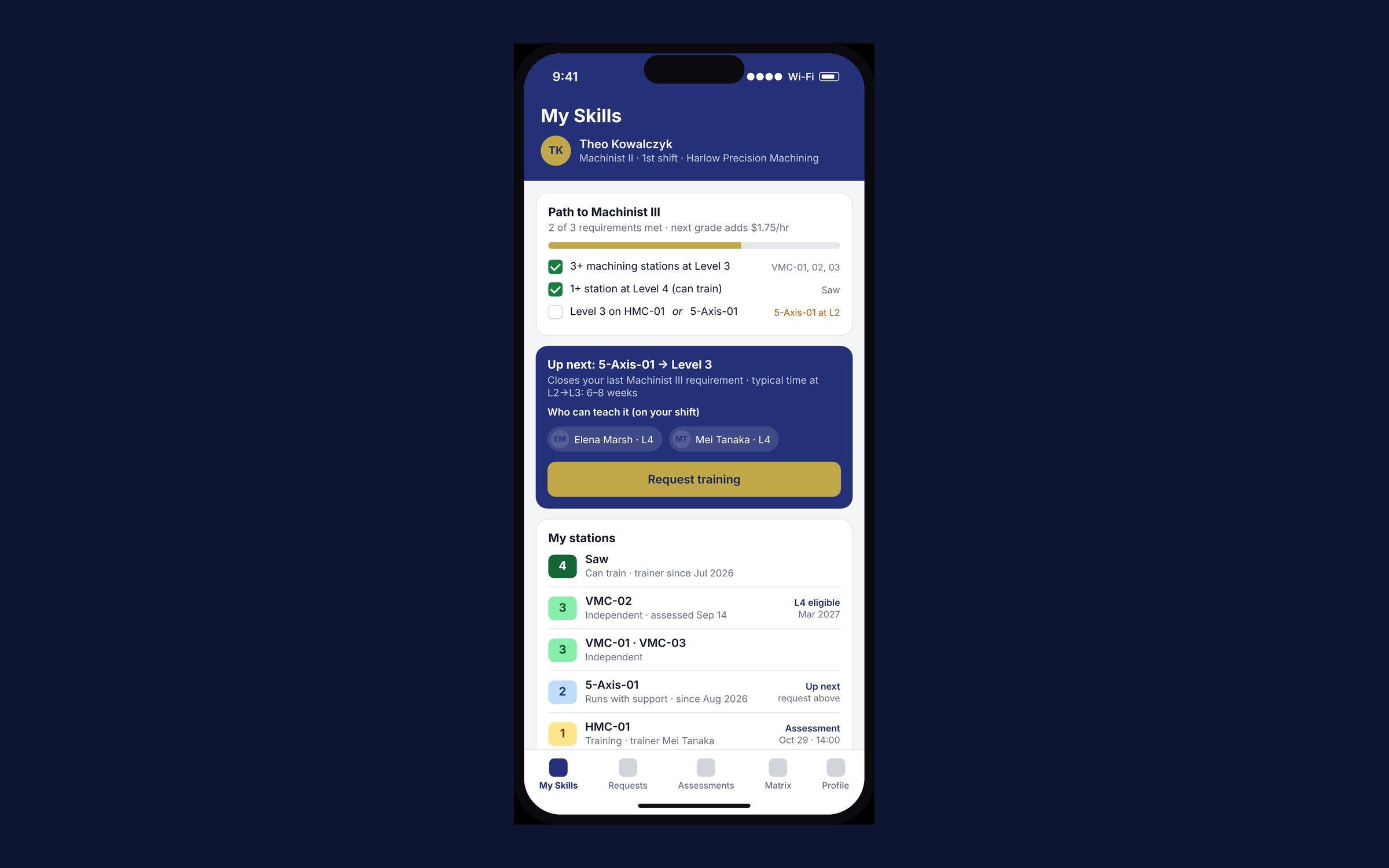
4.0 What they hold, what is next, who can teach it, and what it is worth. Image -
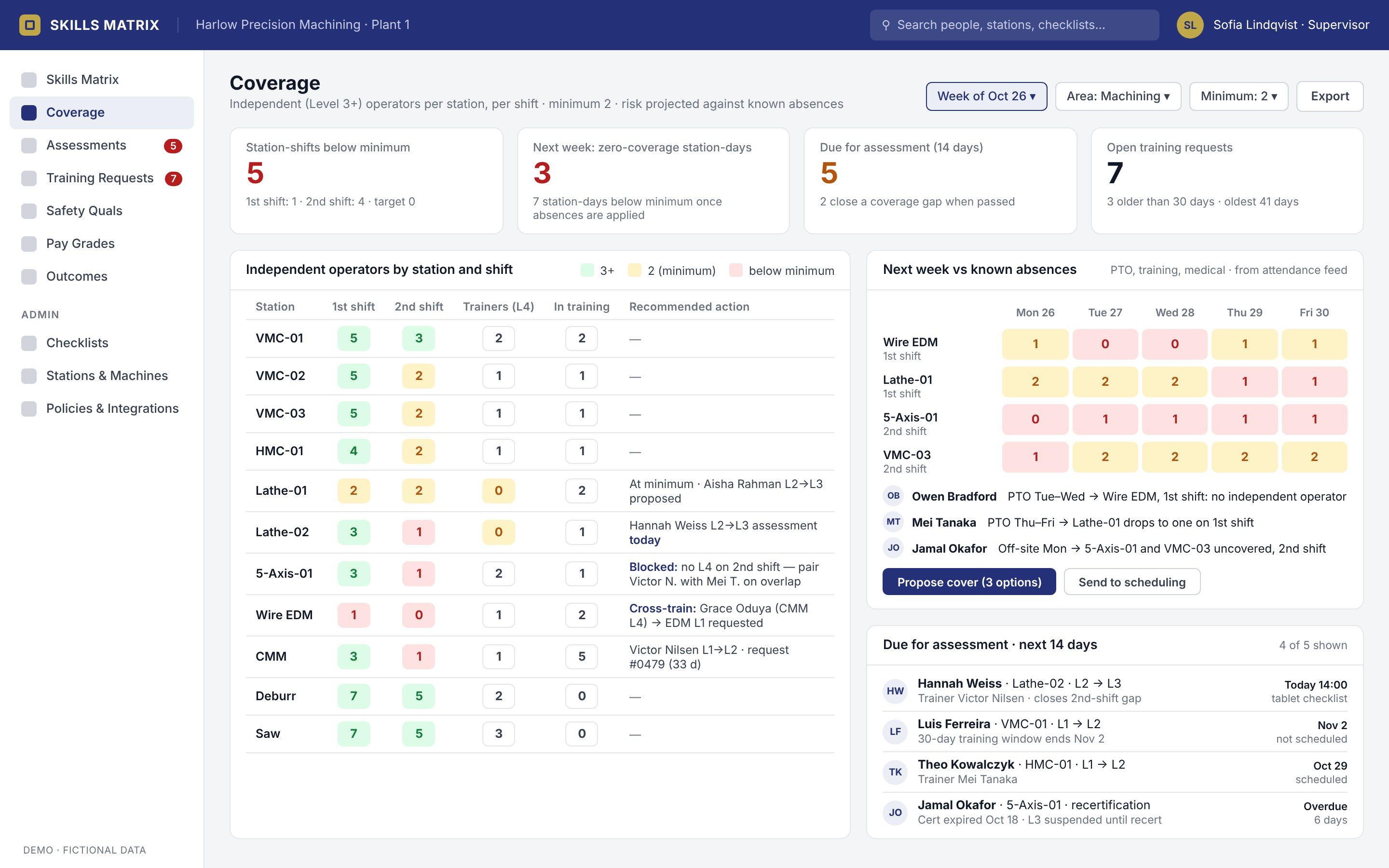
4.1 Coverage you can see before it fails, with next week's absences already applied. Image -
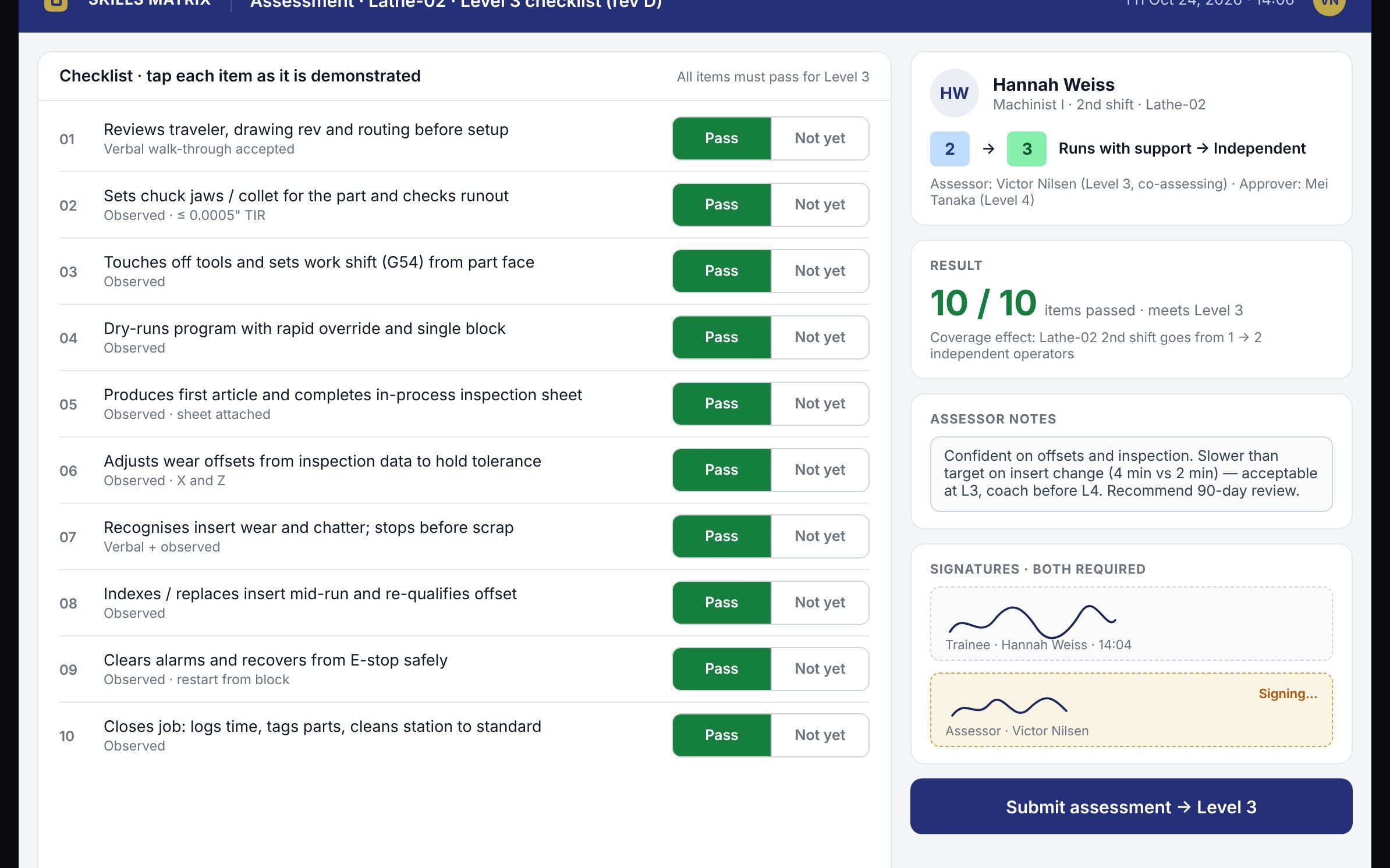
4.2 A level is never typed in. It is the outcome of a checklist both people sign. Image -
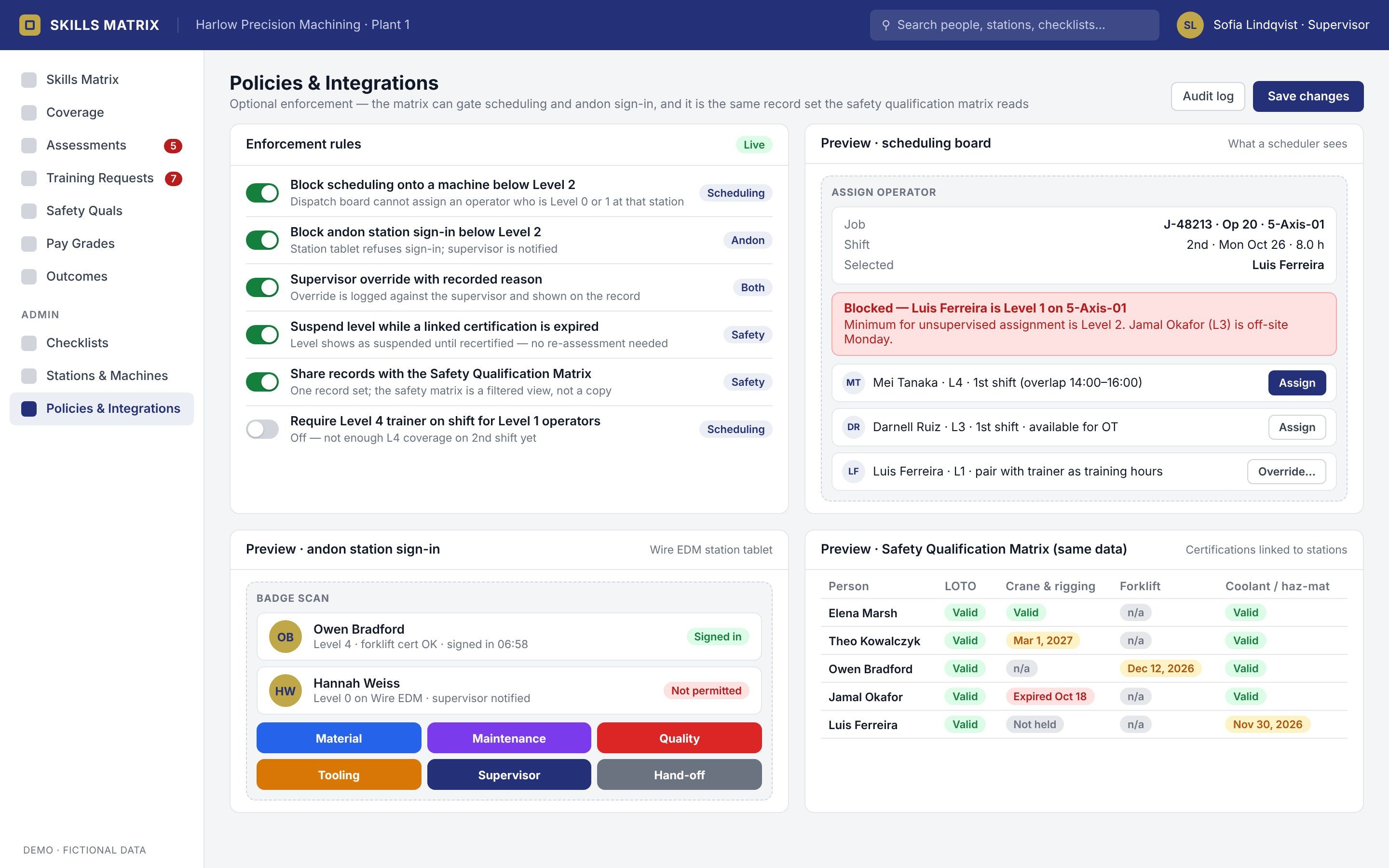
4.3 Optional enforcement, off by default. The safety matrix is a view of the same records. Image -
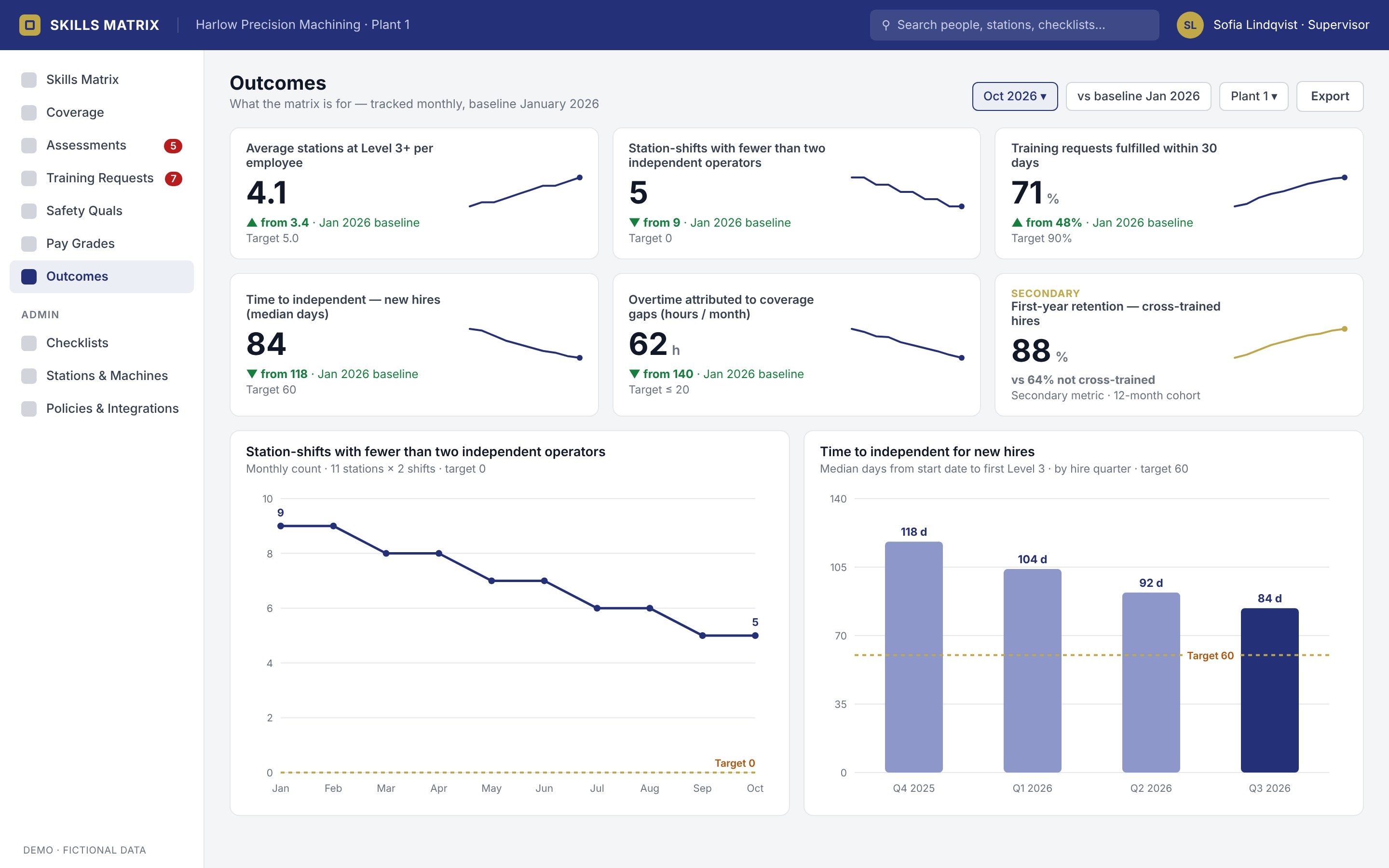
4.4 Five numbers that should move, all computed from assessment records rather than a survey. Image