FirstCycle: pre-shift machine checks in two minutes, acted on before the first cycle
Concept Specified and mocked up, not yet deployed. Every plant, person, and figure in the screens is fictional.
- Role
- Concept and interface design
- Year
- 2026
- Tools
- Concept deckInterface mock-ups
Overview
Scan the machine, pass or fail each item, photograph the fails, sign. A fail opens a ticket; a critical fail blocks the machine until a supervisor acts.
Problem
There is no proof the machine was checked before it ran.
A clipboard check does not show when it was done, by whom, or whether the item was actually looked at, and a fail noted on the sheet stays on the sheet. A supervisor has no view of which machines were checked before the first cycle. A coolant leak or a weak guard switch noted at six in the morning reaches maintenance when someone remembers to mention it.
Approach
Two minutes at the machine, and every other system updated by the check itself.
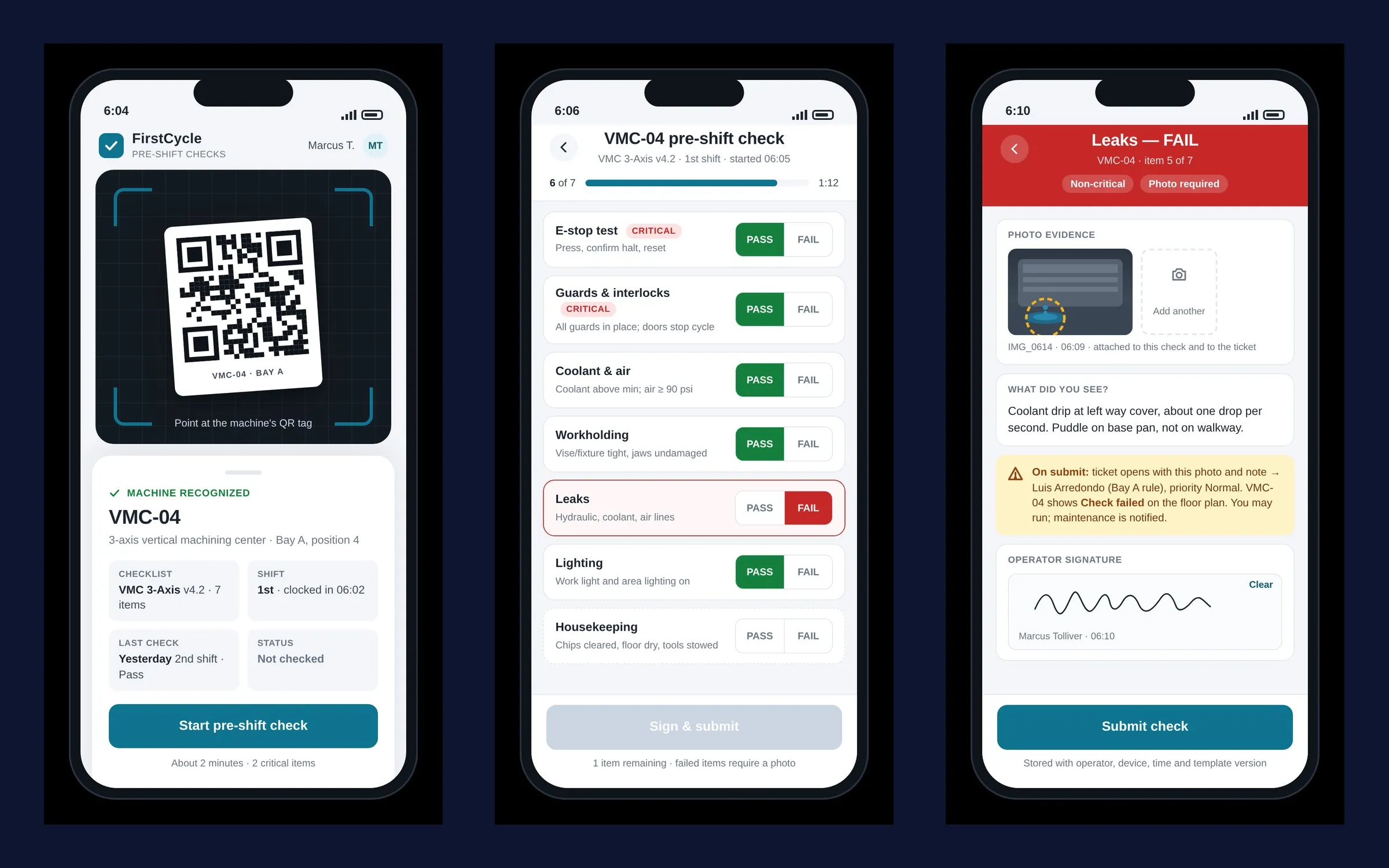
One QR tag per machine resolves the machine, its location, and the right checklist for that machine type: five to eight items such as the e-stop test, guards and interlocks, coolant and air, workholding, leaks, lighting, and housekeeping. The operator comes from the clock-in, so there is nothing to type. Each item is pass or fail; a fail cannot be submitted without a photo and a note; a signature closes the check, stored with operator, device, start and sign times, and the template version.
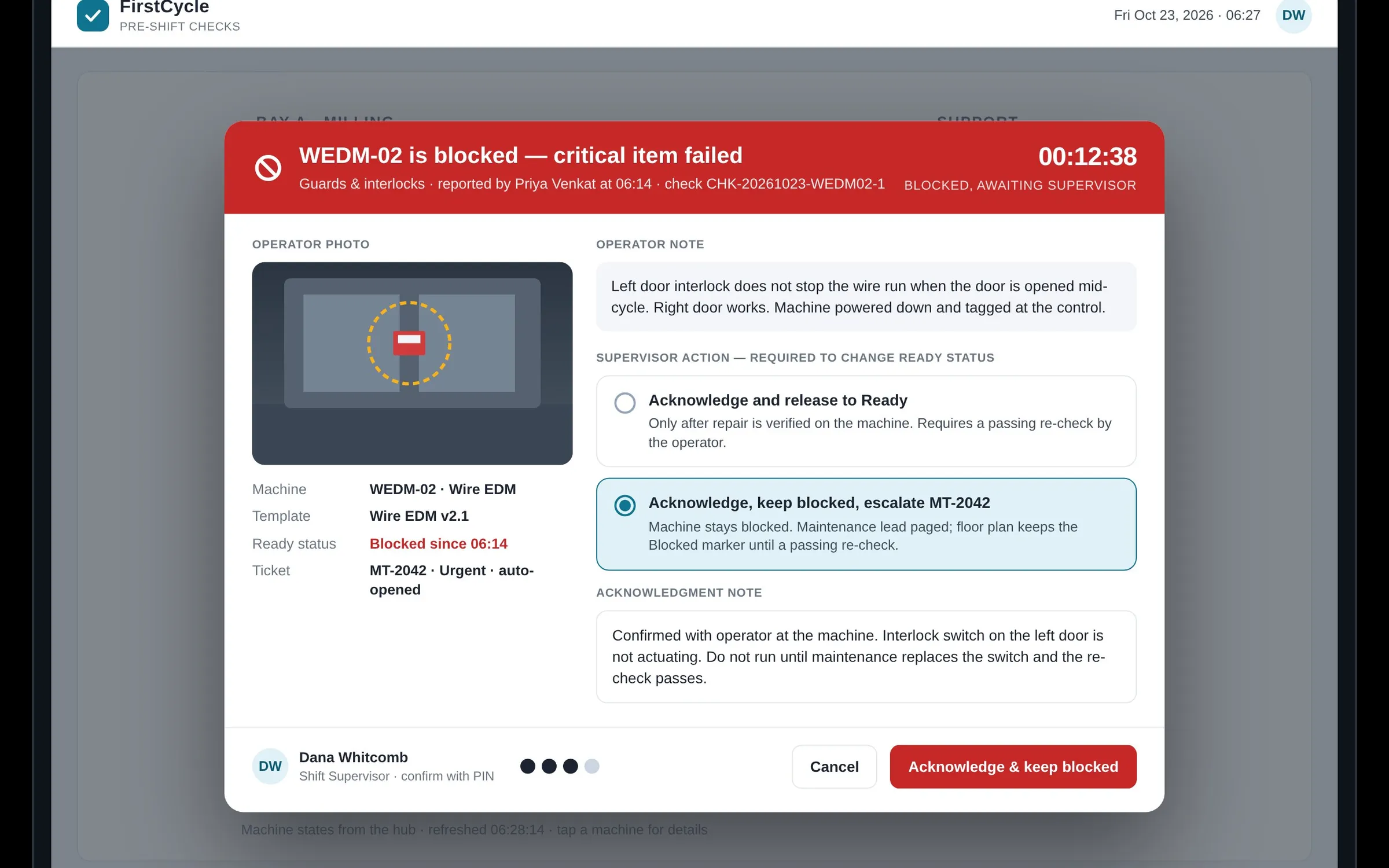
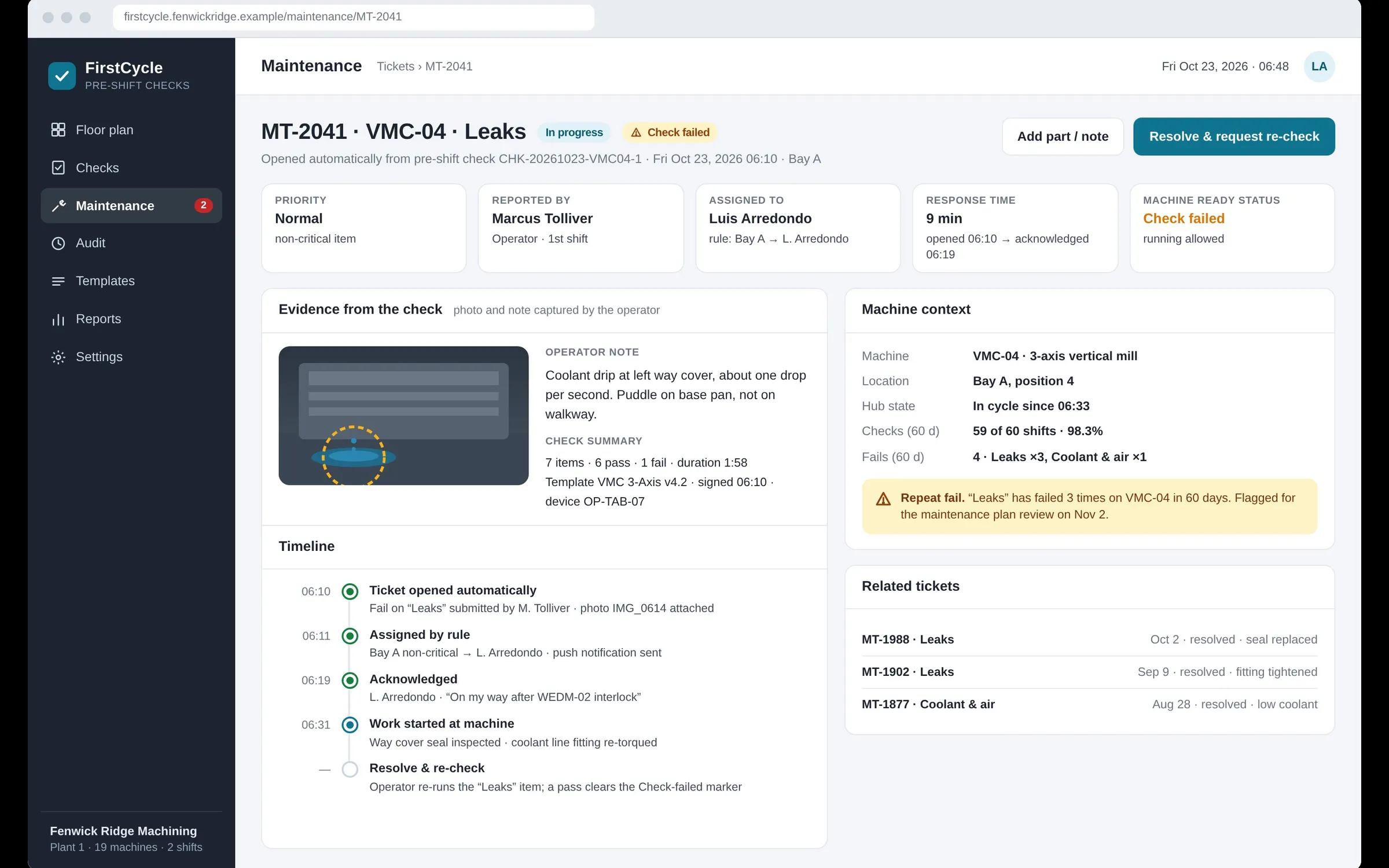
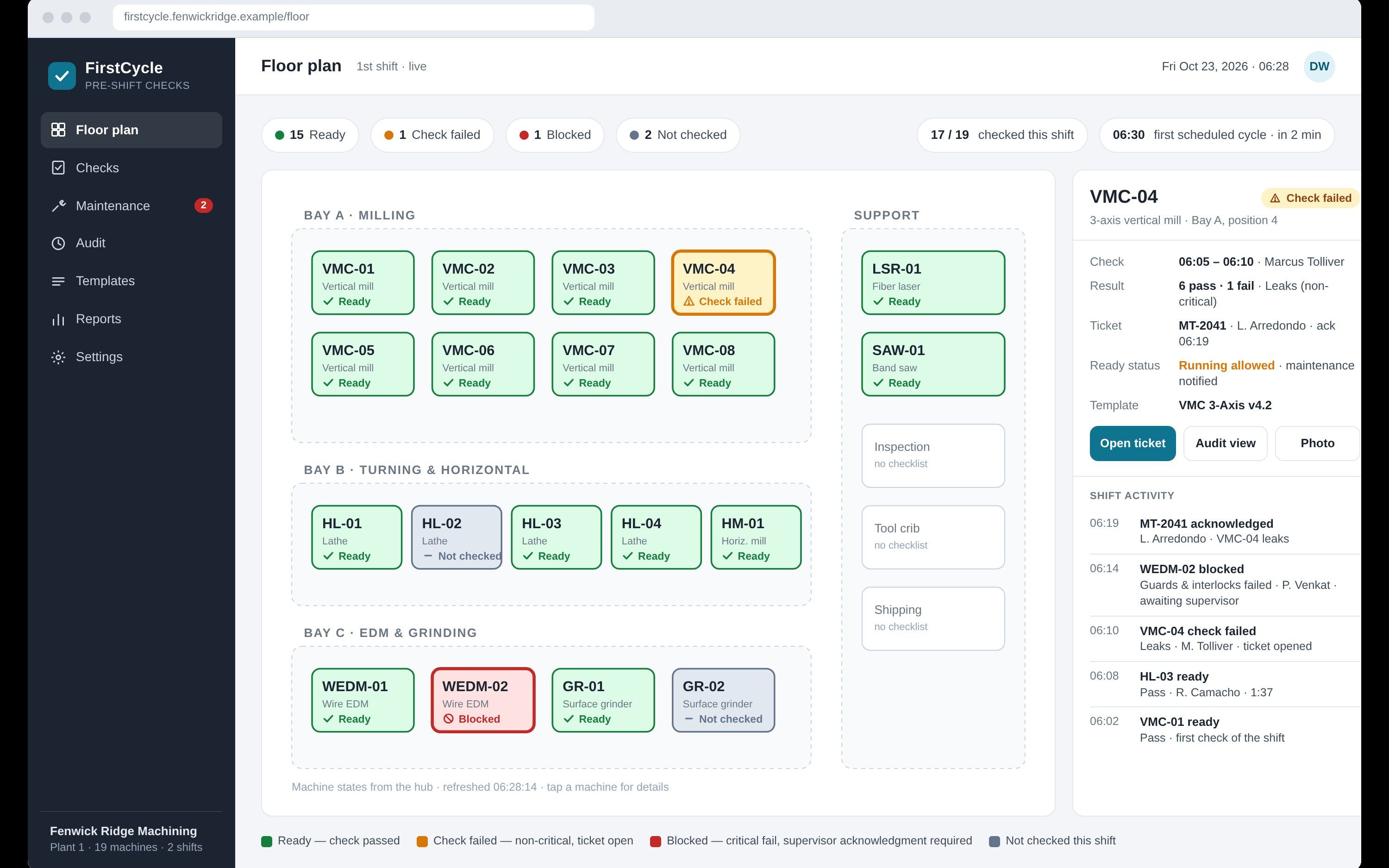
A fail is never just a note. A non-critical fail opens a maintenance ticket with the photo attached and turns the machine’s tile on the floor plan to check failed. A critical fail, an e-stop or a guard, withholds the machine’s ready status with a clock running until a supervisor acknowledges it with a note and a PIN, either releasing it after a verified repair or keeping it blocked and escalating the ticket. The floor plan shows every machine’s readiness for the shift on one screen.
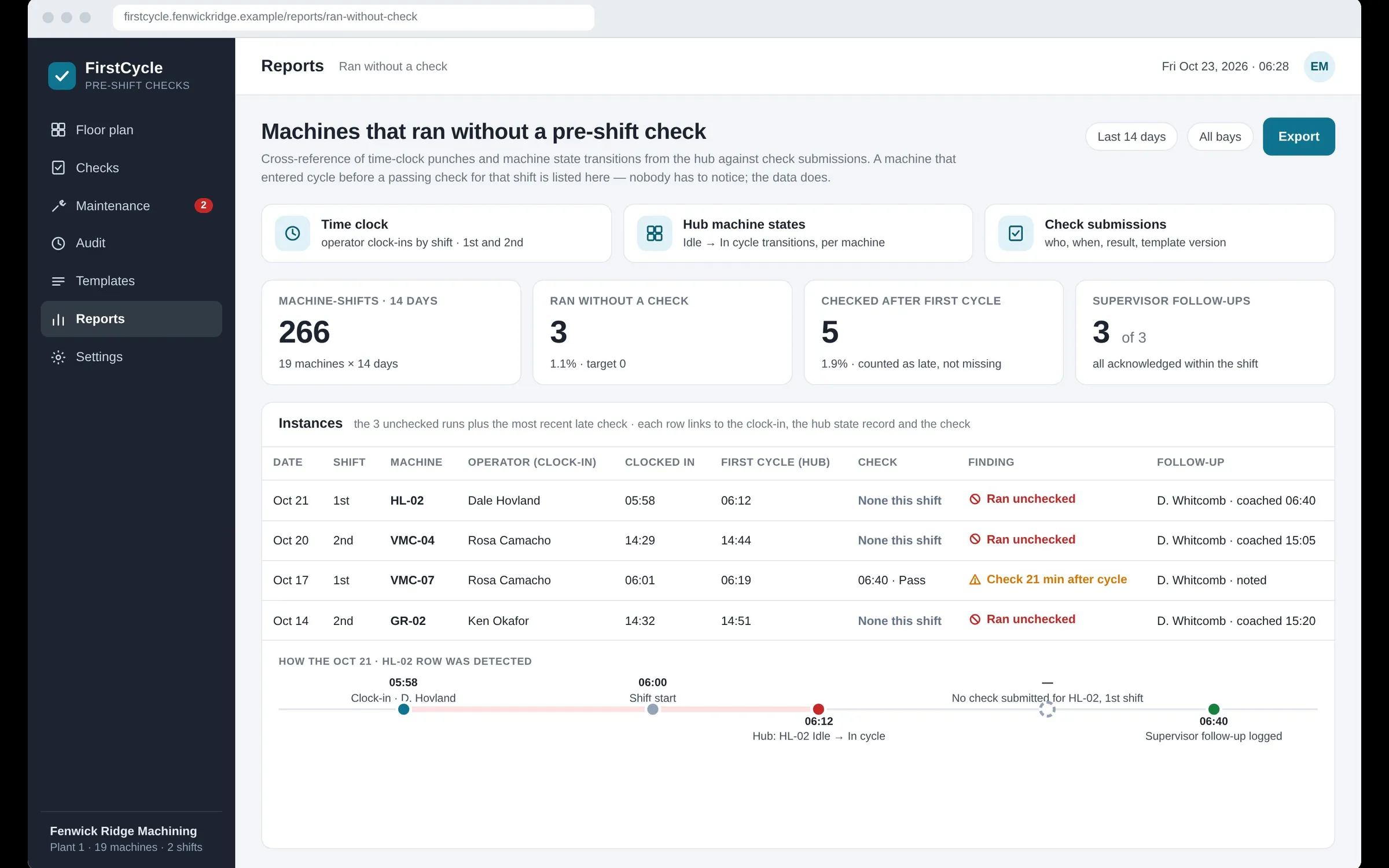
Because the check record, the time clock, and the machine states live together, the tool can list the machines that ran without a check, by shift and operator, with the follow-up. Templates are versioned, with a retirement rule for items that never fail, so the list stays honest and short.
Outcome
| Metric | Result |
|---|---|
| Status | Concept, in development |
| Check | Five to eight items, about two minutes |
| Critical fail | Machine blocked until acknowledged |
| Record | Operator, device, times, template version |
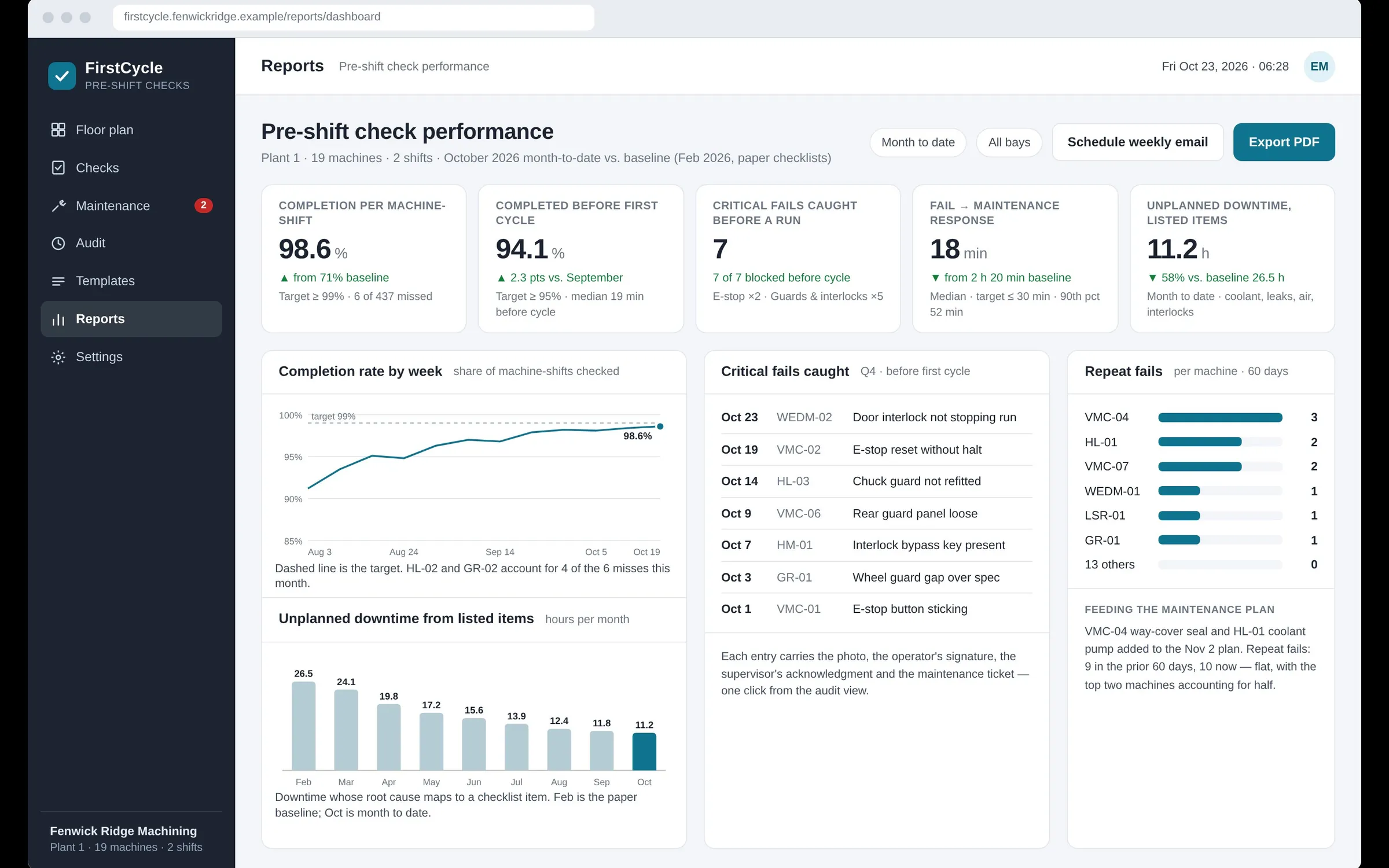
Built to move five numbers, each computed from records the check creates on its own.
Completion rate per machine-shift at or near one hundred percent, and the share completed before the first cycle. Critical fails caught before a run. Time from a failed item to the maintenance response. Repeat fails per machine, down, because they feed the maintenance plan. Unplanned downtime attributable to listed items, down.
Nothing here has run on a floor yet. The screens are a specification with fictional data, and the numbers on them are placeholders.
Gallery
-
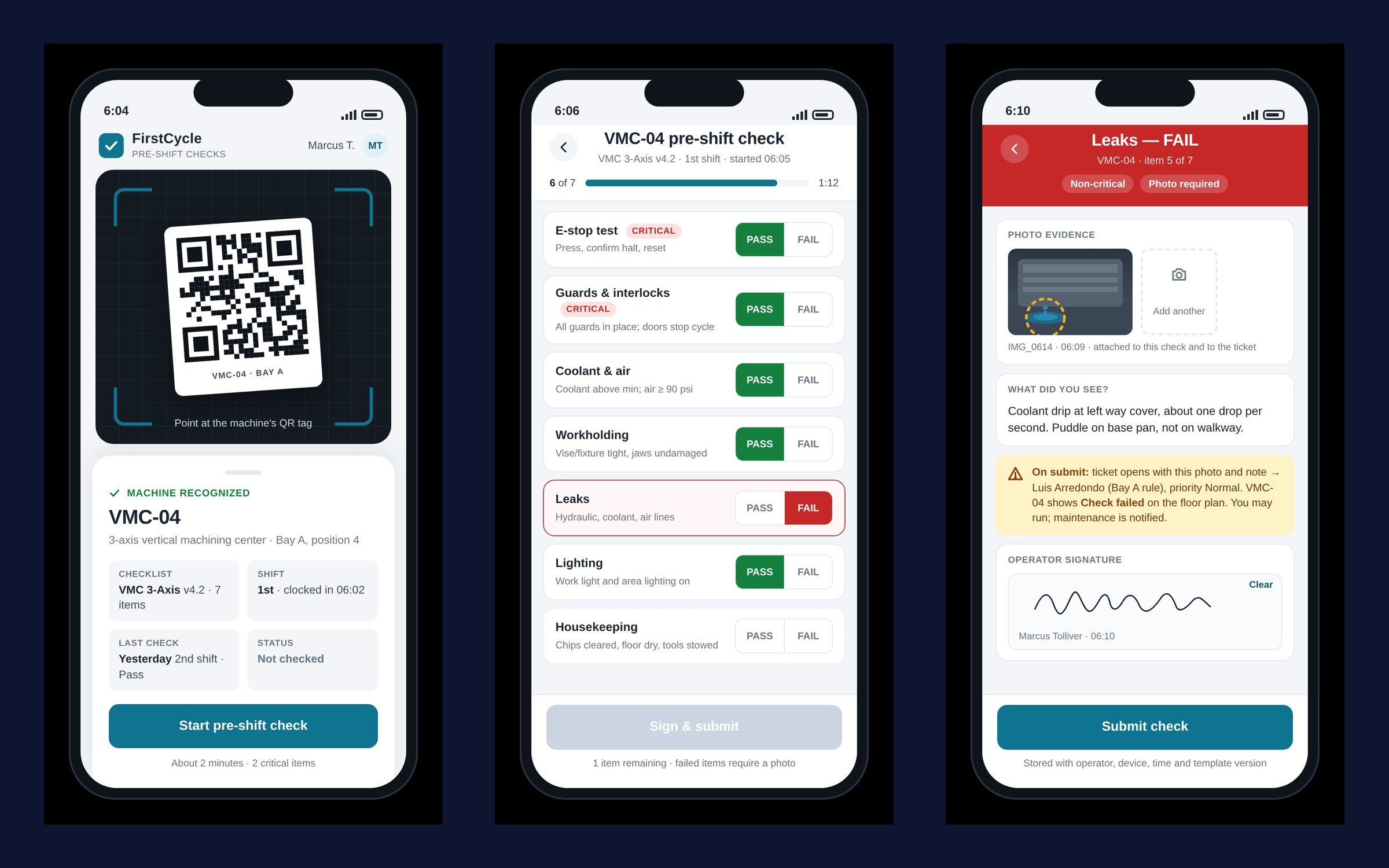
4.0 Scan, check, photograph the fail, sign. About two minutes at the machine. Image -
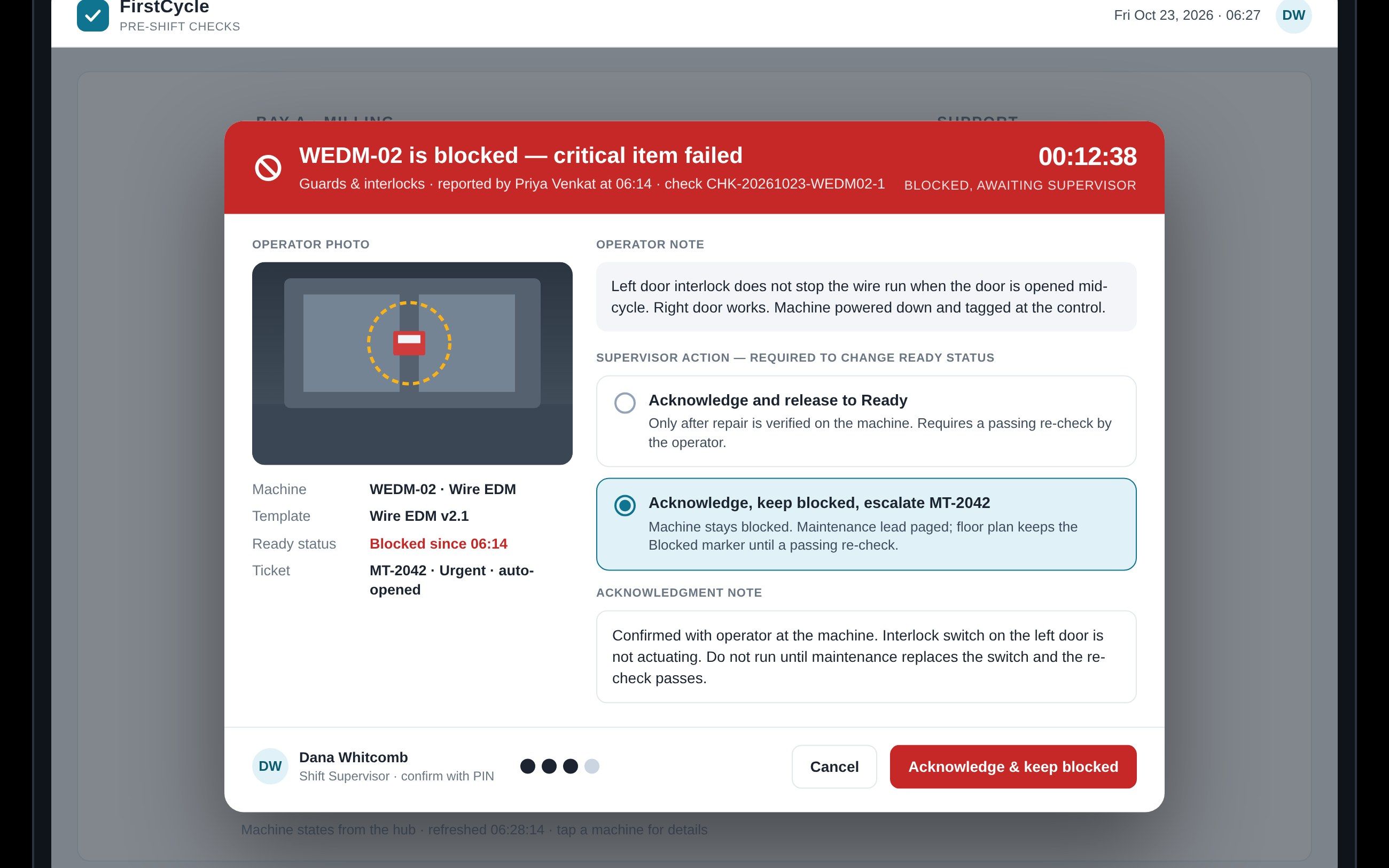
4.1 A critical fail withholds the machine's ready status until a supervisor acts, with a reason. Image -
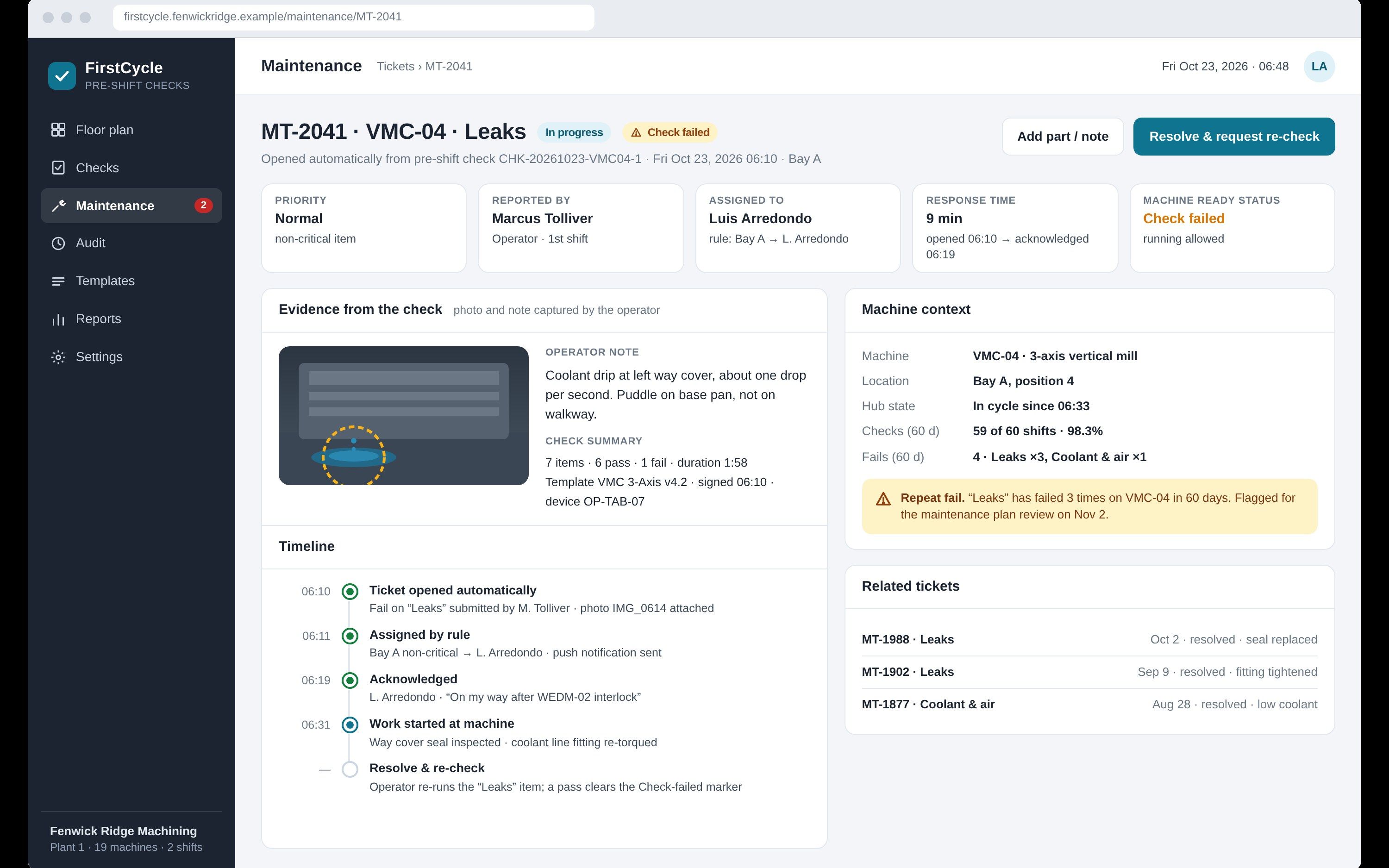
4.2 A fail is never just a note. The ticket opens itself with the photo attached. Image -
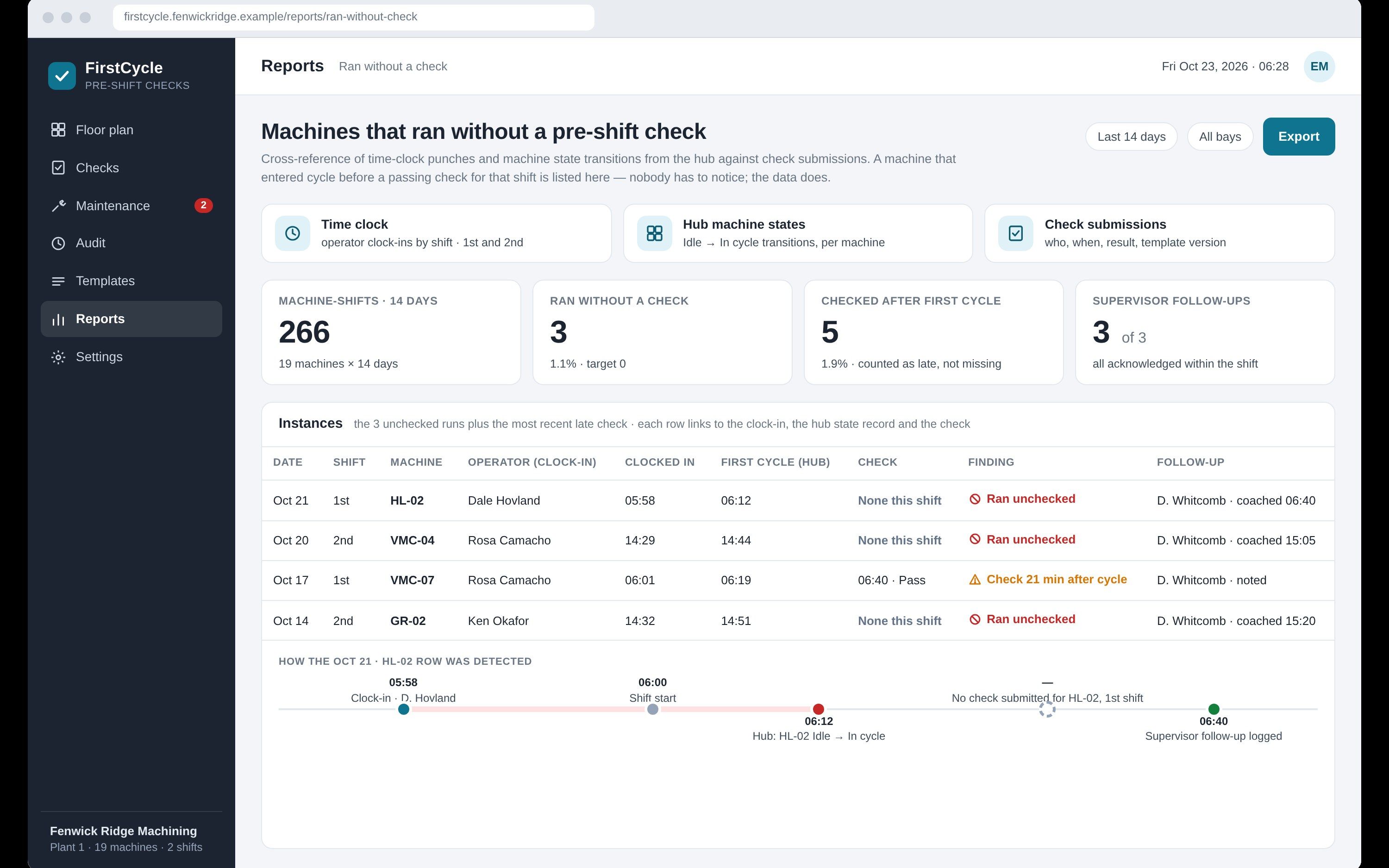
4.3 Clock-ins and machine states say which machines ran unchecked. The list is short and named. Image -
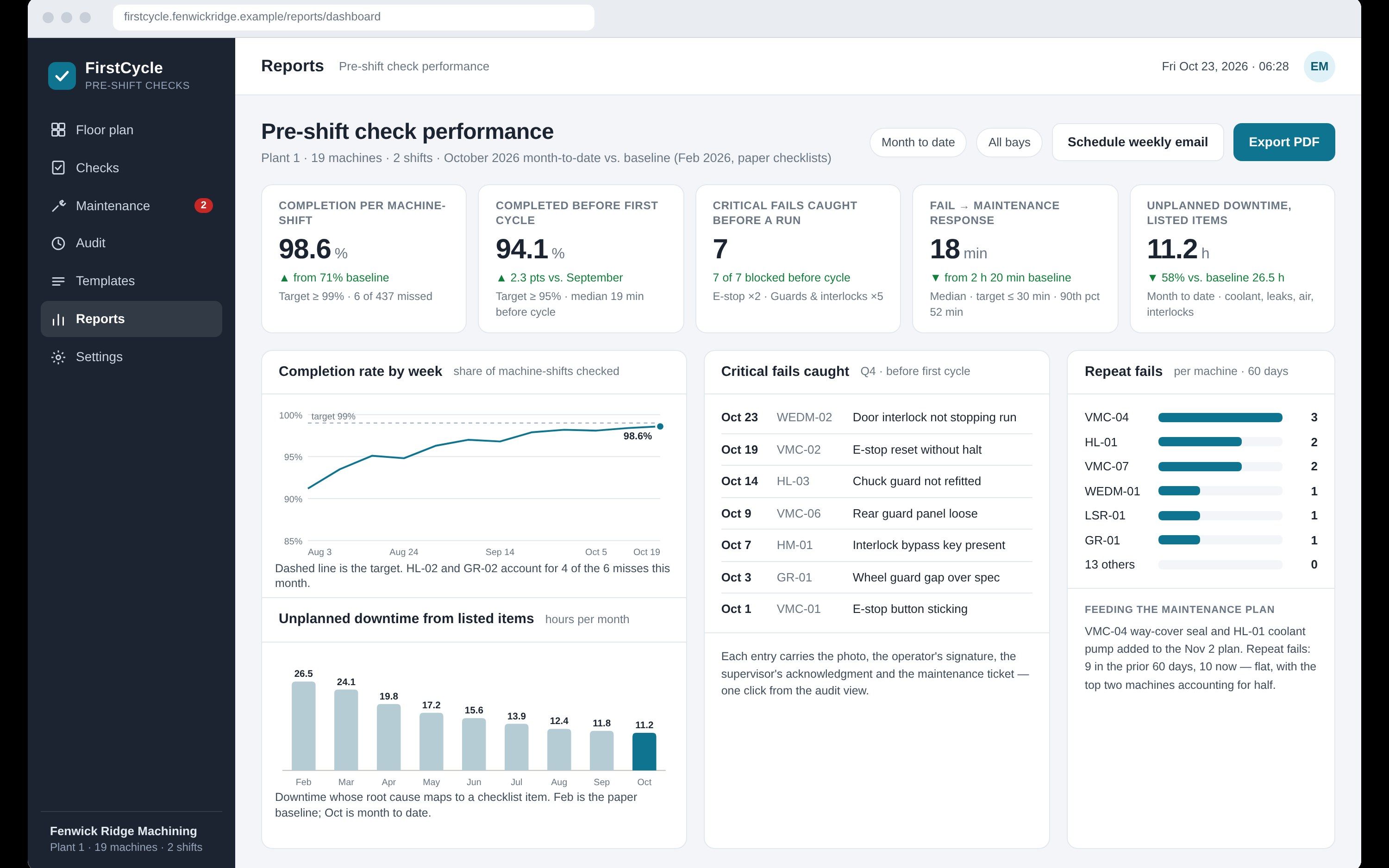
4.4 Repeat fails by machine feed the maintenance plan. Image