Beacon: andon without a PLC
Concept Specified and mocked up, not yet deployed. Every plant, person, and figure in the screens is fictional.
- Role
- Concept and interface design
- Year
- 2026
- Tools
- Concept deckInterface mock-ups
Overview
A tablet at every work center, a video call before anyone walks, and a timed record of every raised hand. No wiring, no stack lights, no PLC.
Problem
Most andon systems promise a response and few measure one.
A light goes on and nothing is recorded: how long the operator waited, who came, or whether the fix held. The responder walks over blind, looks, and walks back for a gauge or a part, and the second trip is the one nobody counts. Downtime shows up weeks later in a management report, after the causes have moved on. And a wired andon is frozen: a new button, a new responder, or a moved station means conduit, I/O, and a controls engineer.
Approach
Three surfaces, one timed record per call, and a video call before anyone walks.
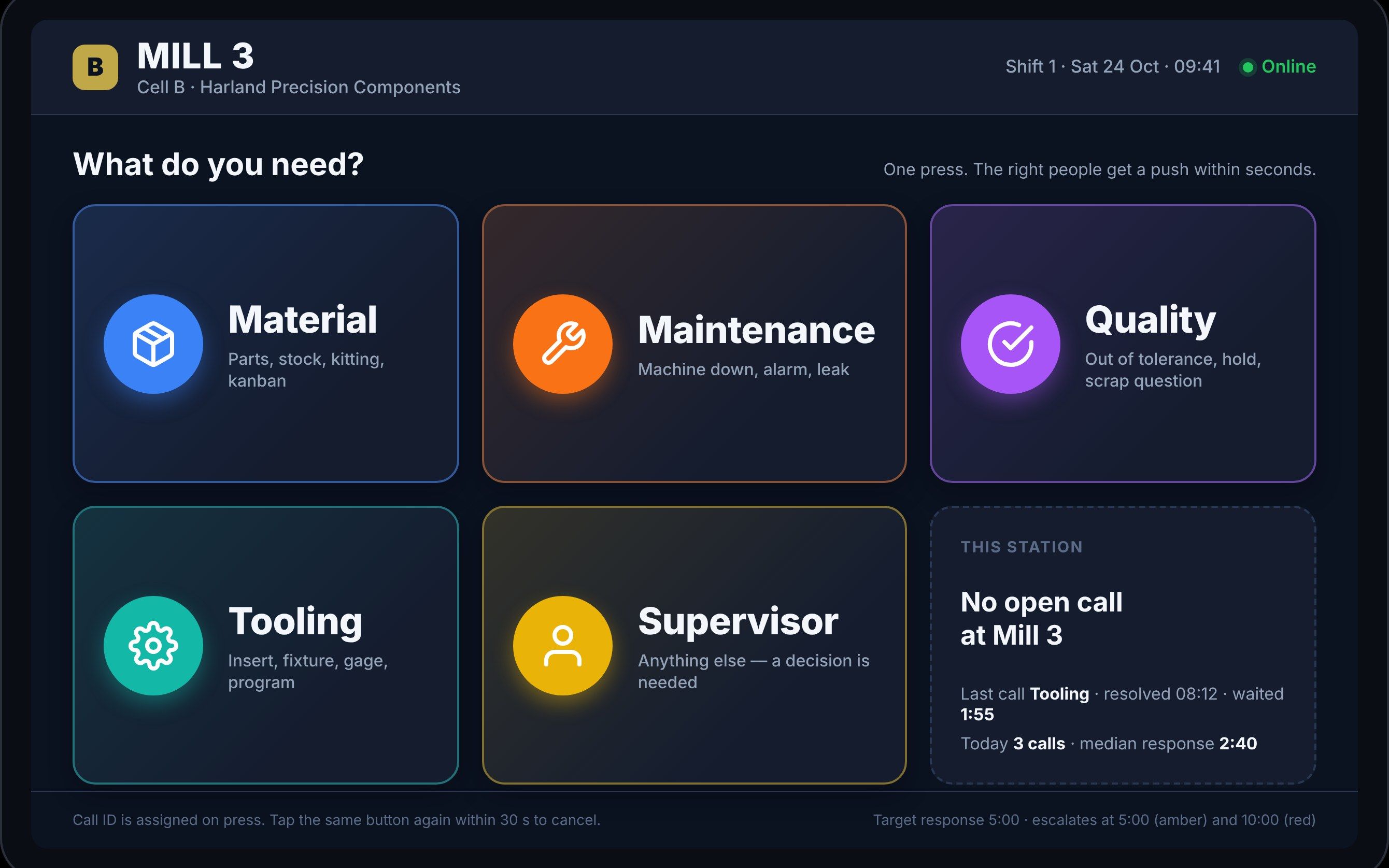
Every work center gets a mounted tablet with five glove-sized buttons: Material, Maintenance, Quality, Tooling, Supervisor. One press creates a call with station, time, and reason, puts it on the area display, and pushes it to the responder group’s phones. The tablet is bound to its machine, so a call can never be raised against the wrong one, and a second tap within thirty seconds cancels without paging anyone twice.
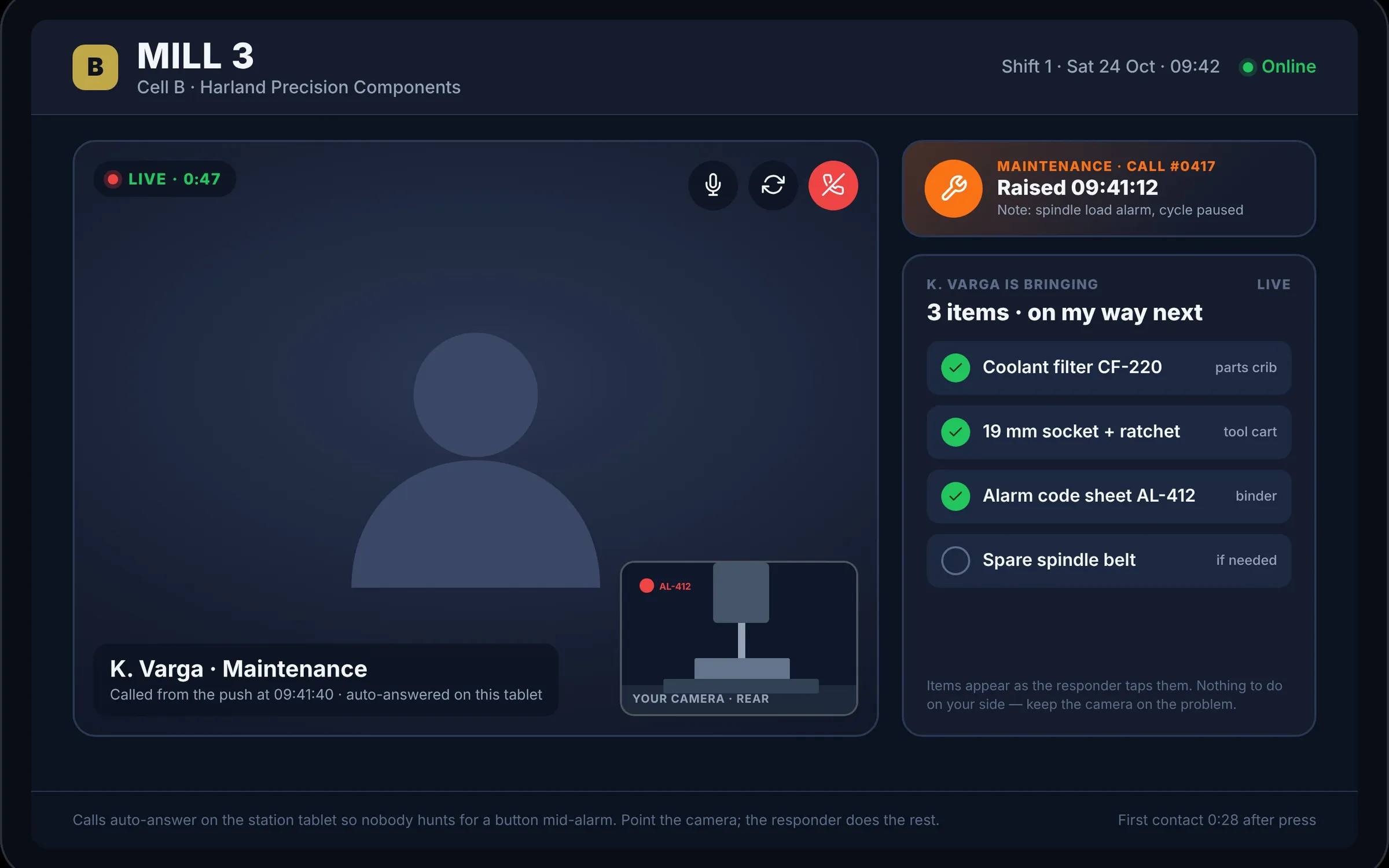
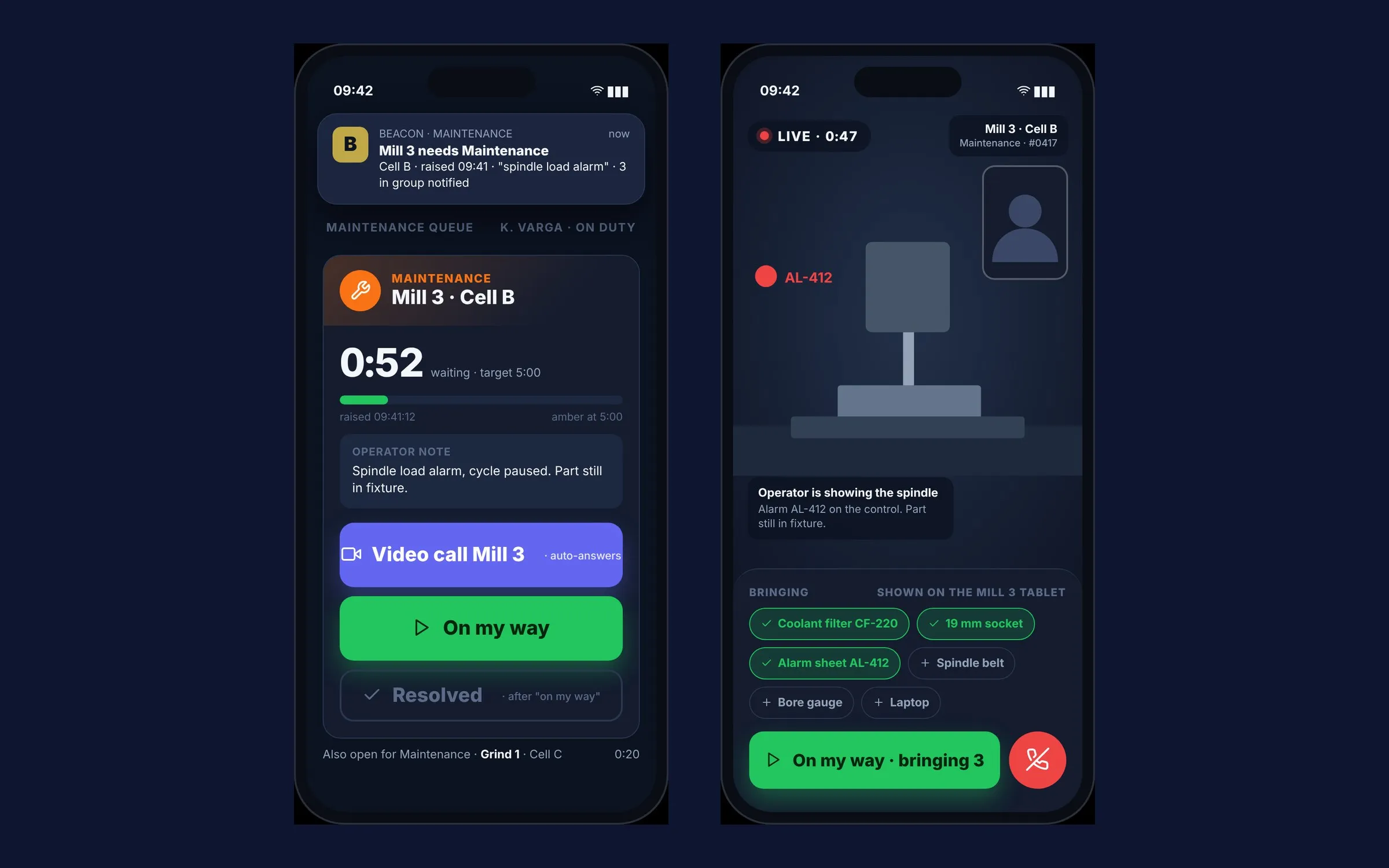
The responder taps the push and the station tablet auto-answers a video call. The operator points the rear camera at the problem; the responder ticks off what to bring, and the list rides along with “On my way”. Resolved unlocks only after On my way, so nobody can close a call from across the plant, and the call stays open until the operator confirms the machine is running. Reopening keeps the original call ID, so partial fixes show up as what they are.
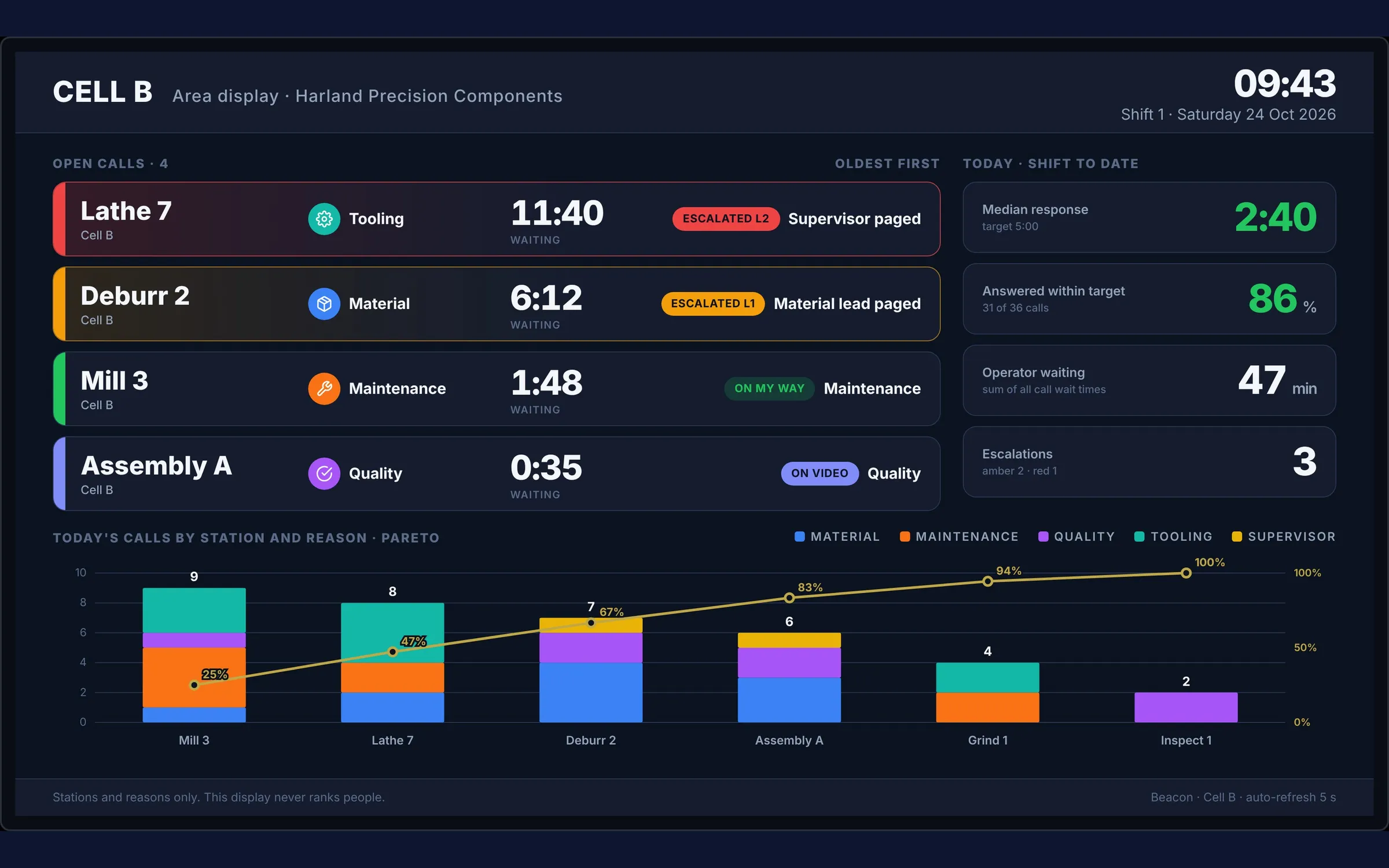
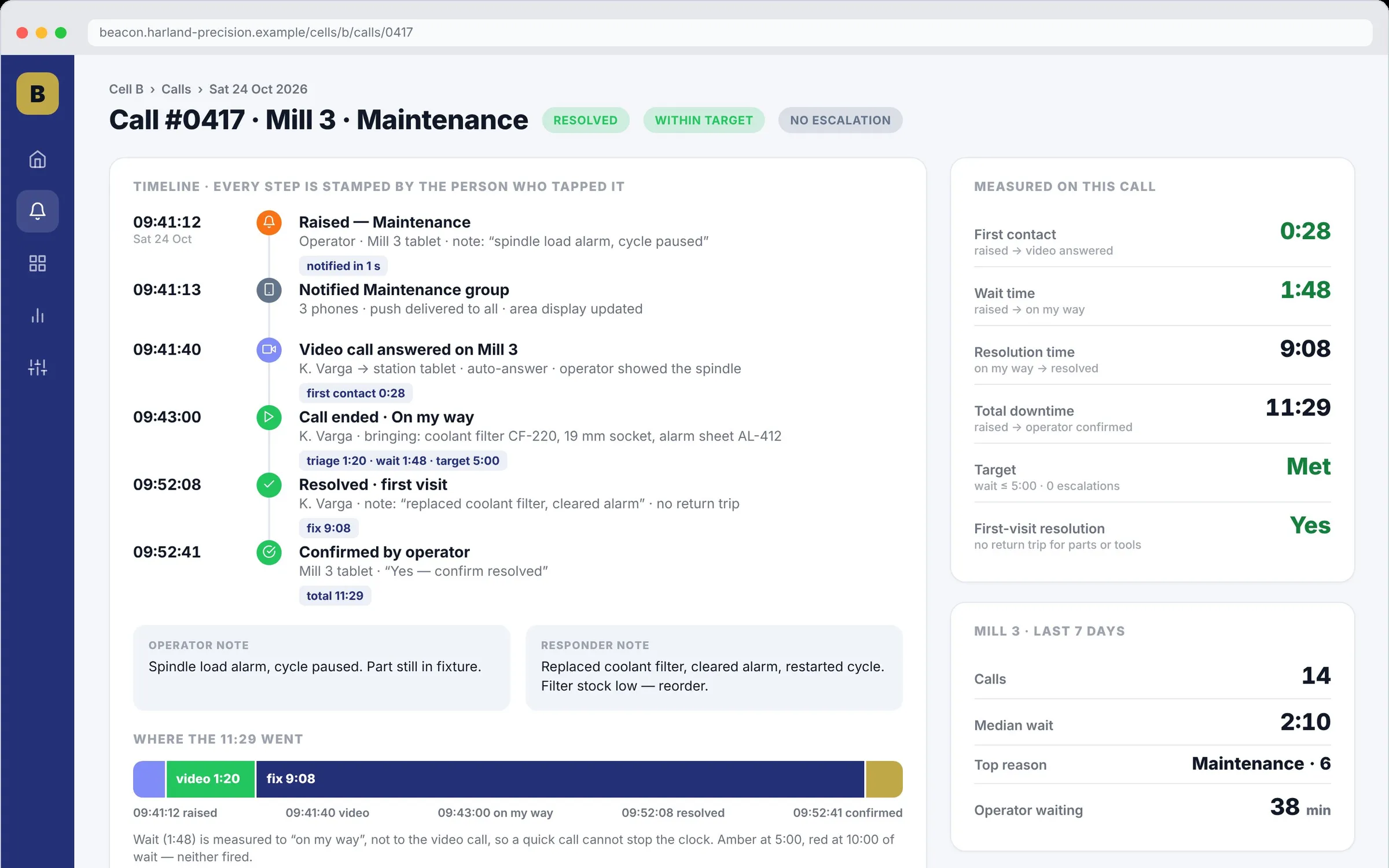
Every tap is a stamp: raised, notified, video call, on my way, resolved, confirmed. Wait is measured to On my way, not to the video call, so a quick call cannot stop the clock. Each reason gets its own target; at the target the group lead is paged and the row turns amber, at double it the supervisor is paged and the row turns red. The area display shows open calls oldest first, today’s median response, the share within target, and a Pareto of reasons by station. It never shows response times per person, because the crew owns the data and the data cannot be used against the crew. Nothing is wired: a browser on commodity tablets and phones over the existing Wi-Fi.
Outcome
| Metric | Result |
|---|---|
| Status | Concept, in development |
| Hardware | One tablet per work center, no PLC |
| Per call | Six stamps, four durations, no typing |
| Escalation | Amber at target, red at double |
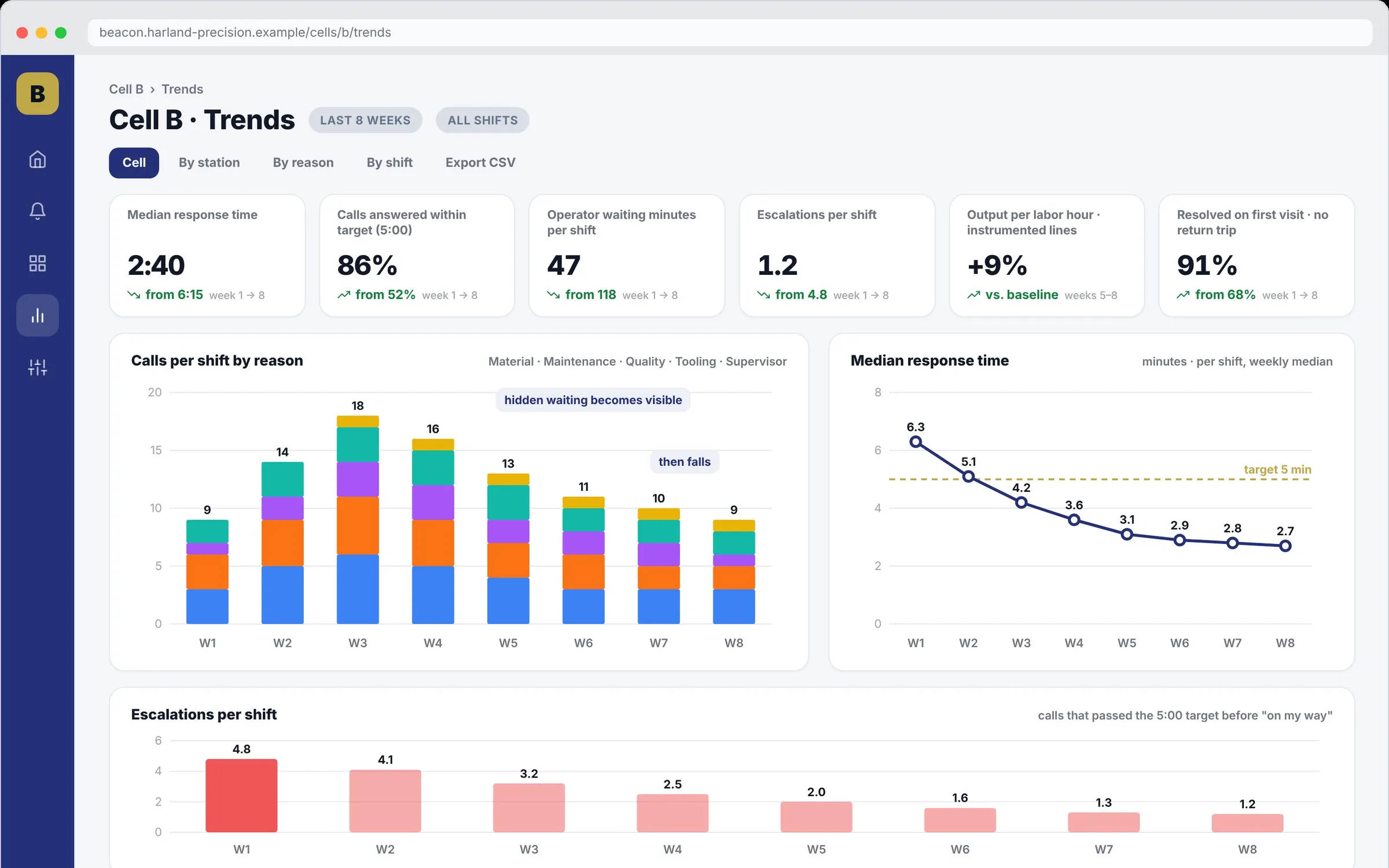
Built to move six numbers, and the direction of each is stated in advance.
Median response time down, paired with the share of calls within target going up. Operator waiting minutes per shift down, the number that was invisible before the button existed. Calls per shift by reason up first and then down, because hidden waiting surfaces before it is removed. Escalations down. Resolved on first visit up, which is the number the video call exists to move. Output per labor hour on the instrumented lines is the lagging one that pays for the tablets.
Nothing here has run on a floor yet. The screens are a specification with fictional data, and the numbers on them are placeholders.
Gallery
-
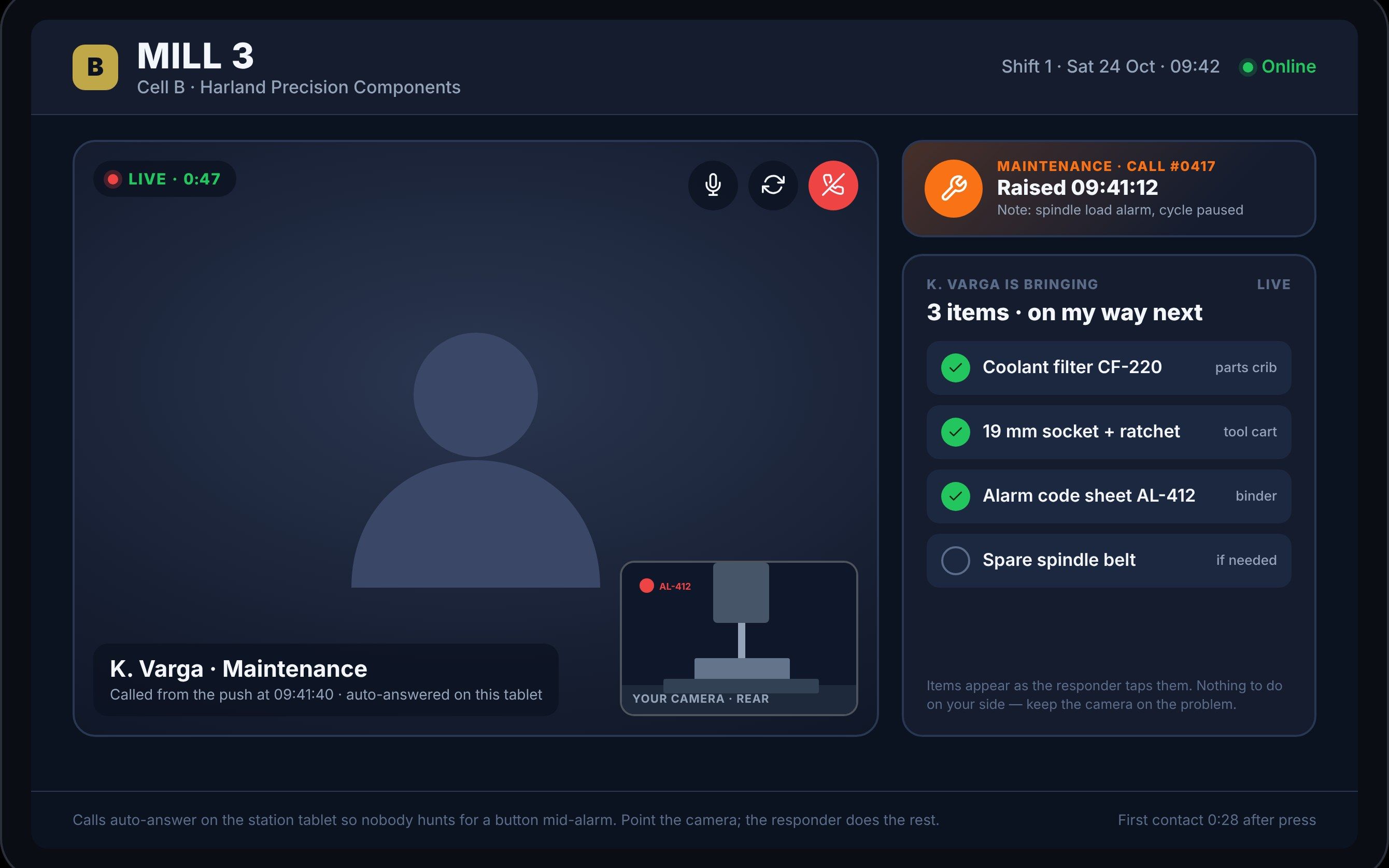
4.0 The responder sees the problem from the push and builds the bringing list on the call. Image -
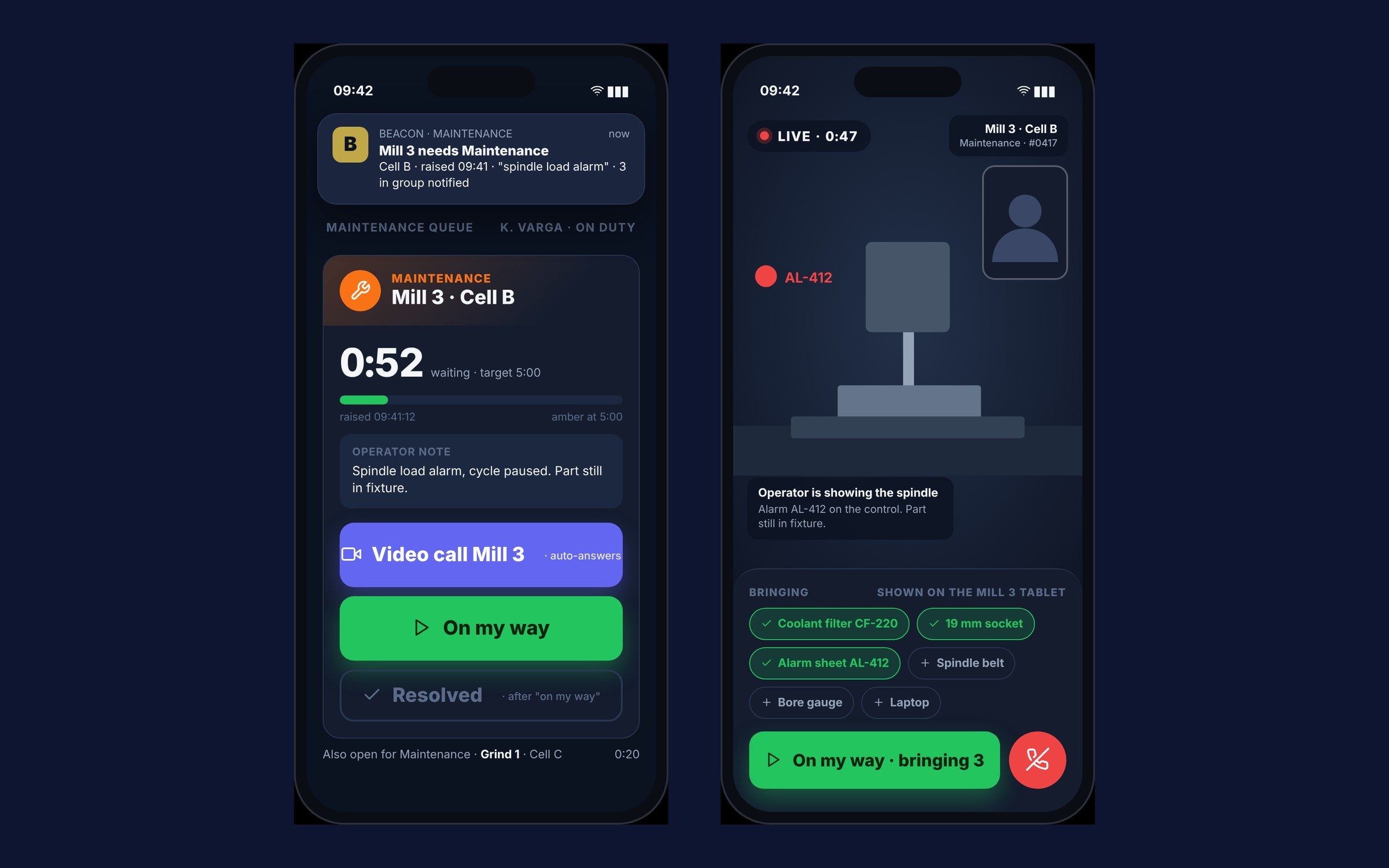
4.1 Push, video call, two taps. The second button unlocks only after the first. Image -
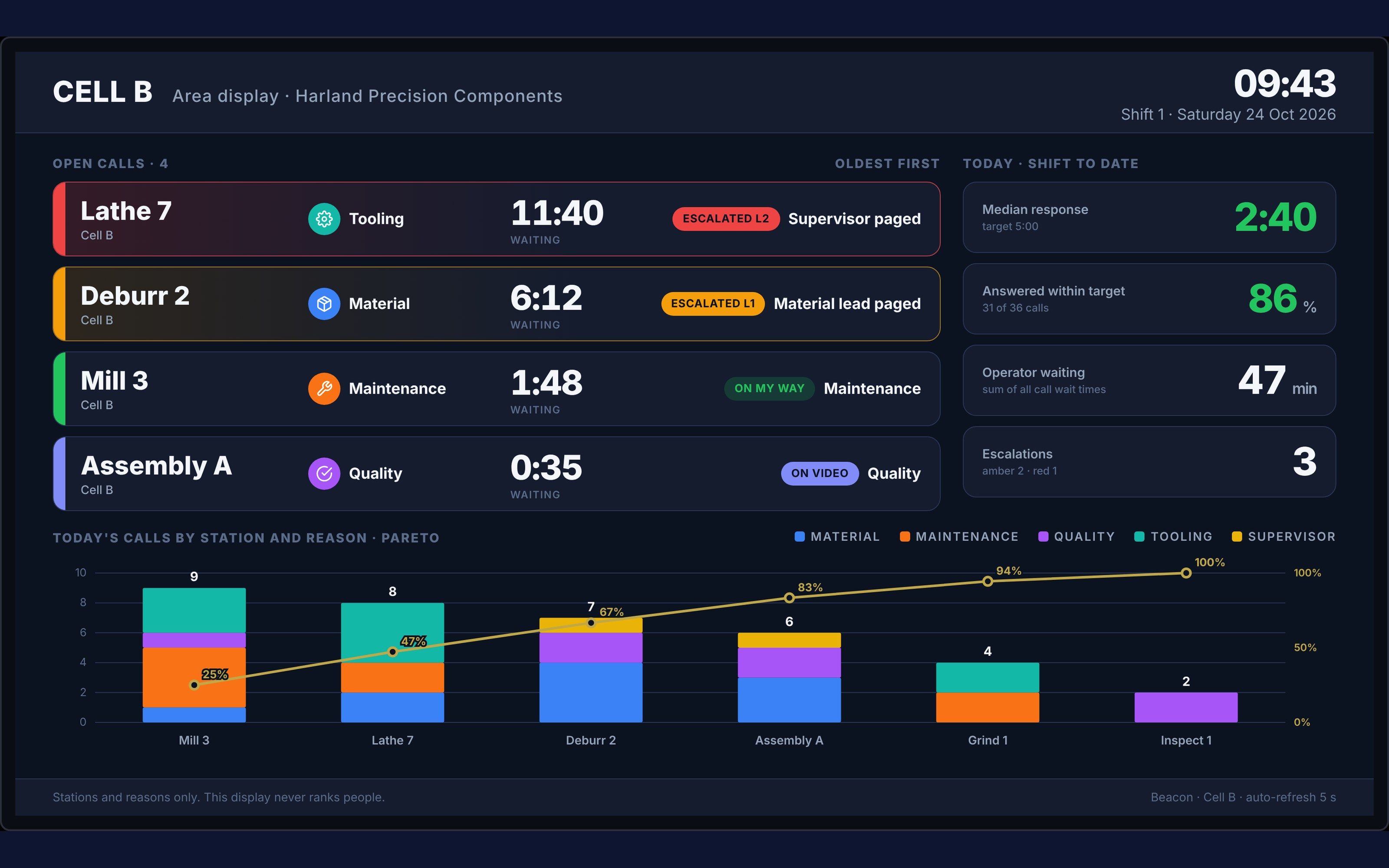
4.2 Stations and reasons on the display, never a leaderboard of people. Image -
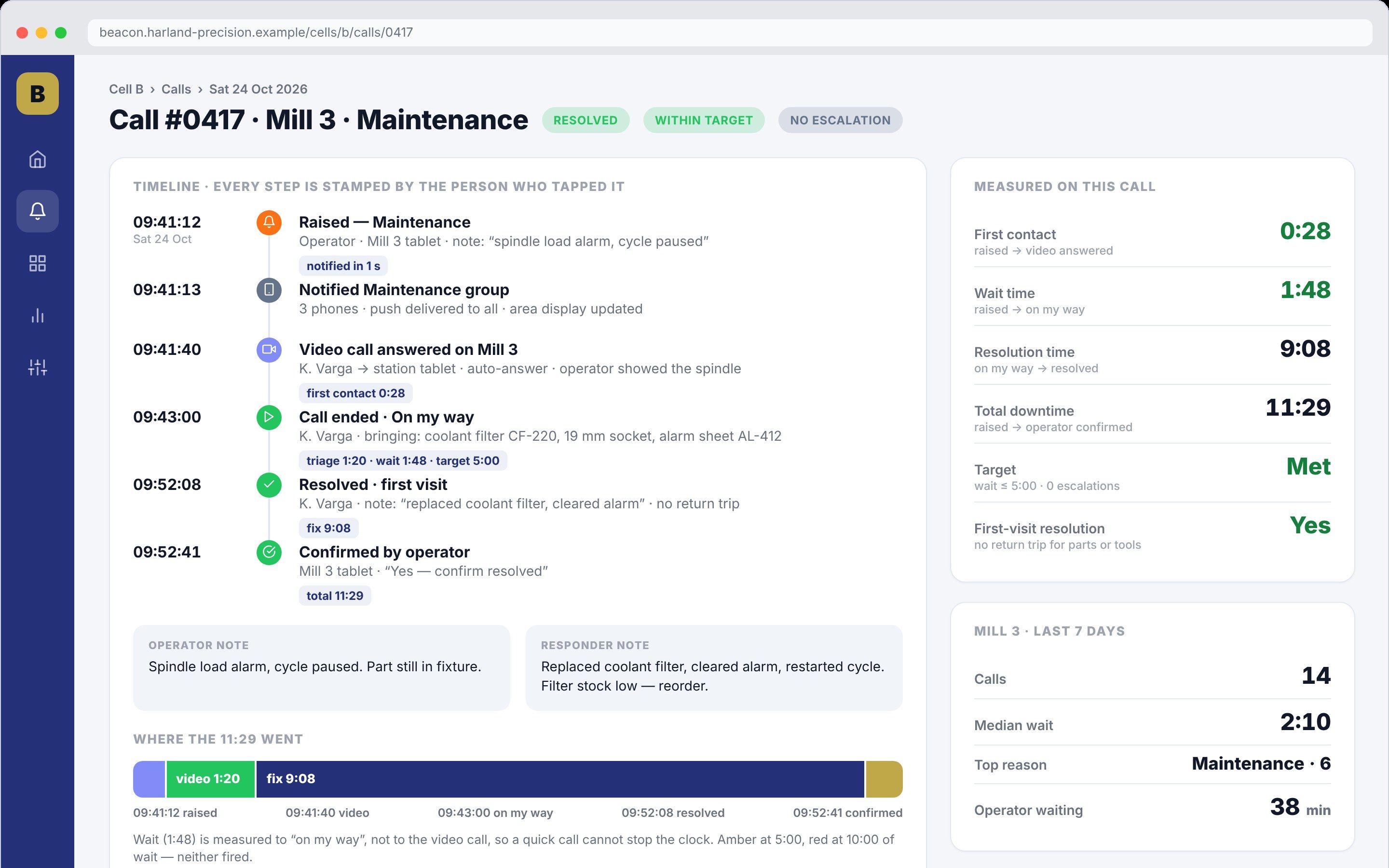
4.3 Nobody estimates and nobody fills in a form. The durations fall out of the stamps. Image -
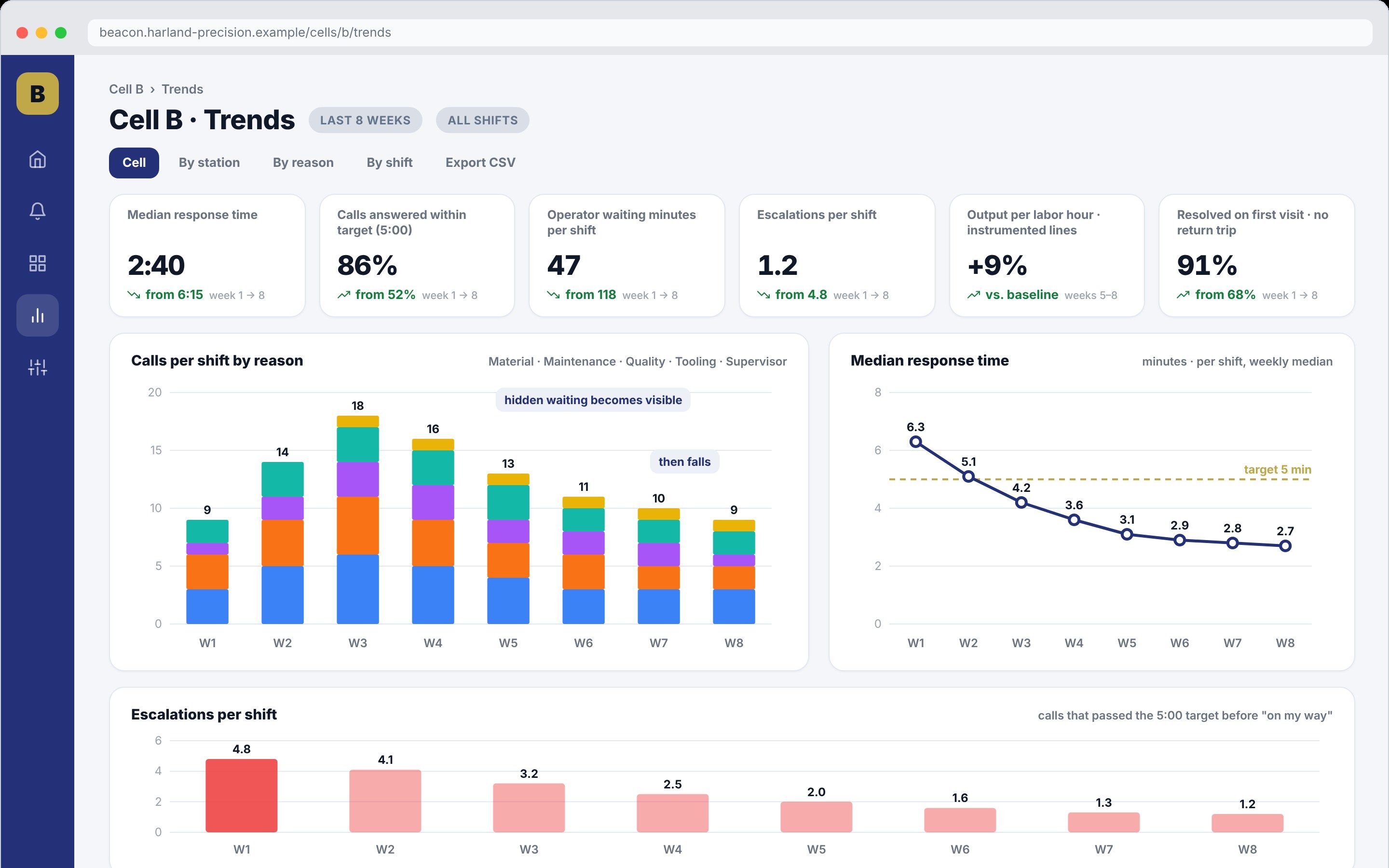
4.4 Calls rise first as hidden waiting surfaces, then fall as the causes are removed. Image