IdeaLoop: a closed-loop idea board for the shop floor
Concept Specified and mocked up, not yet deployed. Every plant, person, and figure in the screens is fictional.
- Role
- Concept and interface design
- Year
- 2026
- Tools
- Concept deckInterface mock-ups
Overview
A QR at every line opens a one-minute form. A decision within ten days, an owner within fourteen, two photos to close, and only the submitter can verify.
Problem
Most suggestion programs die because the program measures submissions, so the board fills with ideas nobody acts on.
Ideas go in and weeks pass. The submitter never hears back, so the second idea never comes. “Good idea” is not an assignment, so approved items sit in a list no one is accountable for. Decisions and results live in a spreadsheet in the office, and the floor never sees the loop close.
Approach
Close the loop in public and measure implementation instead of submissions.
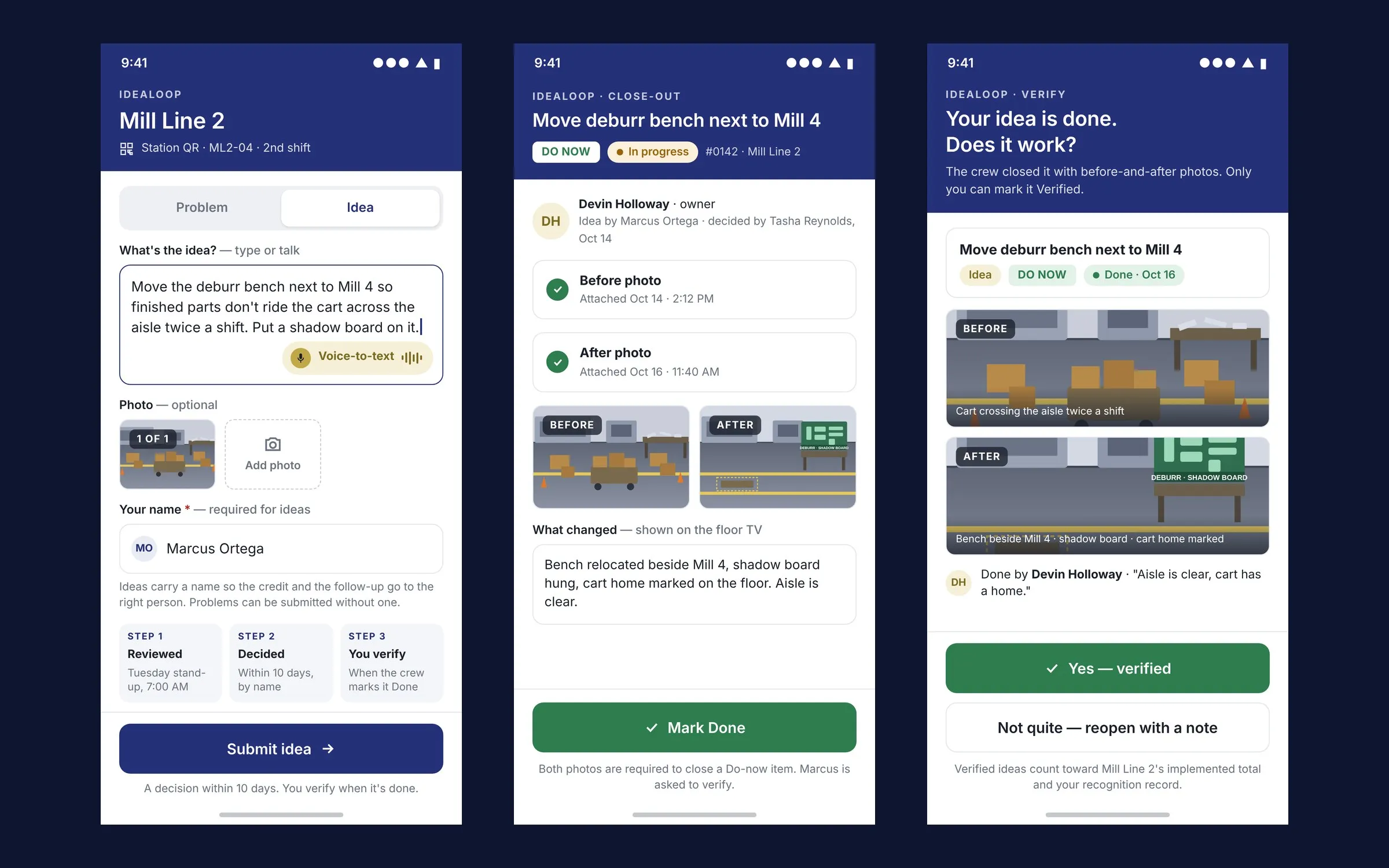
A QR code at each line opens a form in under a minute: problem or idea, voice-to-text for gloves and noise, a photo that becomes the “before”, and the area and shift already filled in. An idea needs a name so the credit and the verification go to the right person; a problem can be raised without one.
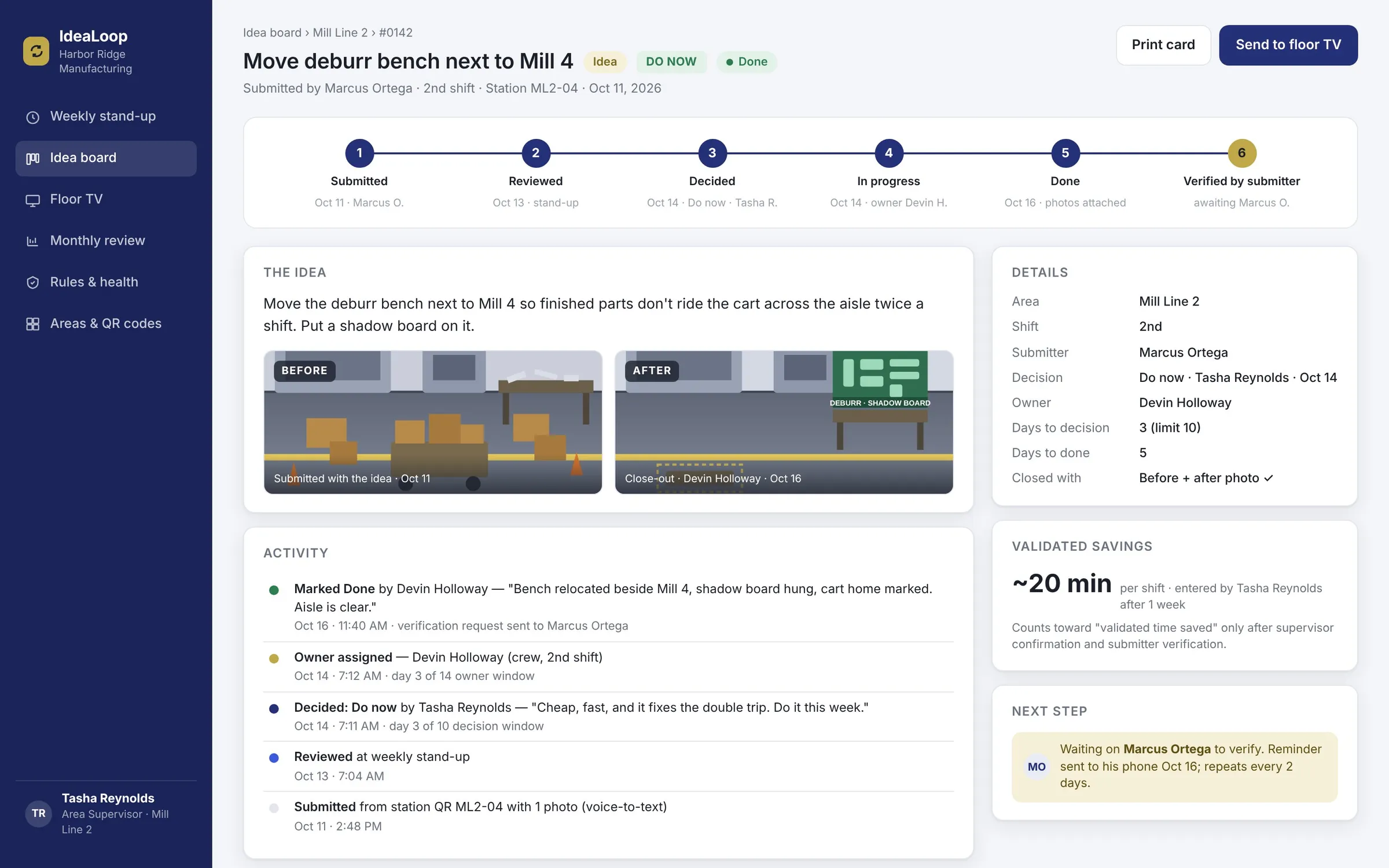
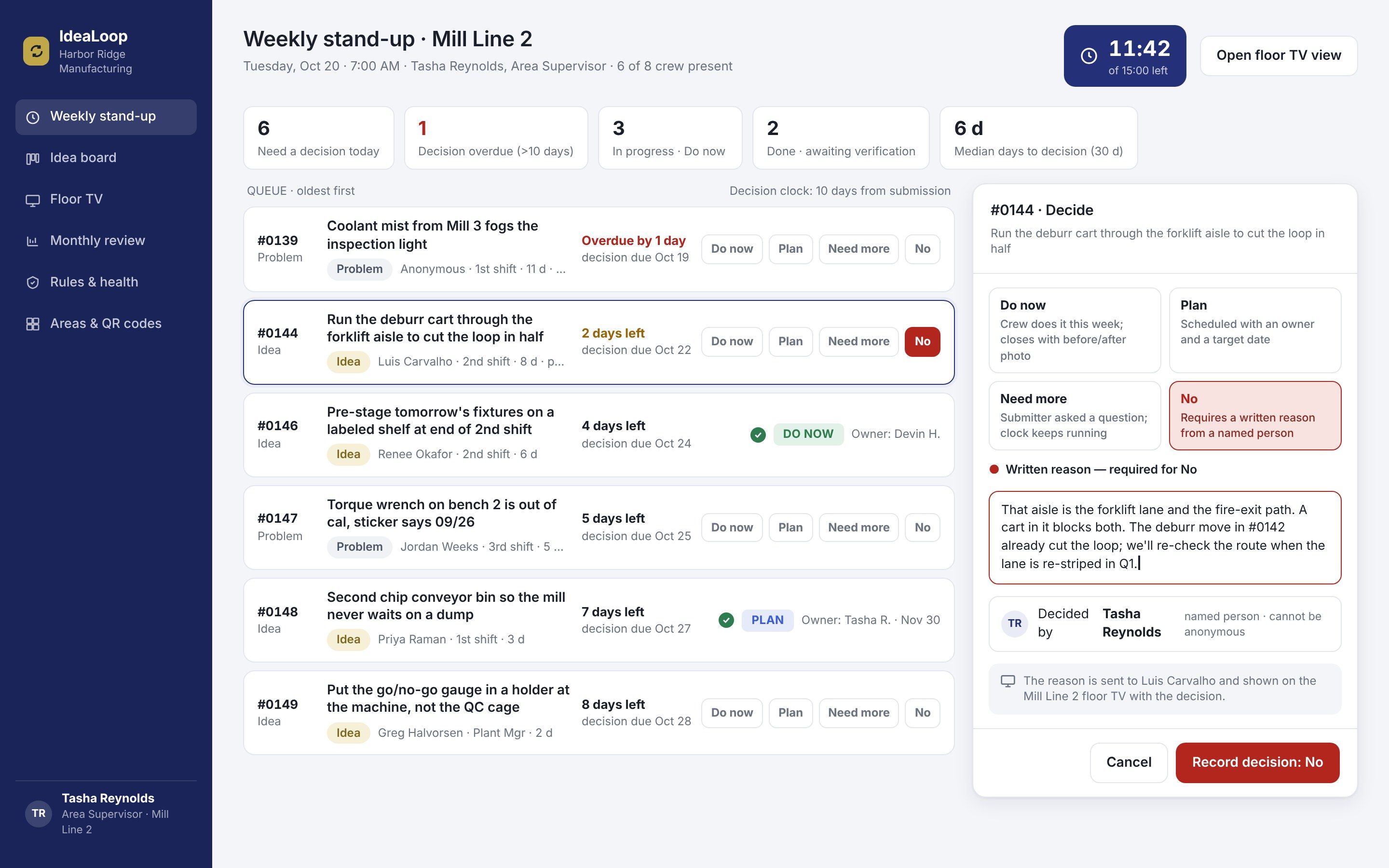
Six states, and a named person moves every one of them. The area supervisor reviews the queue in a fifteen-minute weekly stand-up, oldest first, with days left shown on every item. Each decision is one of Do now, Plan, Need more, or No, and the form will not save a No without a written reason from a named person. Do-now items are done by the crew and close only with a before-and-after photo. Marking Done sends a push to the submitter, and only they can mark it Verified; not fixed reopens it with a note, so there is no arguing in the hallway.
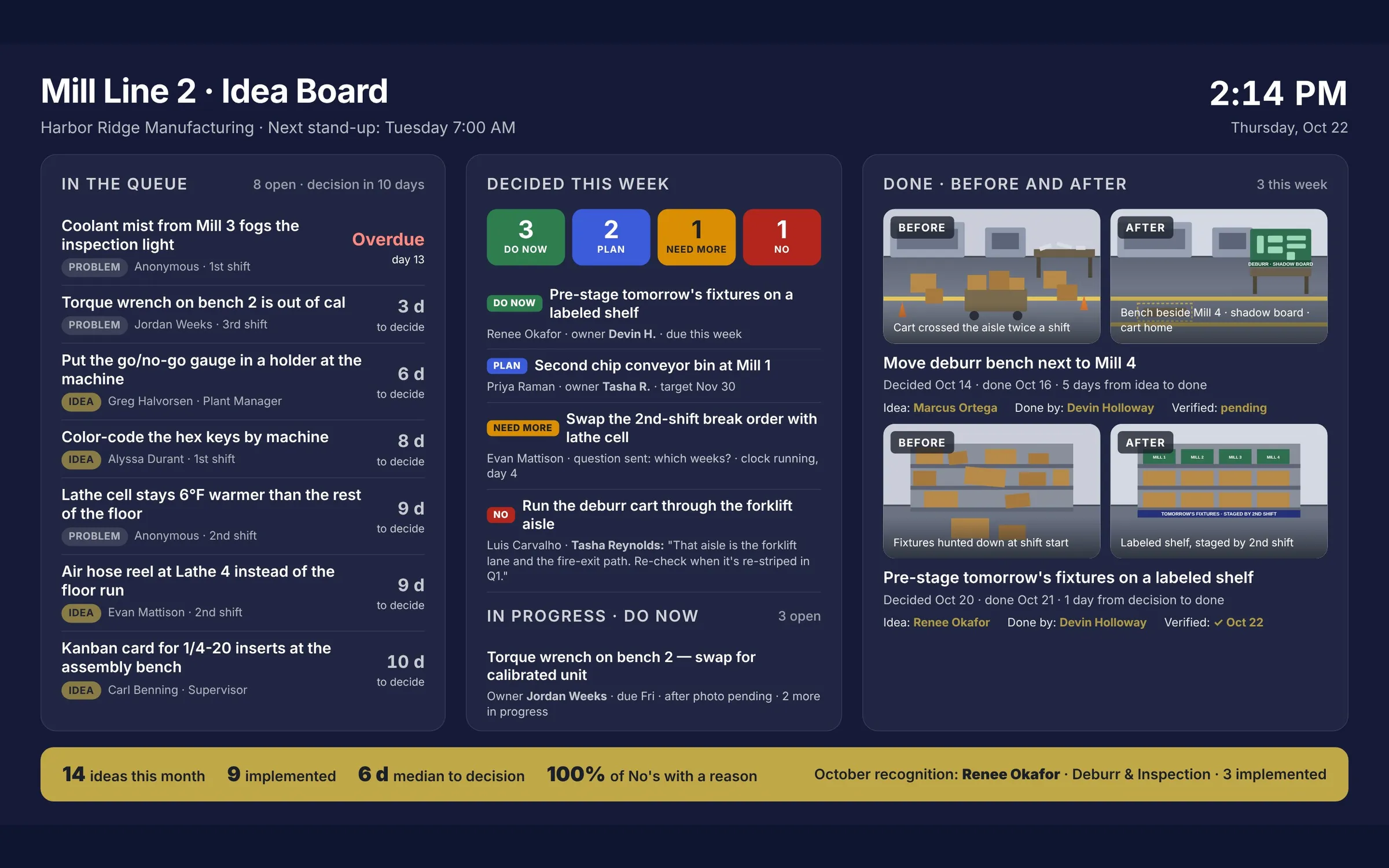
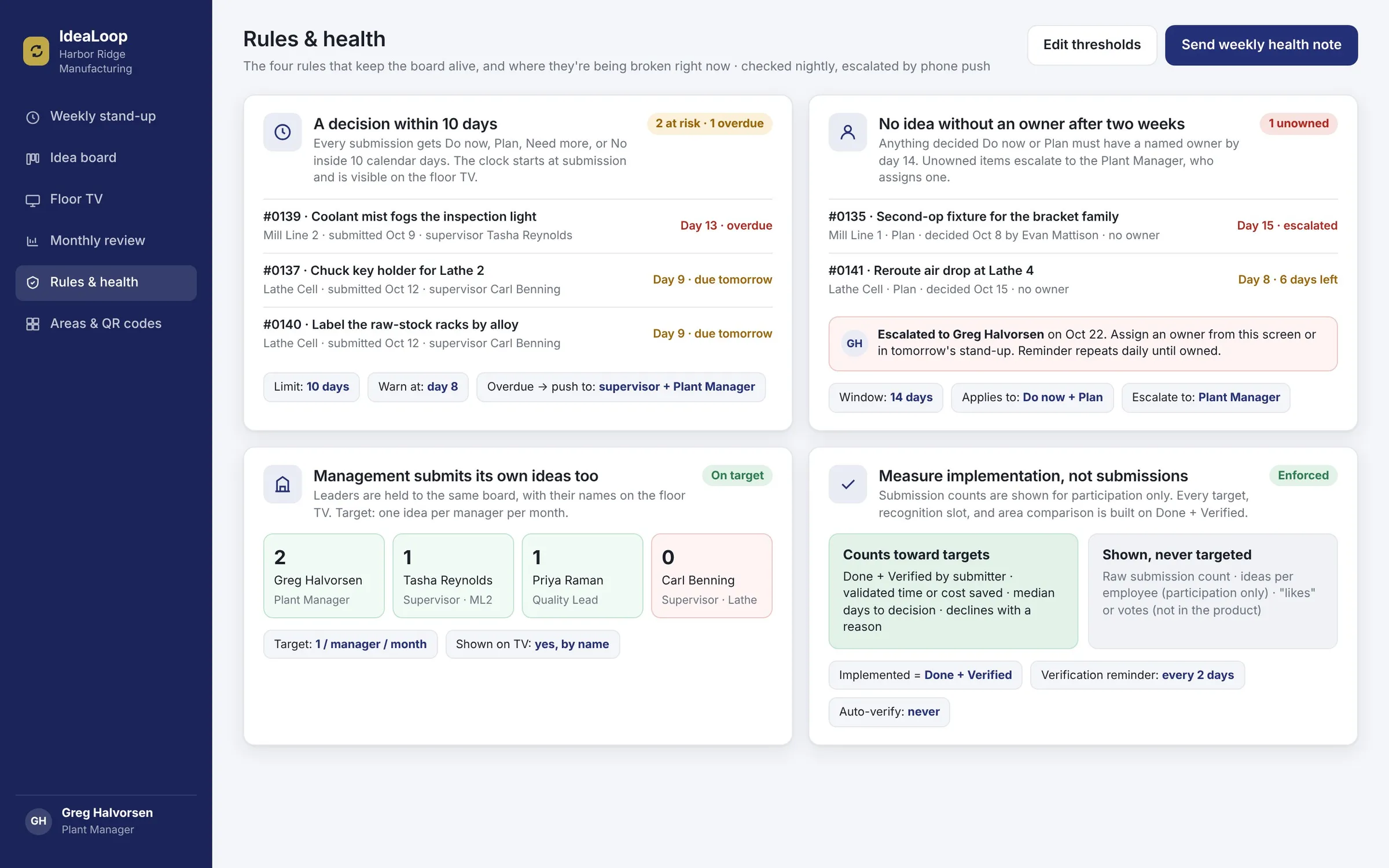
Four rules keep it alive, and the product enforces them: a decision within ten days, no idea without an owner after two weeks, management submits its own ideas by name, and every target and comparison is built on Done plus Verified. The Rules and health screen shows where each rule is being broken right now and who it has been escalated to. The floor TV shows the queue, the decisions, and the photo pairs with credit to whoever had the idea and whoever did the work.
Outcome
| Metric | Result |
|---|---|
| Status | Concept, in development |
| Decision | Within 10 days, or it escalates |
| Owner | Within 14 days, or it escalates |
| Counted | Done and verified only, never submissions |
Built to move four numbers, and to report a fifth without targeting it.
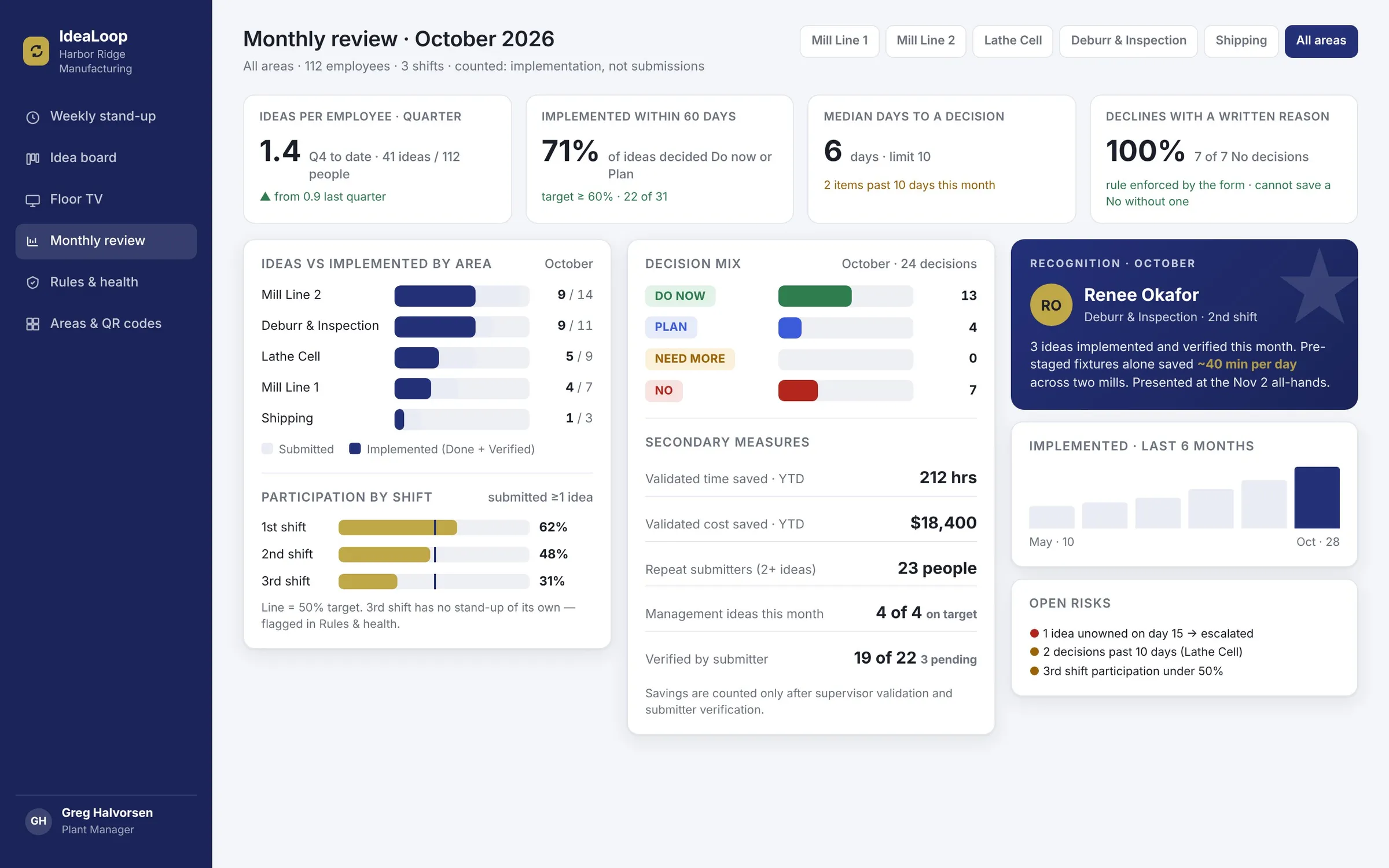
Median days to a decision, under ten. Share of decided items implemented and verified within sixty days, which is the number that says whether the loop closes. Declines carrying a written reason, at one hundred percent, because a silent No ends the program. Participation by shift, shown so the stand-up can see which shift it is not reaching, never used as a target on its own. Validated savings and repeat submitters sit underneath as evidence that the ideas matter and that people come back.
Nothing here has run on a floor yet. The screens are a specification with fictional data, and the numbers on them are placeholders.
Gallery
-
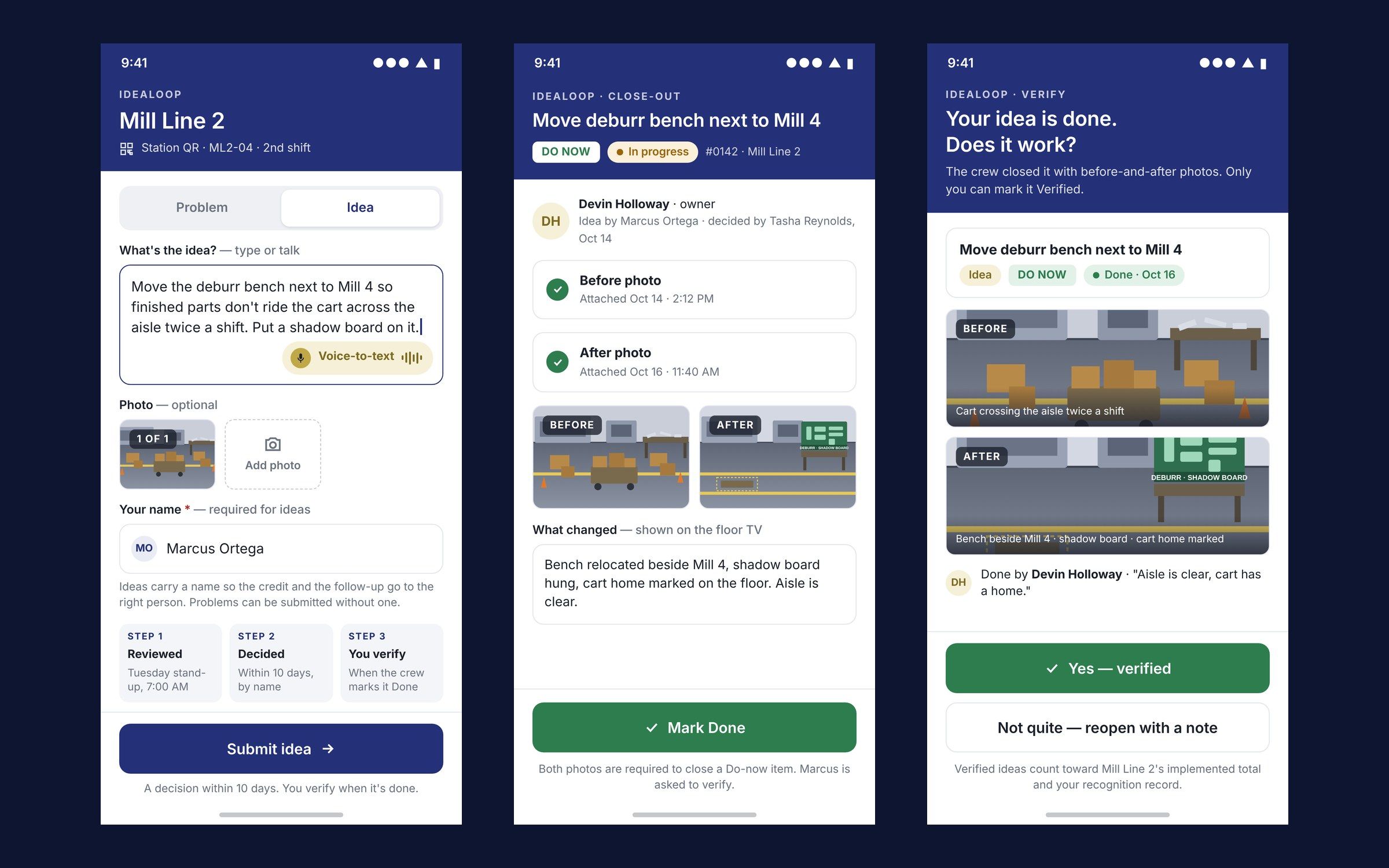
4.0 Submit in a minute, close with two photos, and the person who raised it signs off. Image -
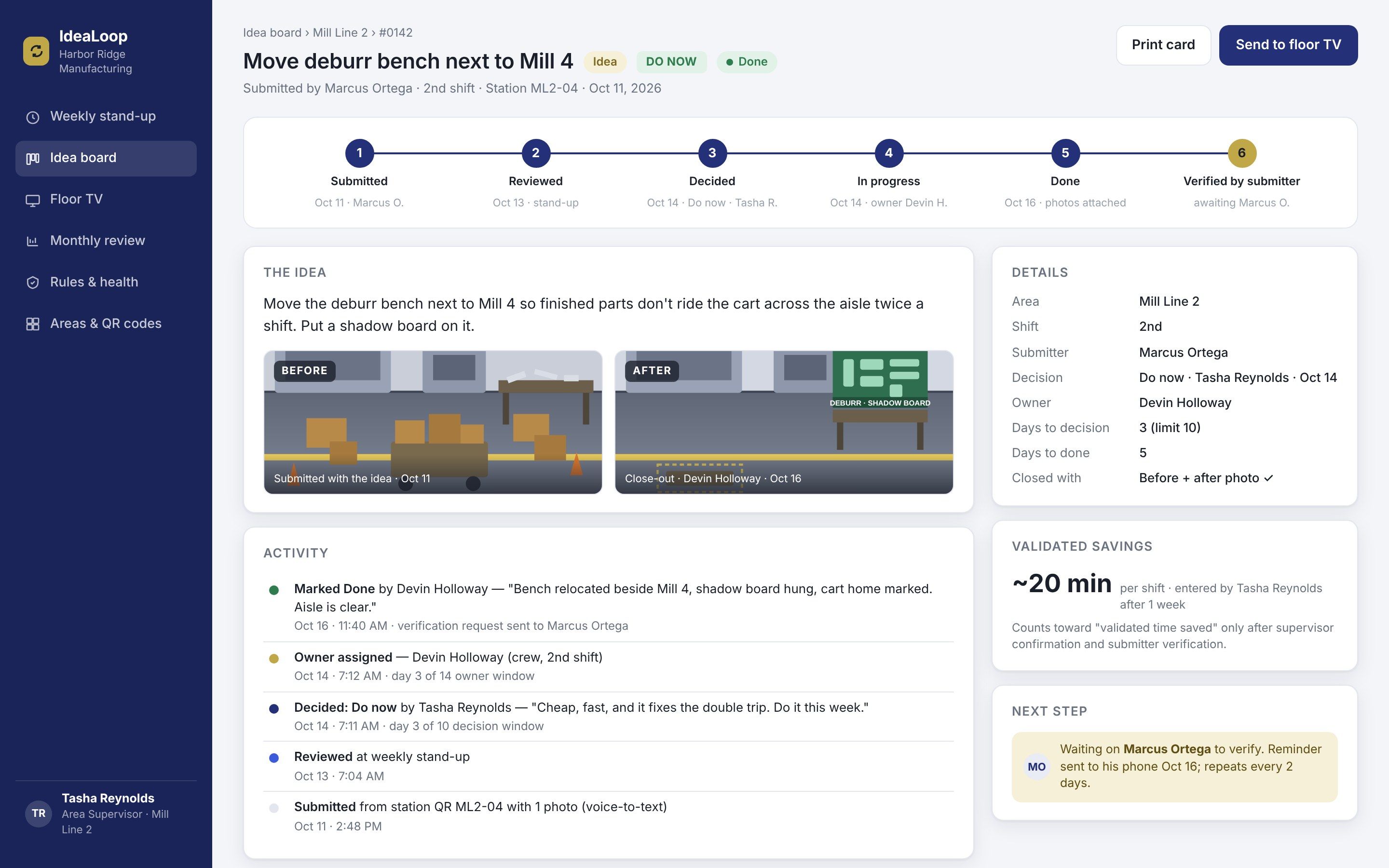
4.1 Every transition is stamped with who and when, and how many days into the window. Image -
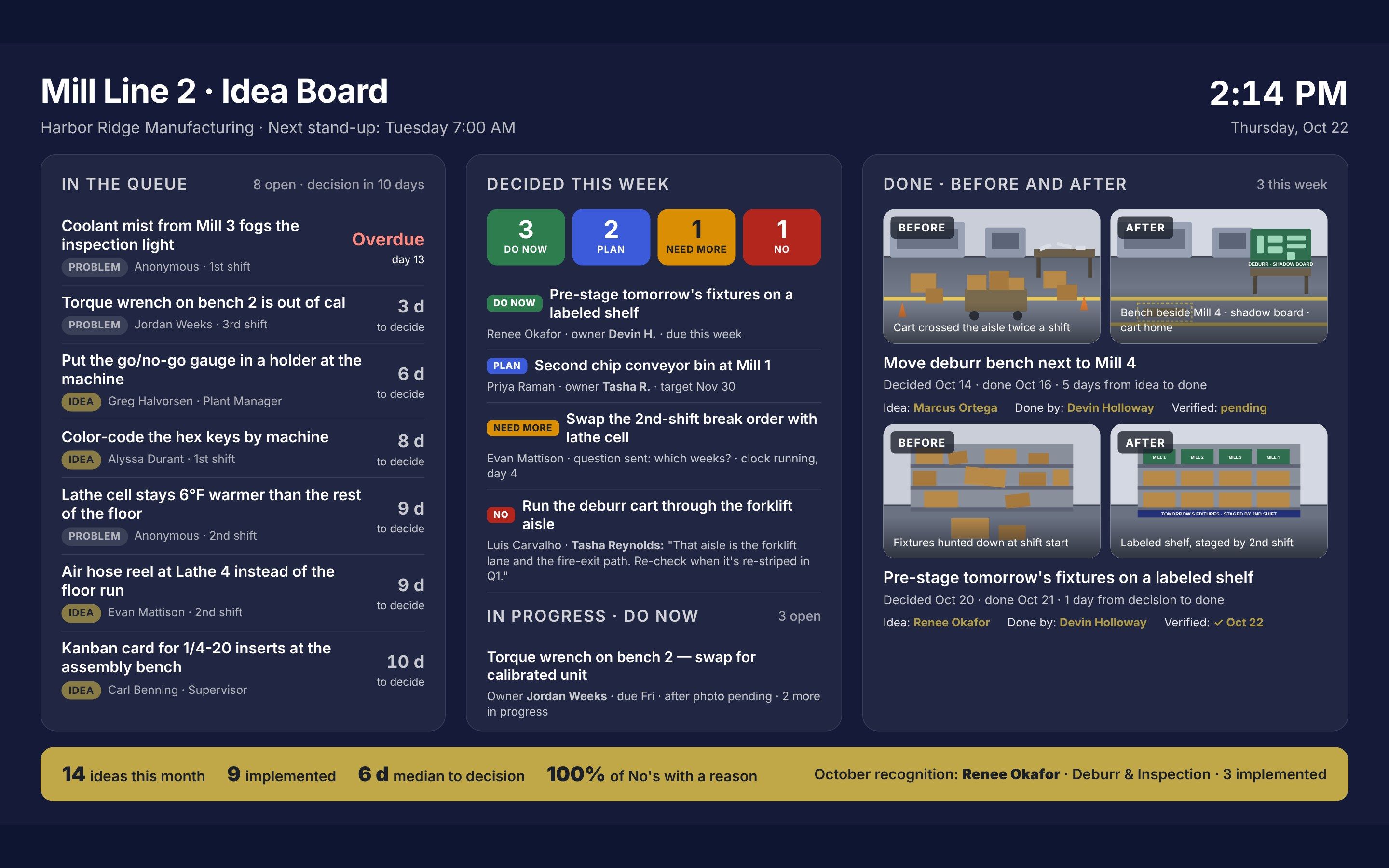
4.2 The queue, the decisions, and the photos, on the floor where the ideas came from. Image -
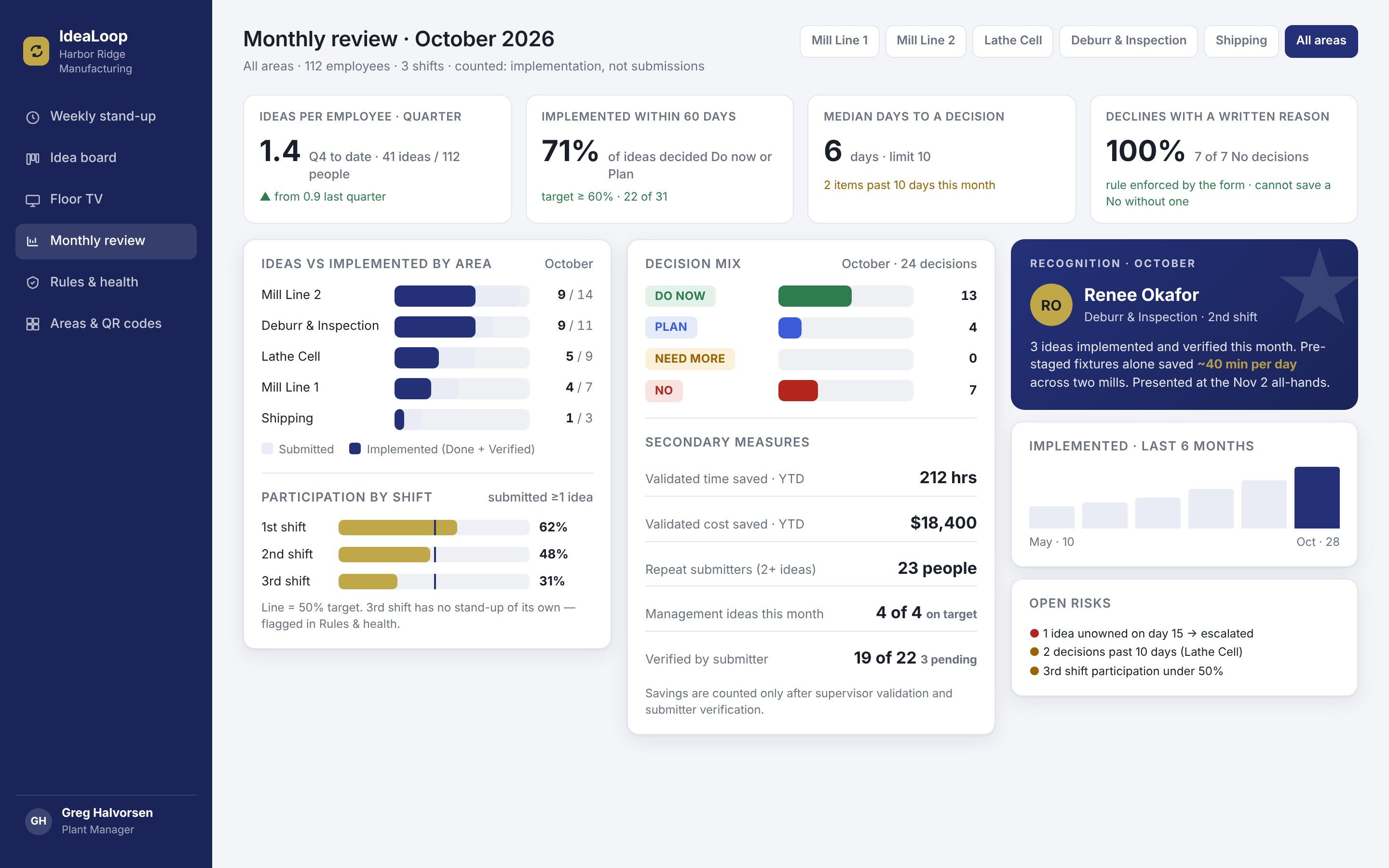
4.3 Areas are compared on what was implemented, never on what was submitted. Image -
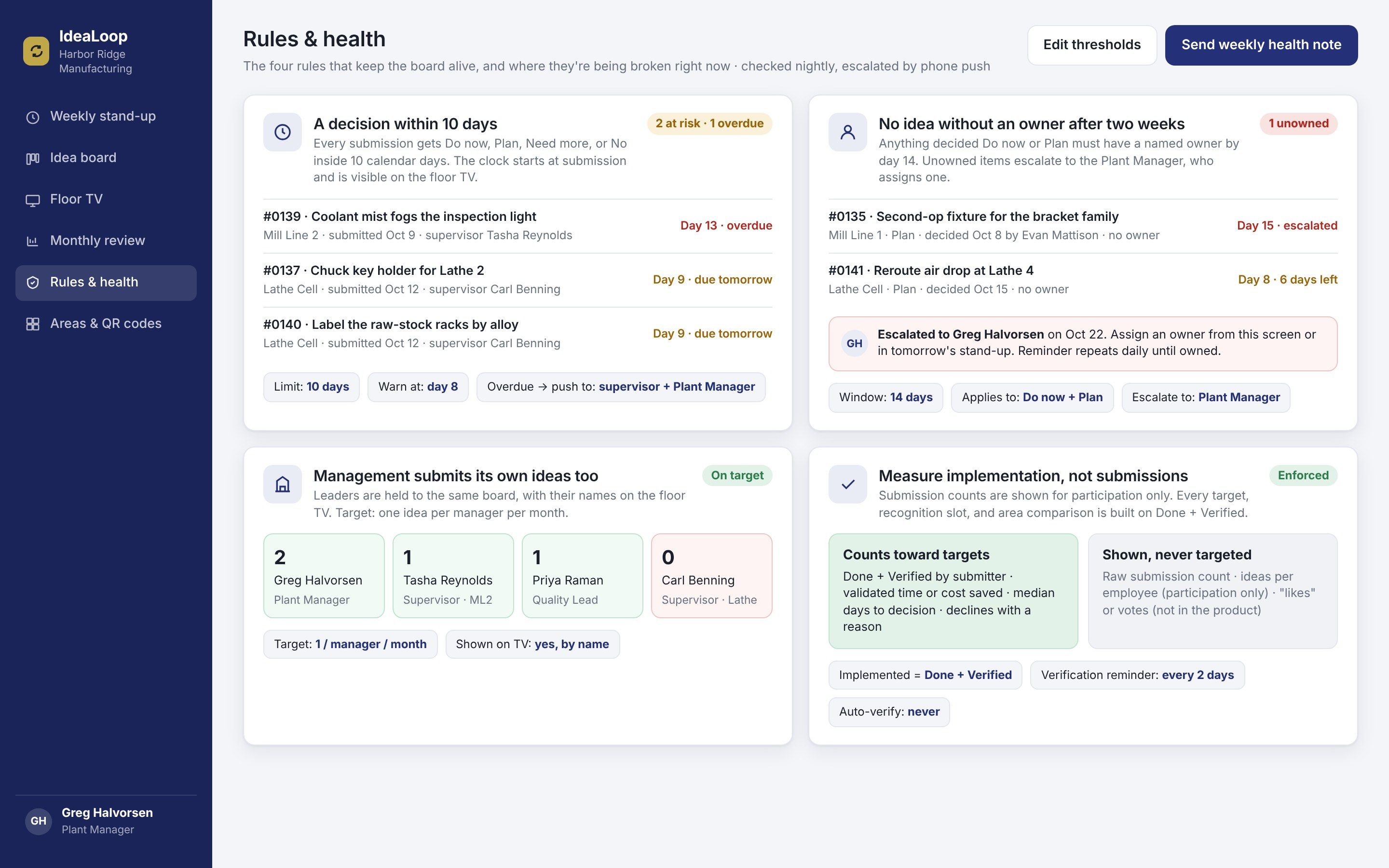
4.4 Four rules keep it alive, and the product enforces them. Image