Pneumatic tube-and-fitting assembly station for a medical customer
- Role
- Primary designer
- Year
- 2026
- Tools
- Autodesk Inventor 2025
- Materials
- Stainless steelBlack anodized aluminumMarkforged Onyx
- Processes
- CNC millingWire EDMJig grindingAnodizingFDM printing
Overview
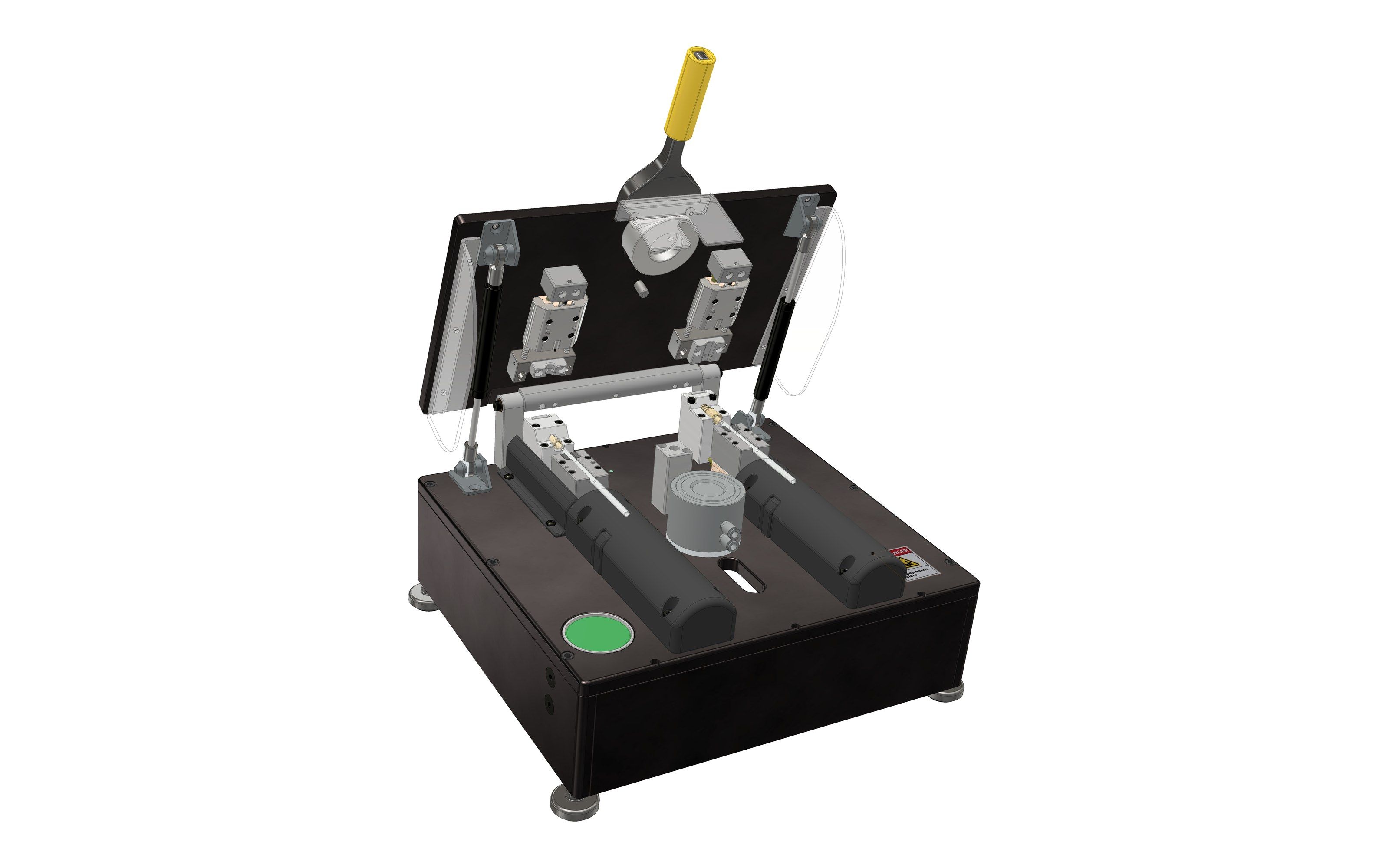
A benchtop pneumatic station that clamps, locates, and presses tubing onto round-body fittings for a medical customer, designed in Inventor.
Problem
Joining tubing to round-body fittings by hand is not repeatable, and it keeps the operator’s fingers at the joint during the press.
A medical customer needed the joint made the same way every time. Assembled by hand, seating depth and alignment depend on the operator’s grip and push, and every press happens with a hand next to the fitting.
The station had to hold both halves of each joint in known positions, apply the press stroke pneumatically, keep hands clear while it does, and fit on a bench with shop air as its only utility. Tooling in contact with the parts had to be corrosion resistant and easy to clean.
Approach
Every part-contact surface lives on the tooling, and every force comes from the pneumatics.
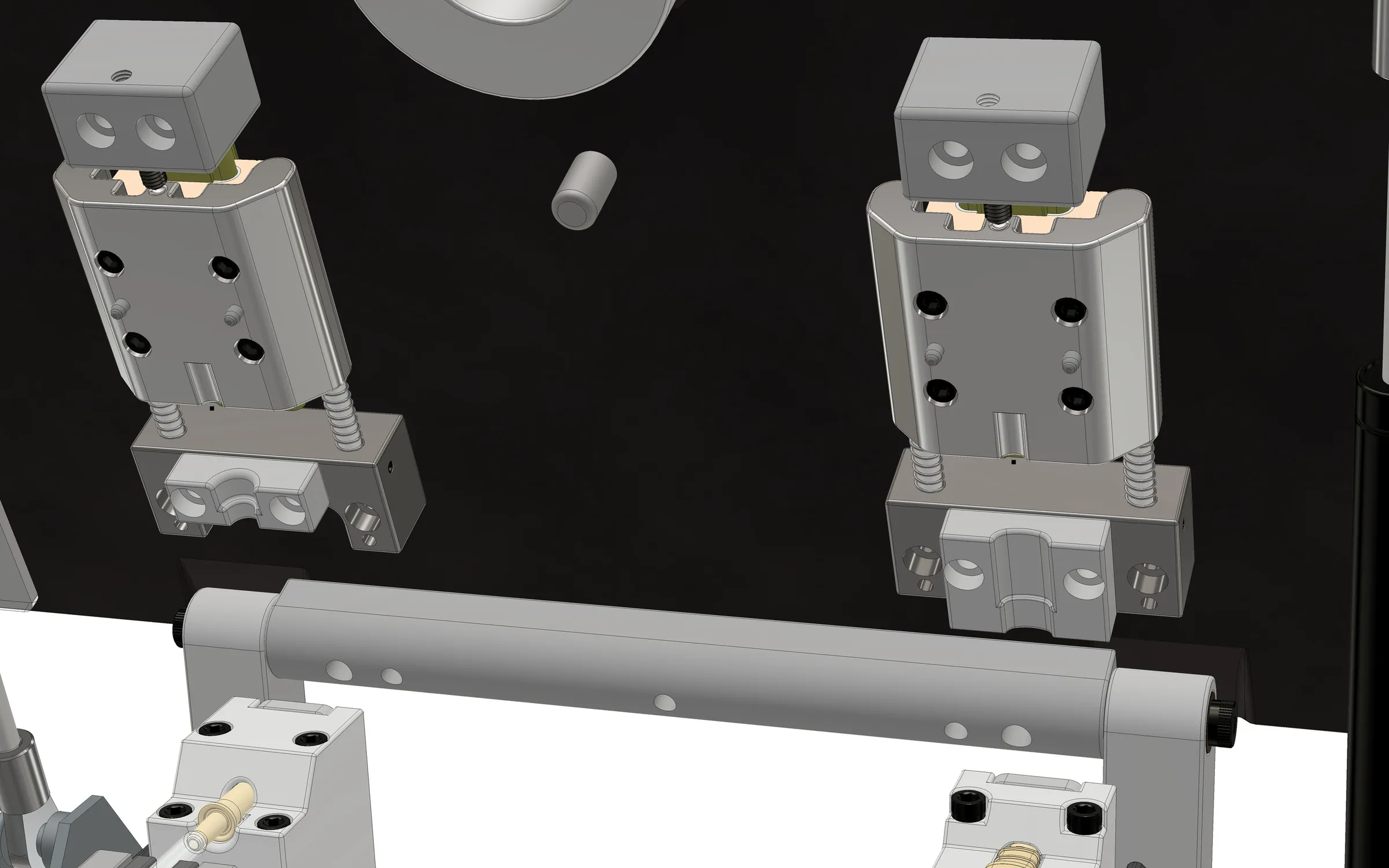
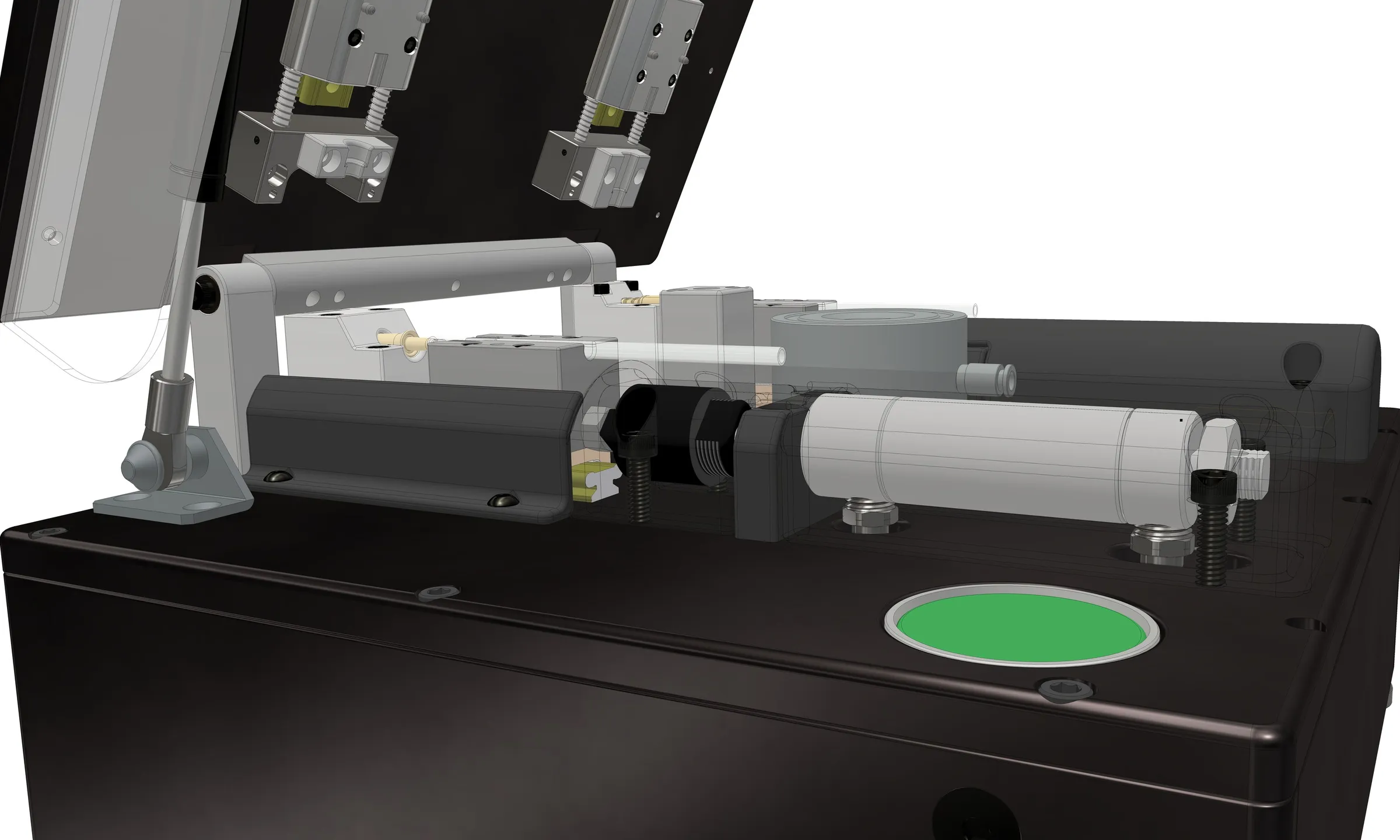
A hinged tool plate carries two spring-loaded fitting clamps; it swings open on gas springs for loading and closes against a pivot bar that sets its position. Below it, the fittings sit in machined nests on a slide carriage, and a pneumatic cylinder drives the press stroke once the plate is closed and the start button is pressed.
Materials follow the job of each part. Nests and clamp details that touch product are stainless steel. The base, tool plate, and structural brackets are black anodized aluminum. Guides and covers with shape but little load are printed in Markforged Onyx, which kept lead time and cost down on parts that would otherwise be five-axis work.
The nests are detailed for inspection as much as for machining. Locating features are dimensioned from a common datum, dowel bores carry a 0.001 inch band, the counterbores are called out to be cut after the wire EDM operation so the ground surfaces are not disturbed, and the fitting relief is defined by angle and depth rather than by a profile that would have needed a CMM program to verify.
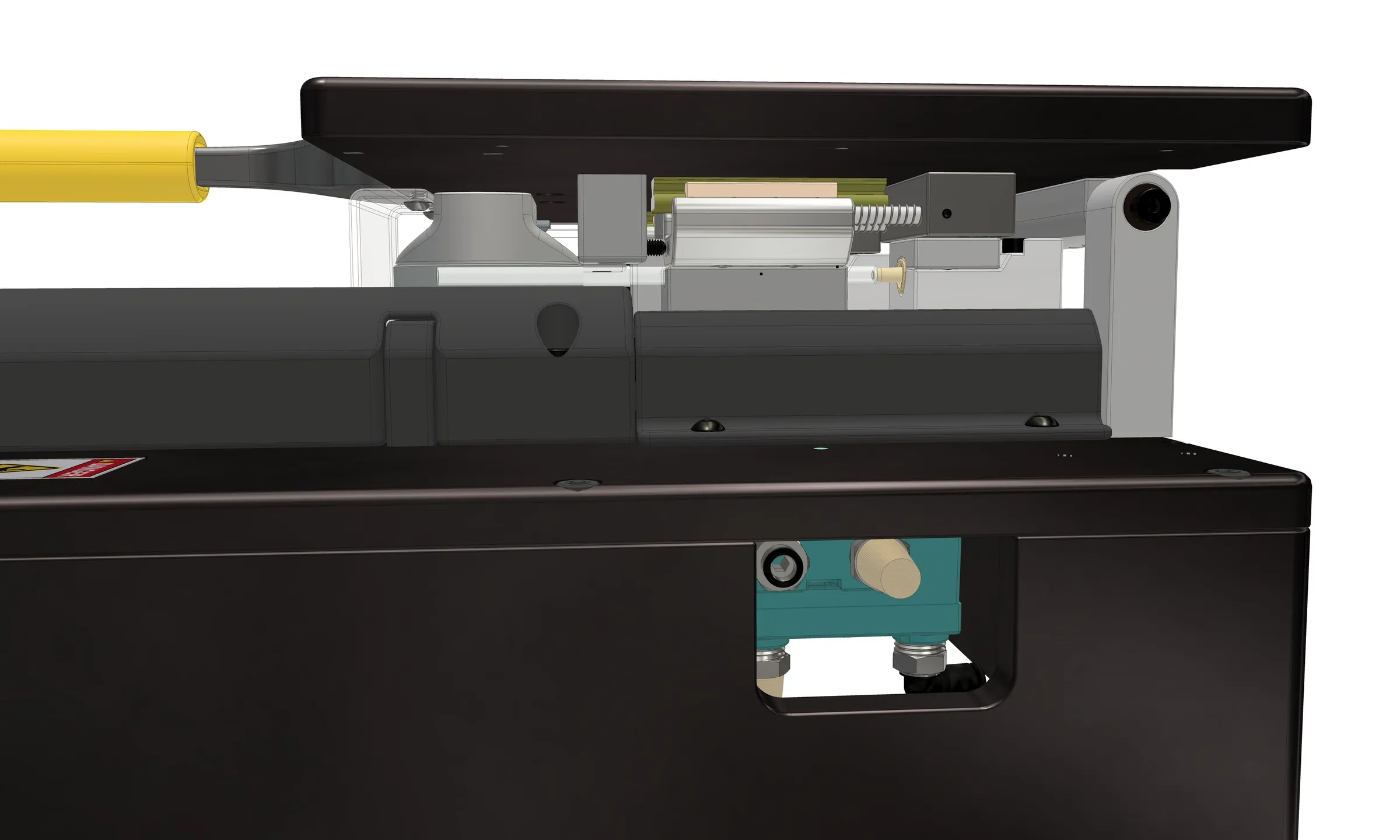
The pneumatic valve and plumbing are mounted inside the base with a cutout for service access, so the working surface stays clear and the station can be wiped down.
Interactive model
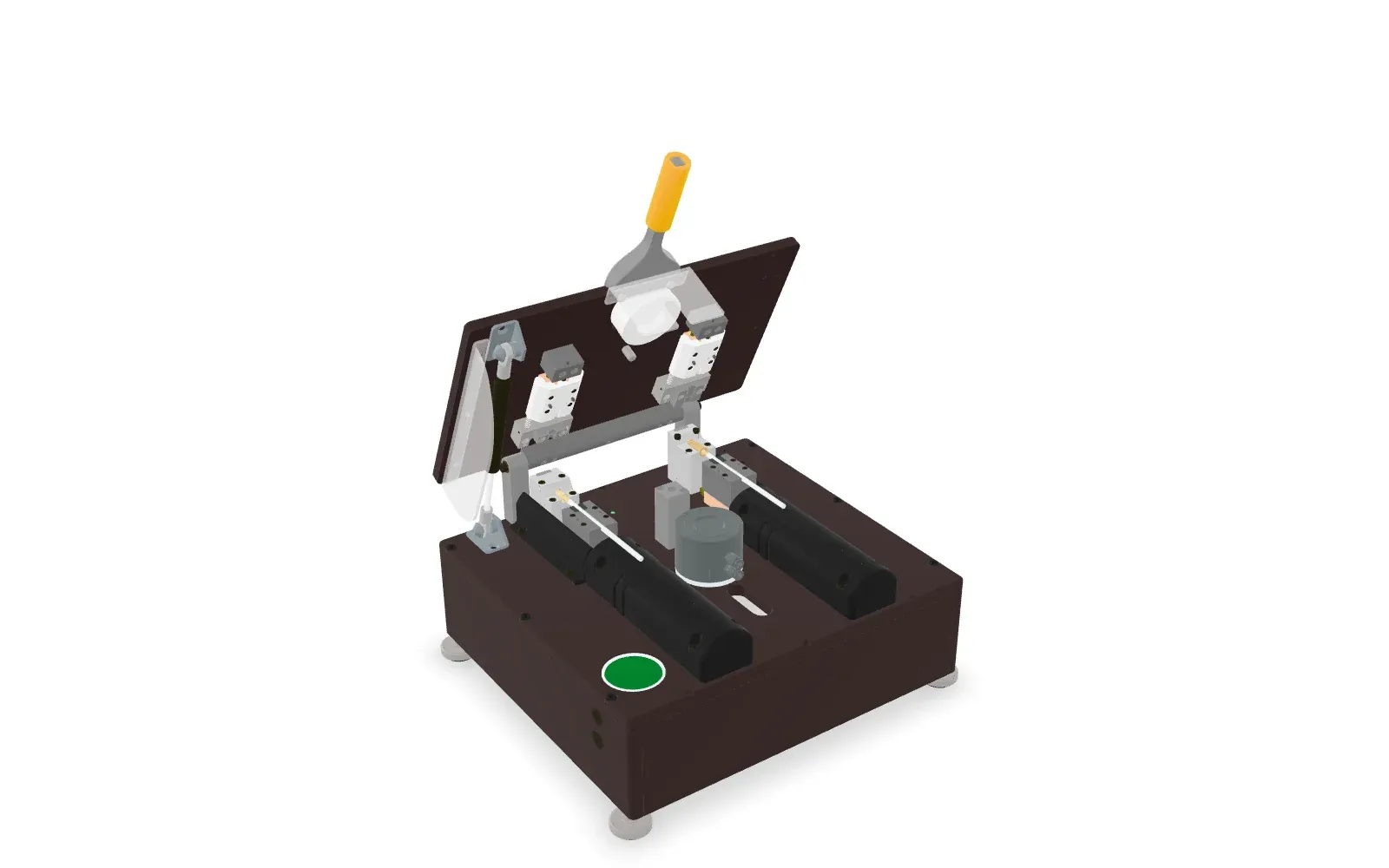
Drag to rotate. Scroll or pinch to zoom.
The model could not be loaded.
Drawings
Previews are sanitized. Select a drawing to enlarge it.
-
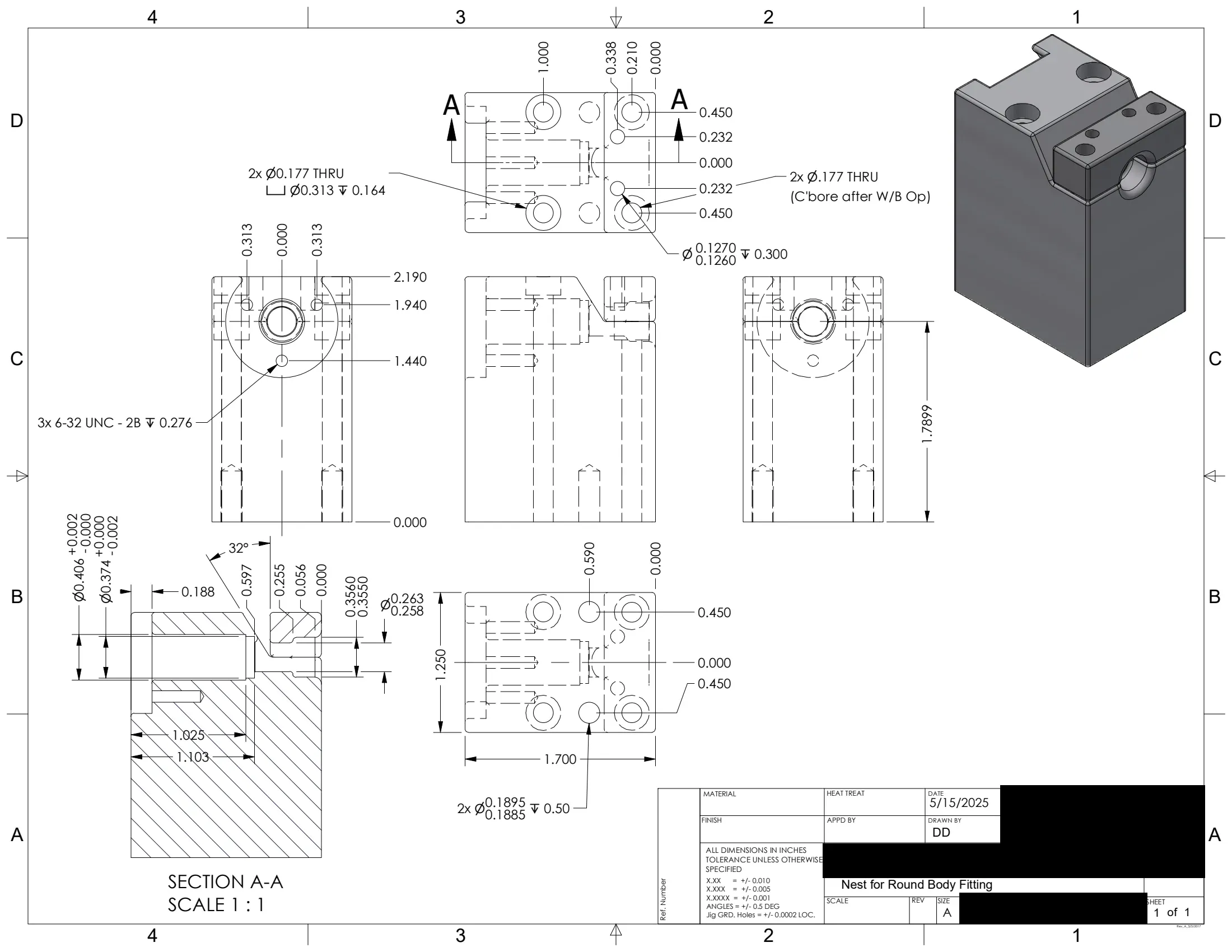
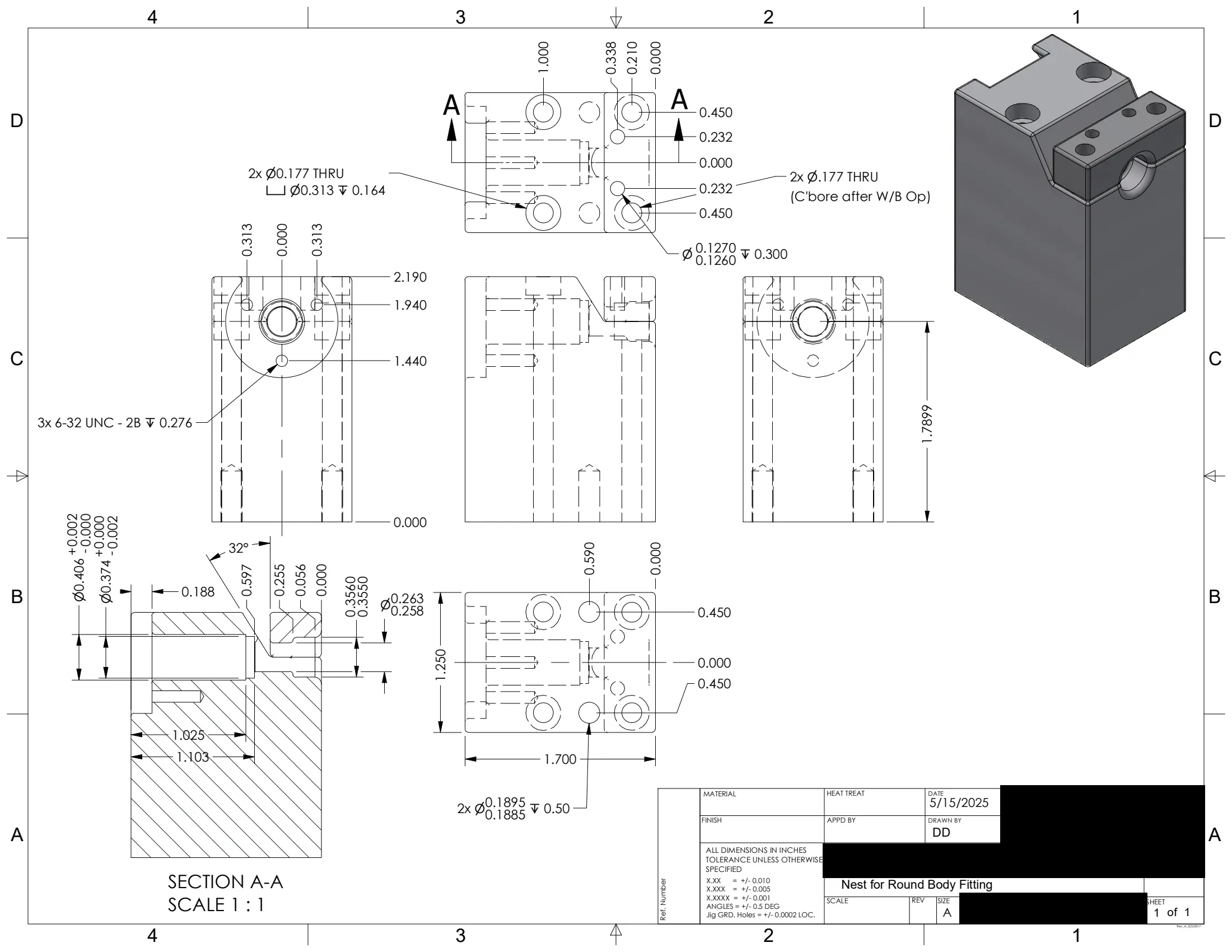
4.0 Nest for the round-body fitting. Dowel bores are held to a 0.001 in band and the counterbores are cut after the wire EDM operation. Customer and job identifiers are redacted. Drawing
Outcome
| Metric | Result |
|---|---|
| Status | Designed and released, 2026 |
| Modeled components | 101 |
The station was designed and released in 2026 as a complete model of 101 components, with production drawings for the machined tooling.
Gallery
-
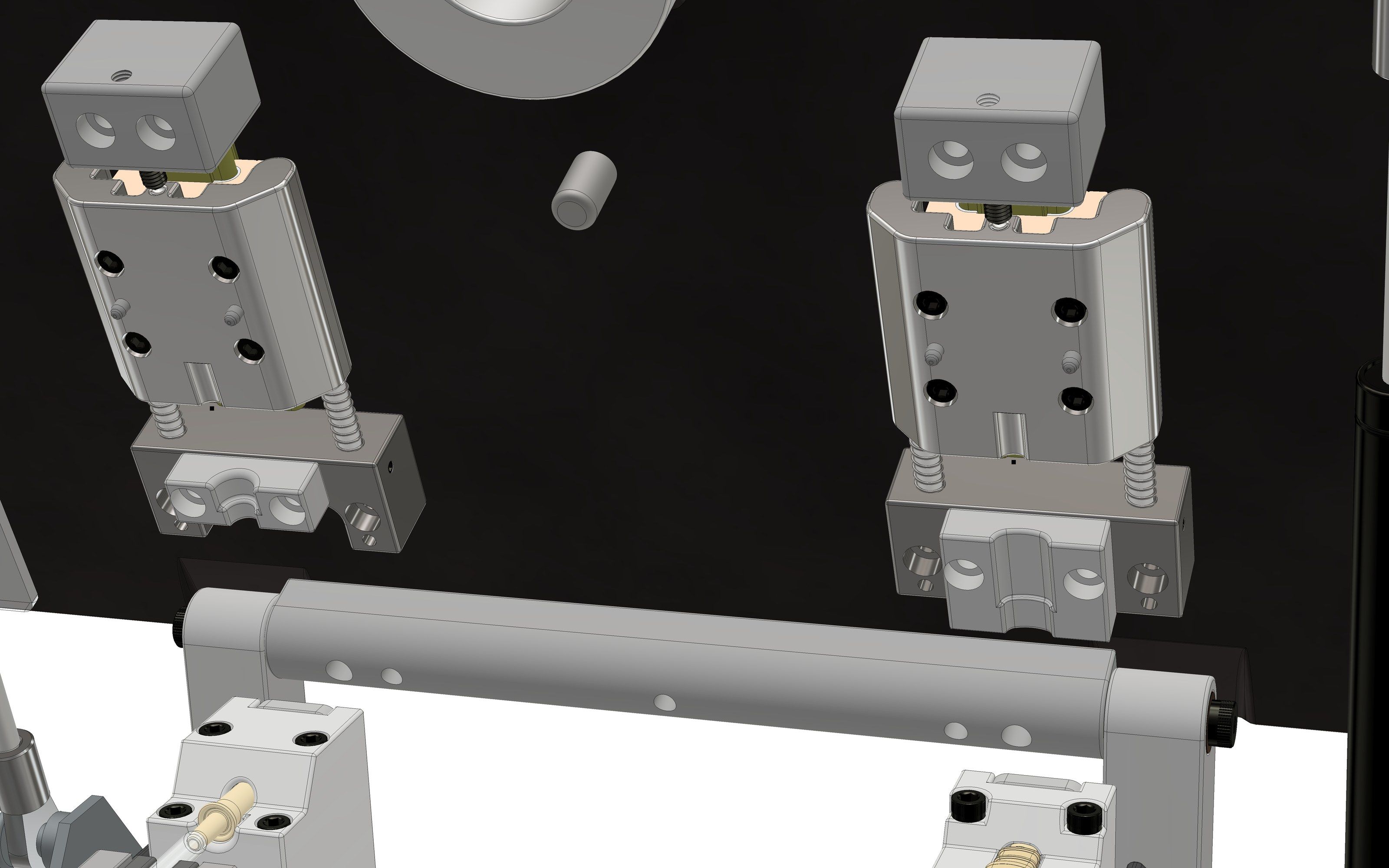
6.0 Upper clamps and lower nests. Each fitting is captured on both sides of the joint before the press stroke. Image -
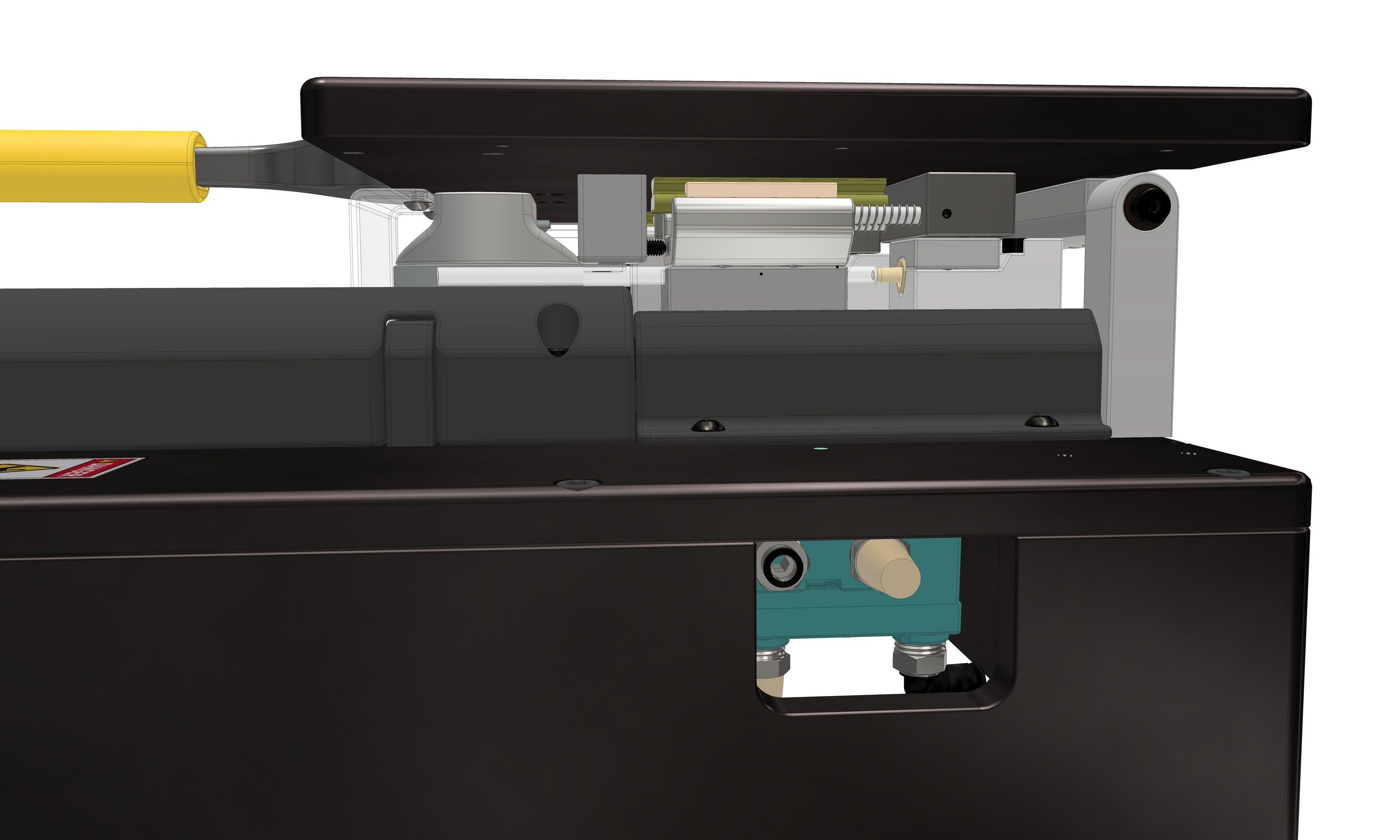
6.1 Tool plate lowered. The valve and fittings live inside the base so the top surface stays clear. Image -
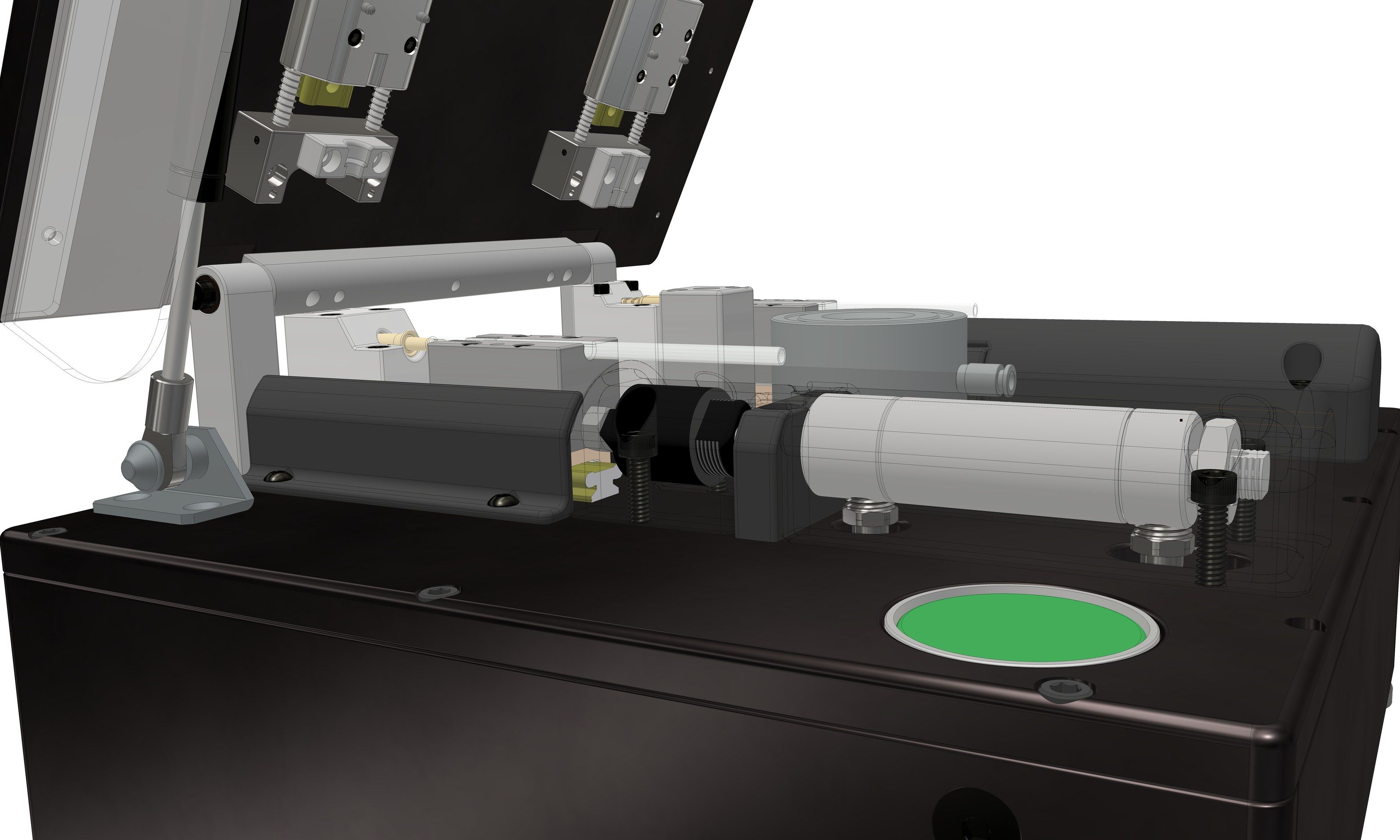
6.2 Press cylinder, nest carriage, and the single start button. Image -
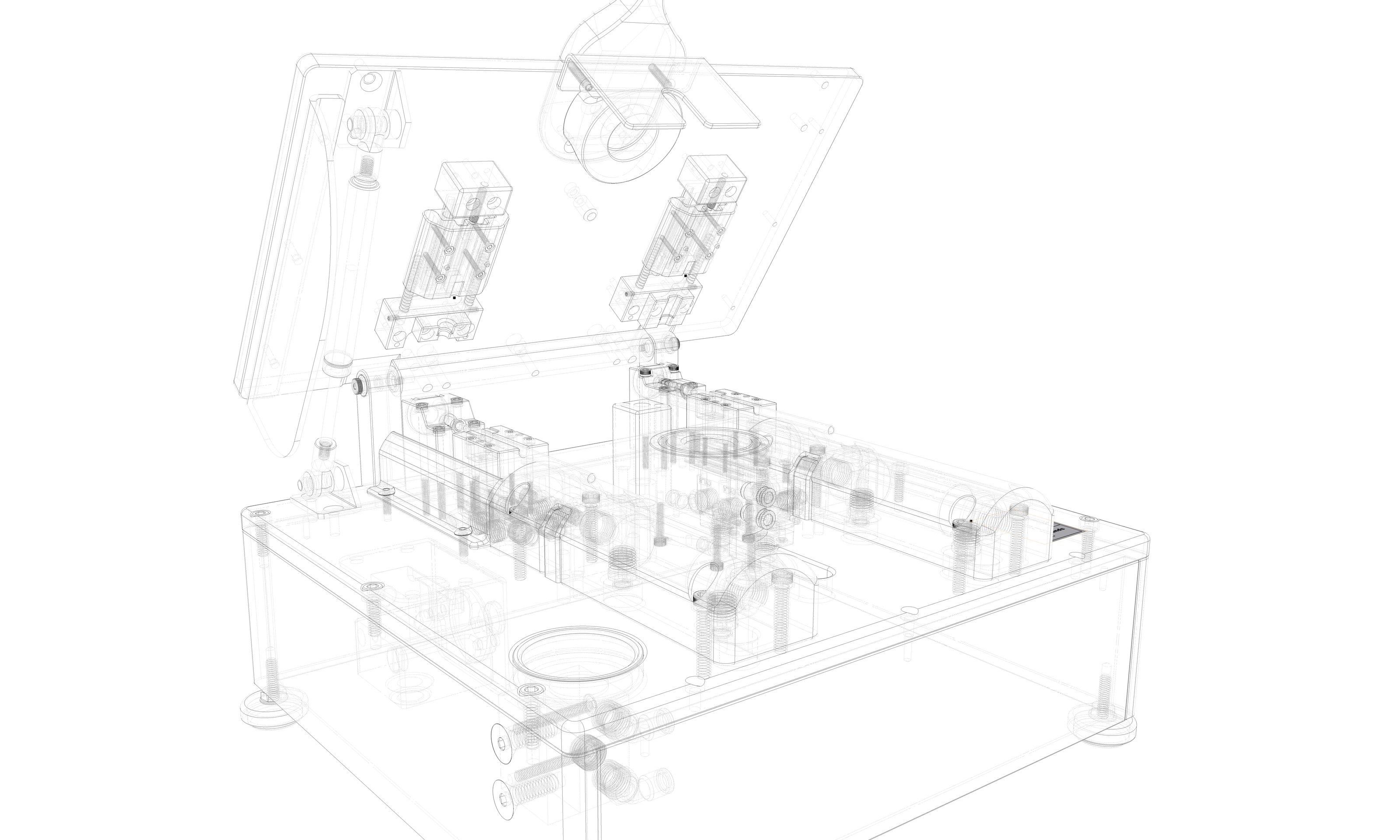
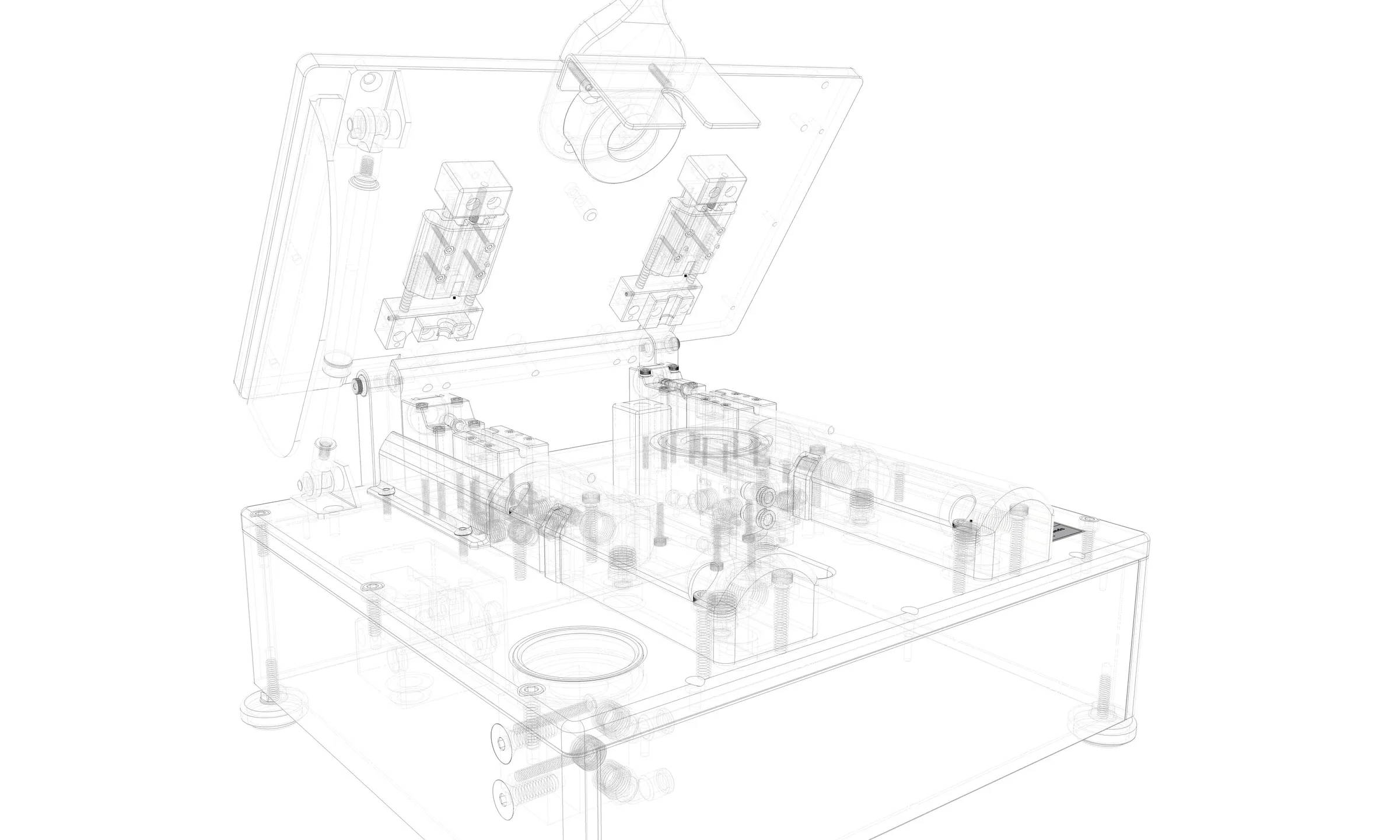
6.3 Everything inside the enclosure, seen through the model. Image