Noticed: a peer recognition wall for the shop floor
Concept Specified and mocked up, not yet deployed. Every plant, person, and figure in the screens is fictional.
- Role
- Concept and interface design
- Year
- 2026
- Tools
- Concept deckInterface mock-ups
Overview
Pick a person, pick the value they showed, write one sentence. Twenty seconds, no points, no prizes, no leaderboard, and the quiet people get seen.
Problem
Most recognition programs are dead within a year, and each cause is a design decision rather than a culture problem.
Points and prizes get gamed within a month, so the data stops meaning anything. When leaders are the main givers, recognition becomes performance feedback with a smile on it and peers stop using it. The same loud, central people get recognized over and over while the person on third shift who never misses a day goes a year without a mention. And a card on a board in March is gone by December, so the review runs on memory.
Approach
A name, a value, one specific sentence, and a wall everyone reads. That is the entire reward.
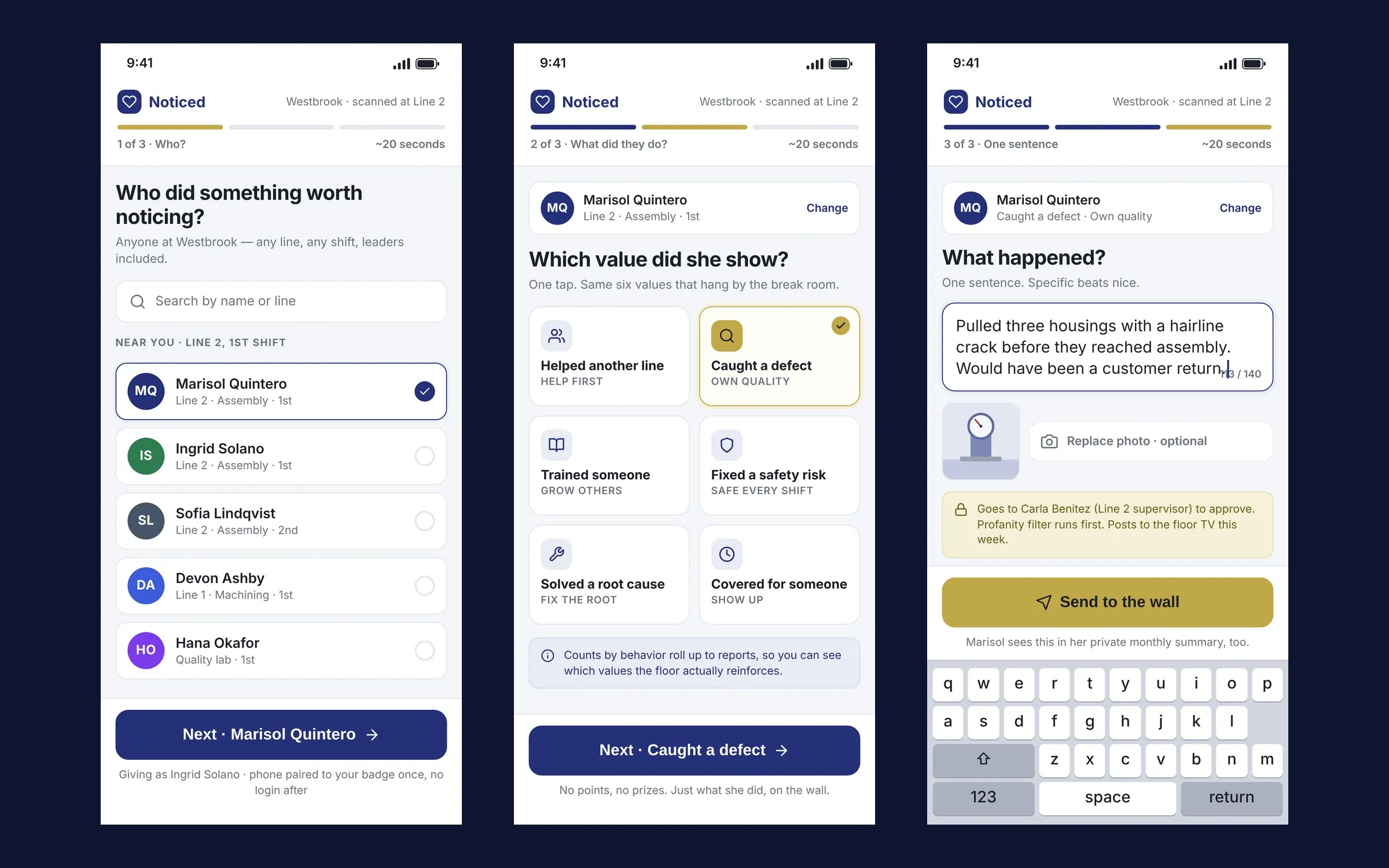
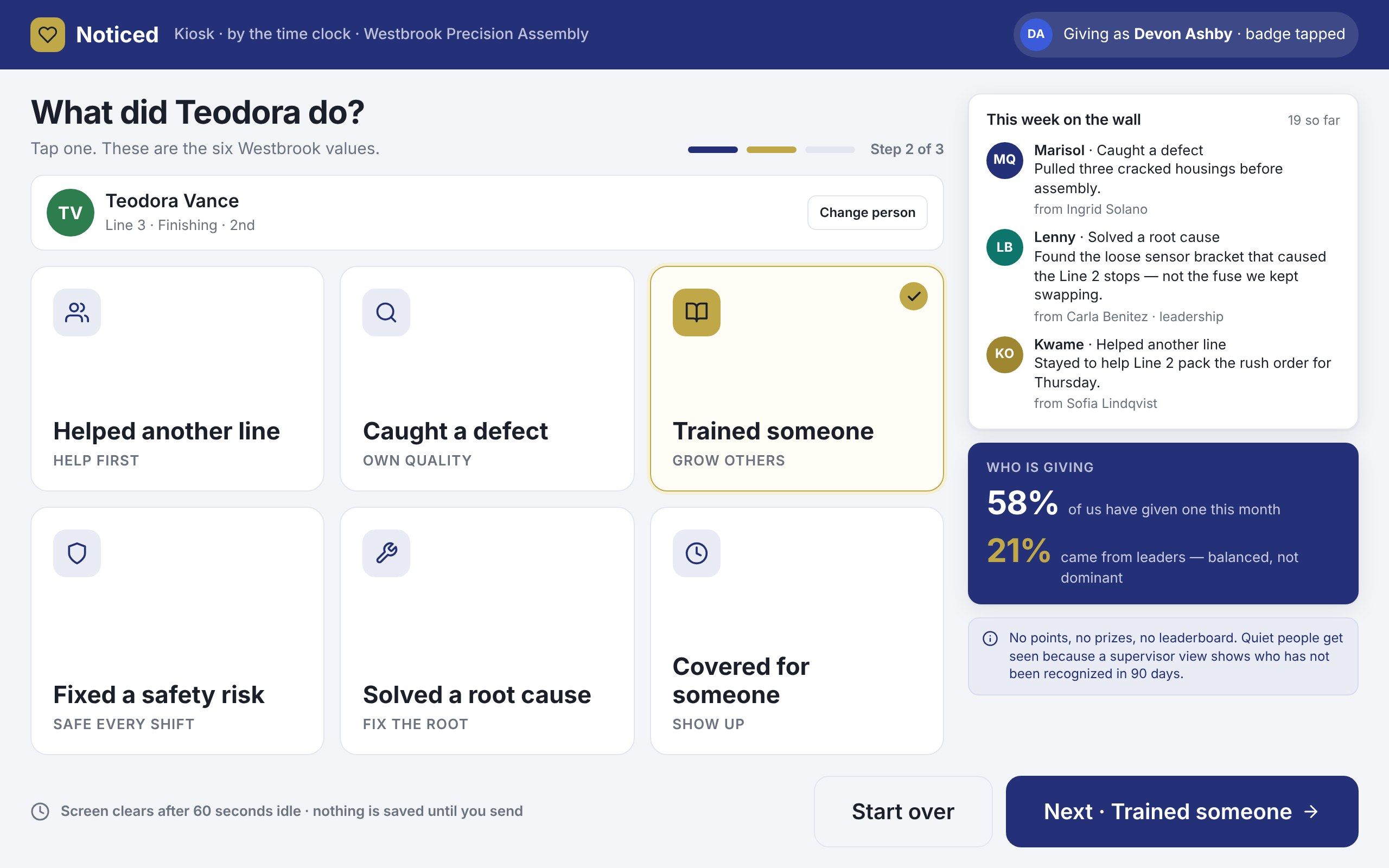
Giving takes about twenty seconds from a QR on the line or a kiosk at the time clock: pick a person, pick one of six behavior tiles, each one a stated company value in the company’s own words, and write one sentence of at most 140 characters, because “great teammate” does not fit and “pulled three cracked housings before assembly” does. The giver is always named; a phone is paired to a badge once and the kiosk reads the badge. Anonymous recognition was left out on purpose.
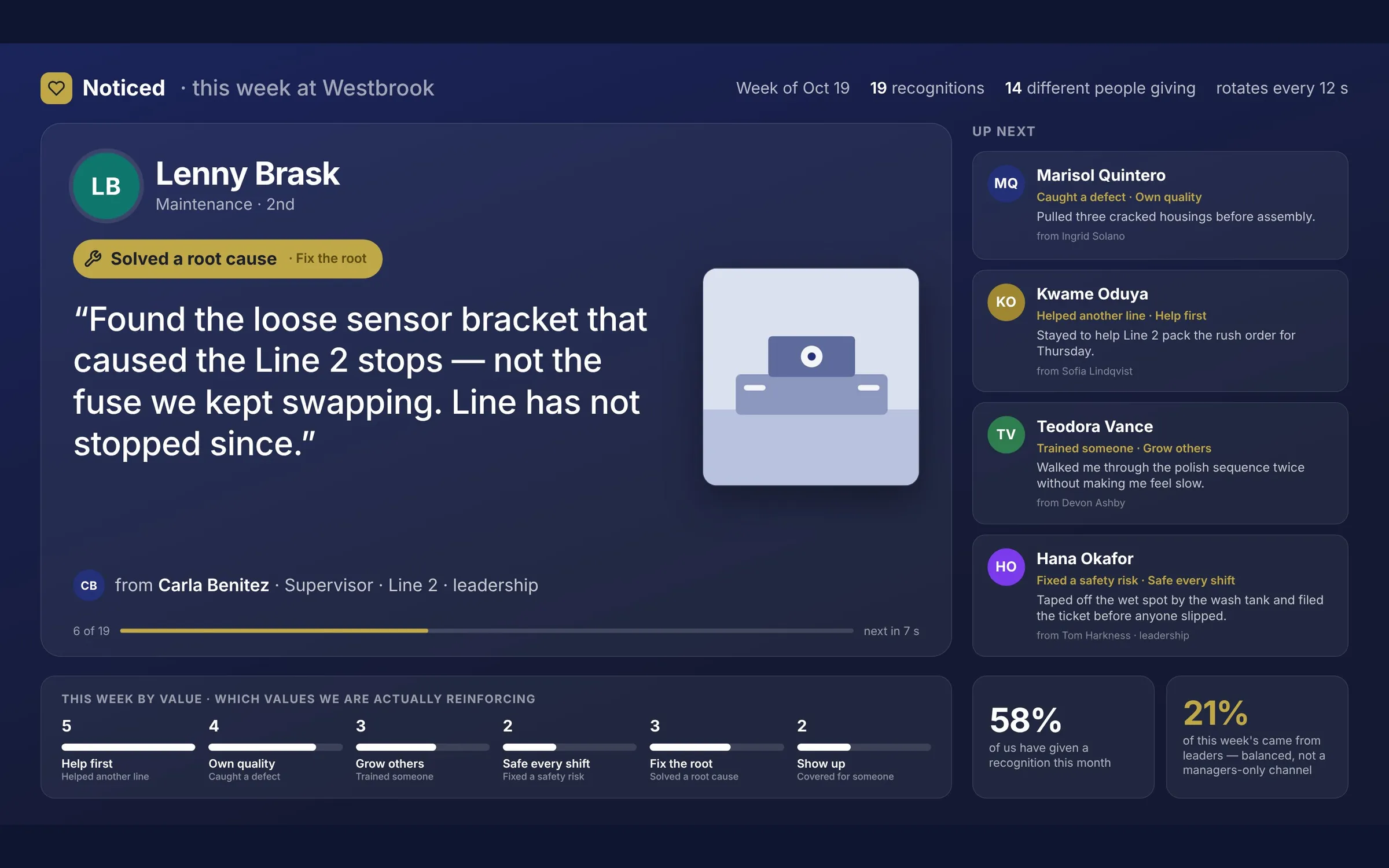
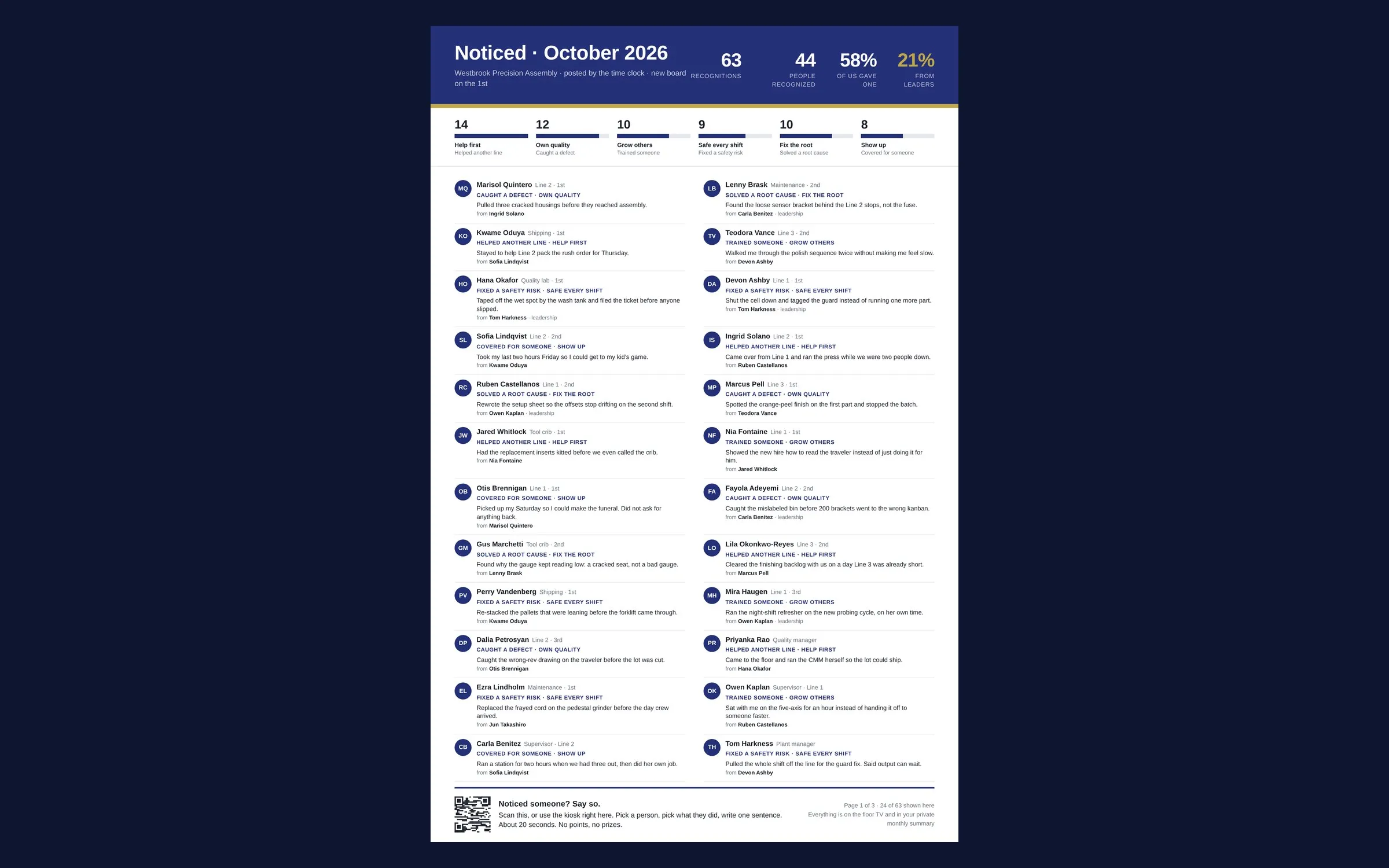
The supervisor approves in bulk in a minute a day; a profanity filter holds the rare item for a human read; anything not reviewed in forty-eight hours posts on its own, so a busy supervisor cannot starve the wall. The floor TV rotates this week’s recognitions one at a time, with counts by value and the share coming from leadership, which stays public so the program cannot drift into a managers-only channel. A printed board goes up by the time clock on the first of each month with every recognized person named, and each person gets a private monthly summary that follows them to their review, read by them and their supervisor only.
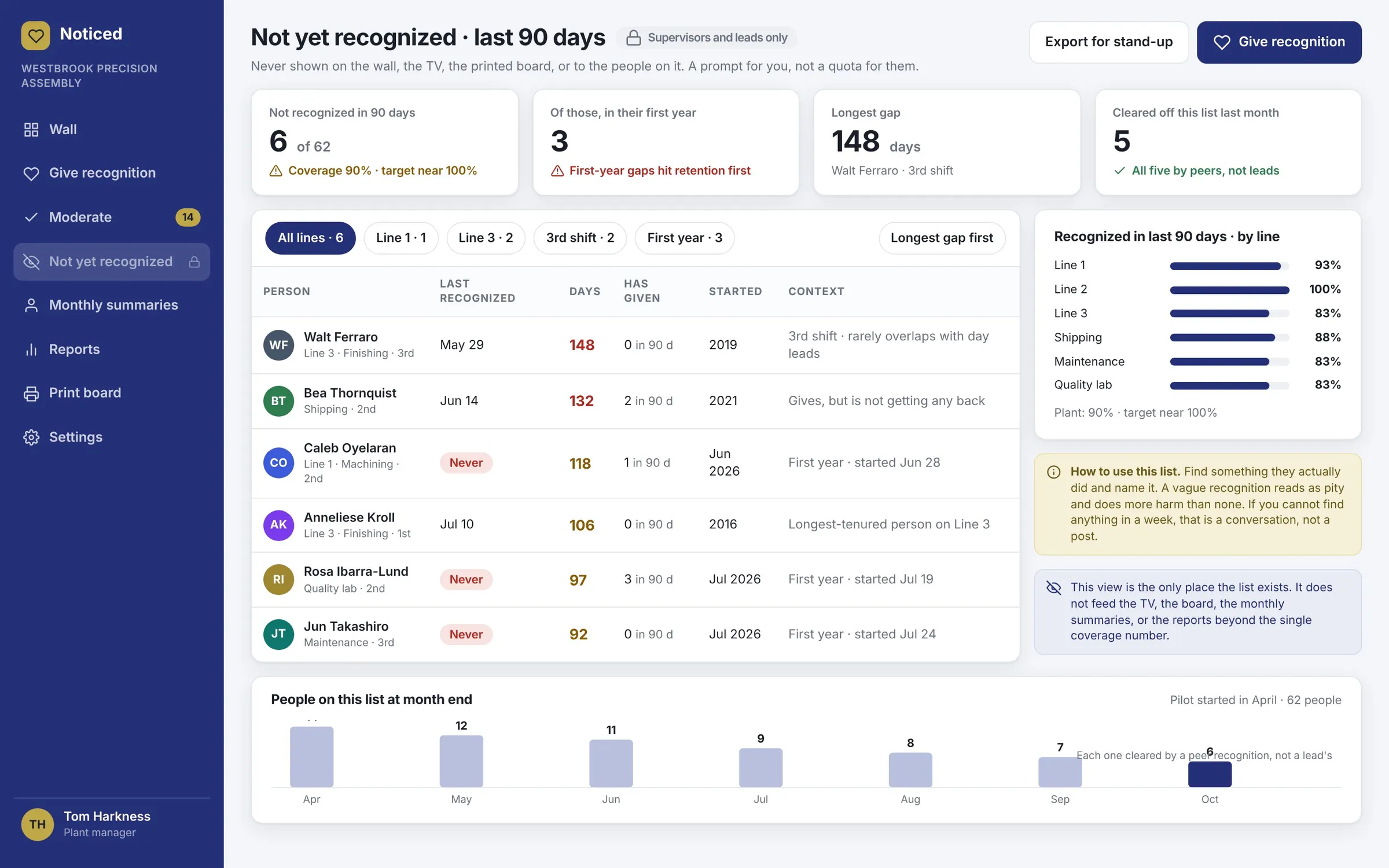
One view, locked to supervisors, lists who has not been recognized in ninety days, with first-year gaps flagged as the retention risk. The instruction on it is explicit: find something real. Left out on purpose: points, prizes, leaderboards, likes, nominations, and award tiers, each of which would break a measure within a month.
Outcome
| Metric | Result |
|---|---|
| Status | Concept, in development |
| To give | About 20 seconds, by badge or QR |
| Rewards | None. A name on the wall, by name |
| Coverage | Everyone recognized within 90 days |
Built to move four leading numbers, and to confirm them with two lagging ones read quarterly.
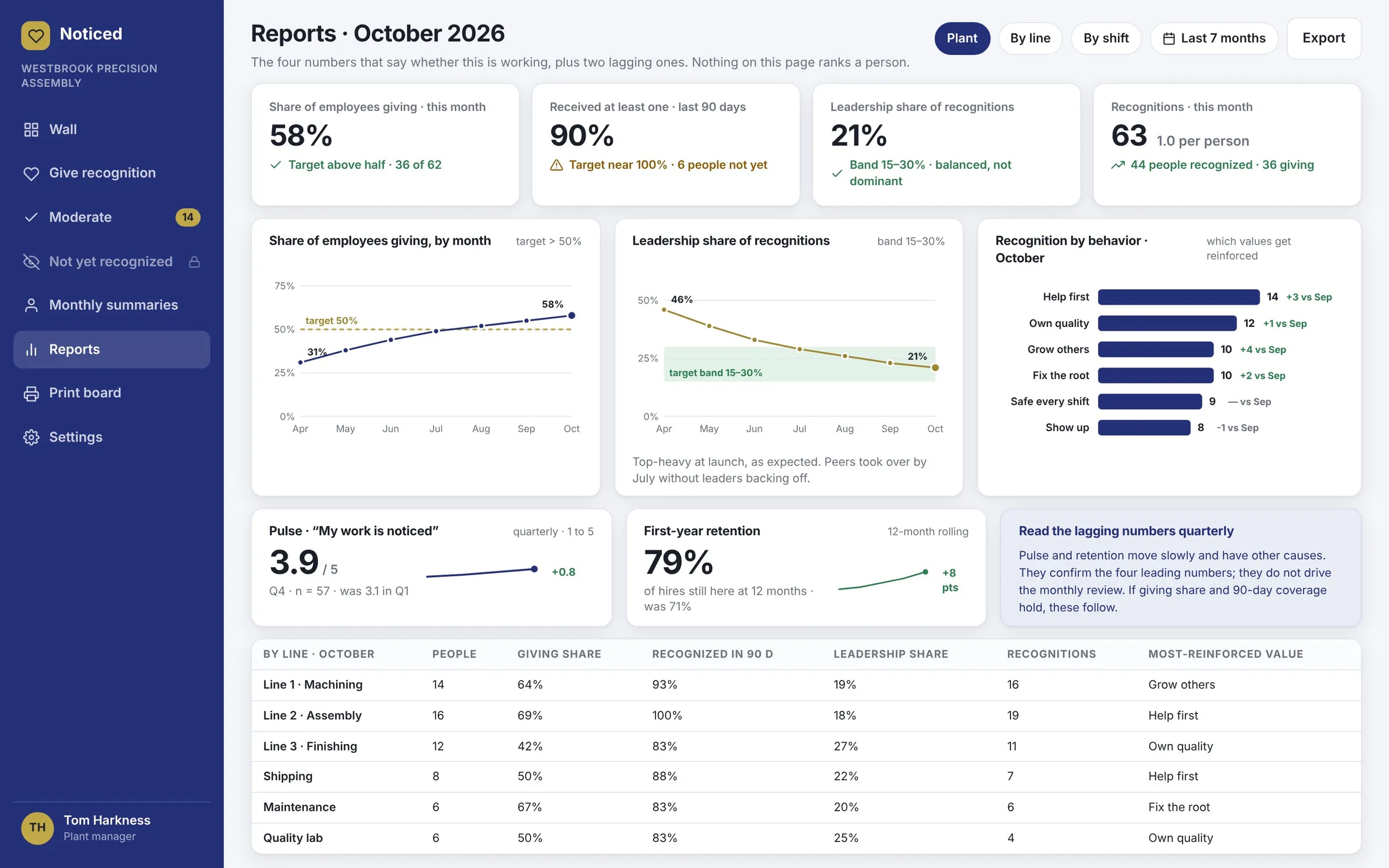
Share of employees giving each month, above half, the single best signal that the program is peer-owned. Share receiving at least one in ninety days, near one hundred percent. Leadership share of recognitions inside a band of roughly fifteen to thirty percent, balanced rather than dominant. Recognition by behavior, with no target, as a diagnostic of which stated values the floor actually reinforces. Underneath, the pulse question “my work is noticed” and first-year retention.
Nothing here has run on a floor yet. The screens are a specification with fictional data, and the numbers on them are placeholders.
Gallery
-
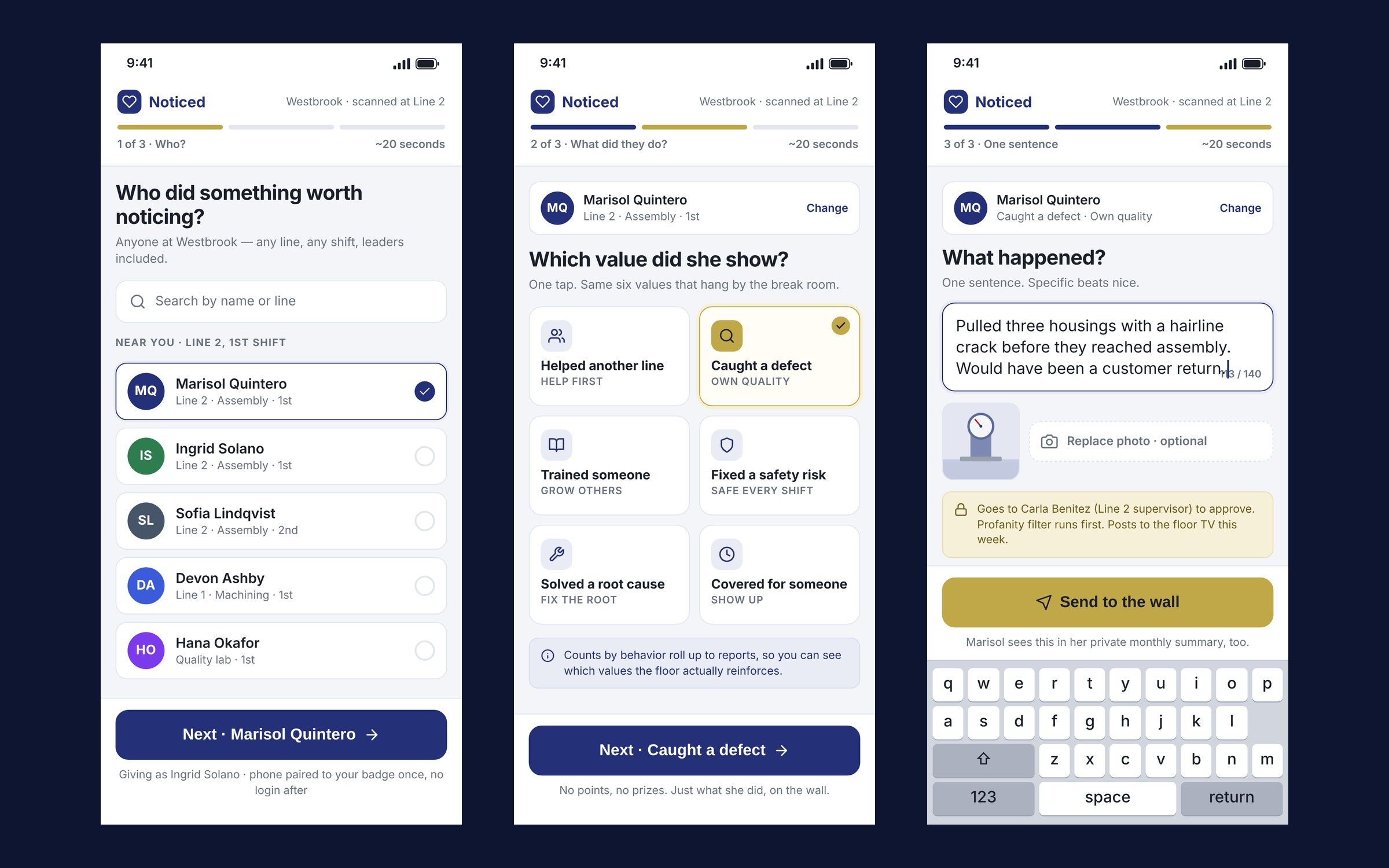
4.0 Three steps, one sentence, 140 characters. Specific beats nice. Image -
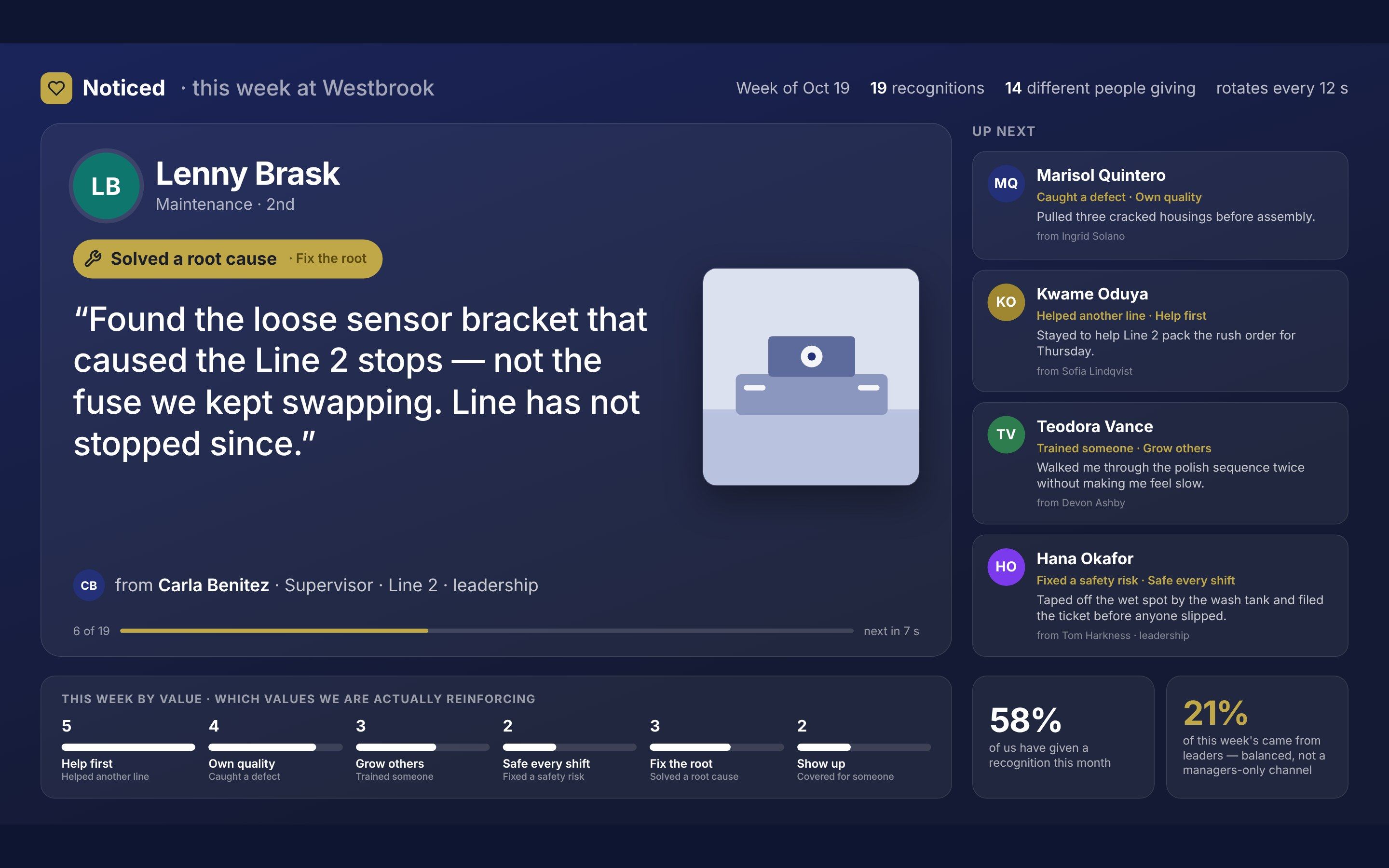
4.1 One at a time, big, readable from the aisle. Counts by value, never by person. Image -
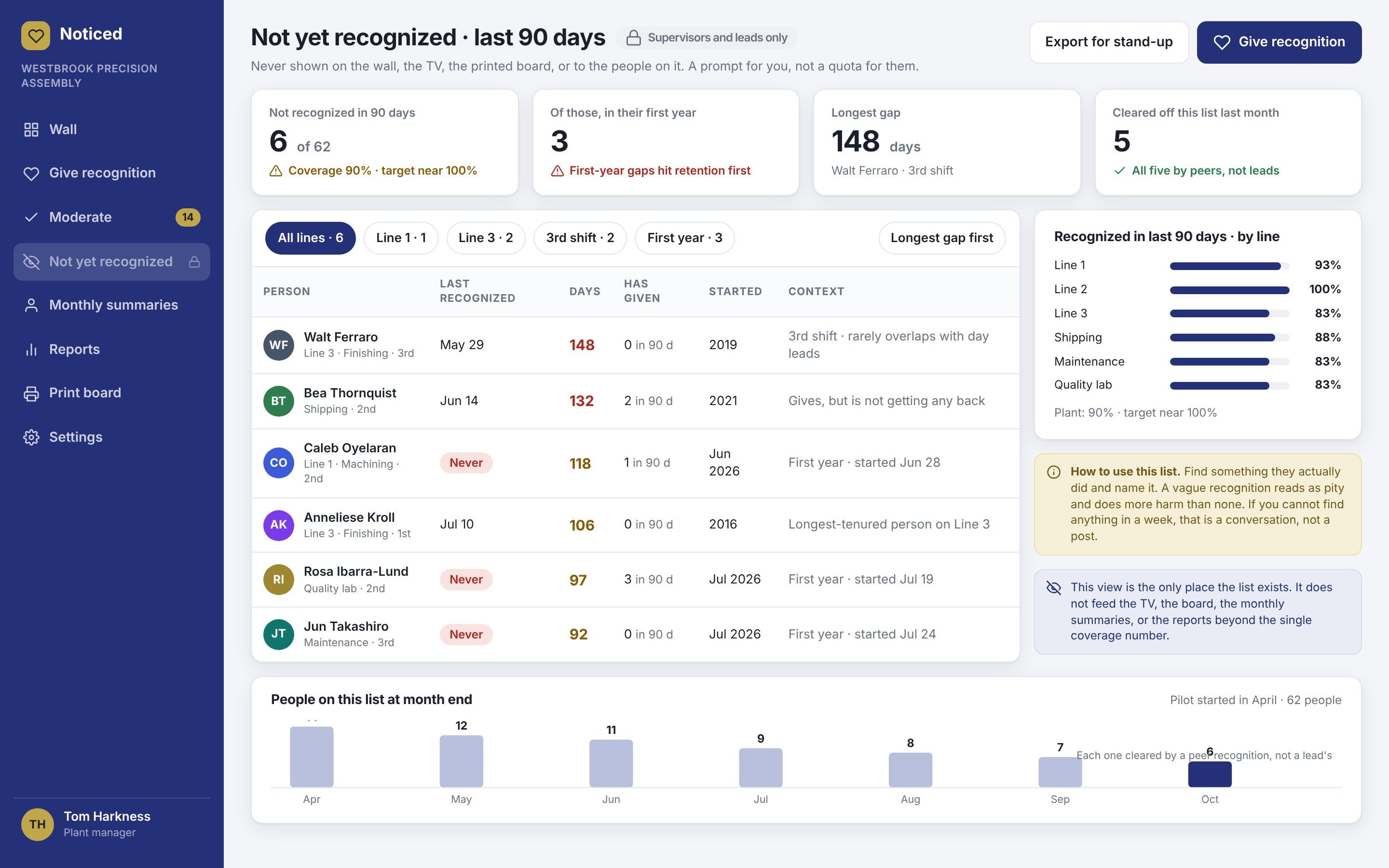
4.2 The one view nobody else sees. A prompt to find something real, not a quota. Image -
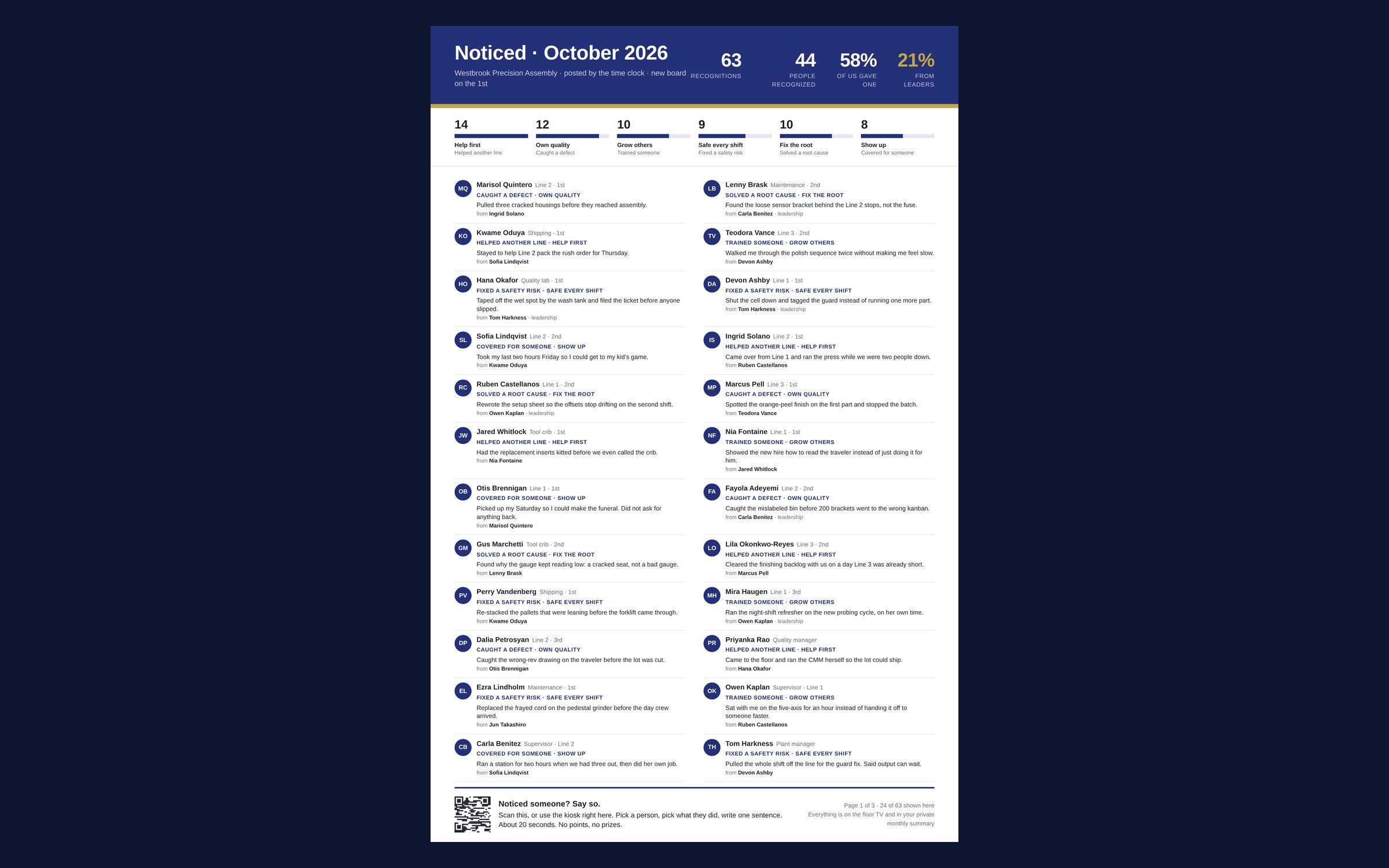
4.3 Part of the floor never looks up at a screen. Paper by the time clock gets read every day. Image -
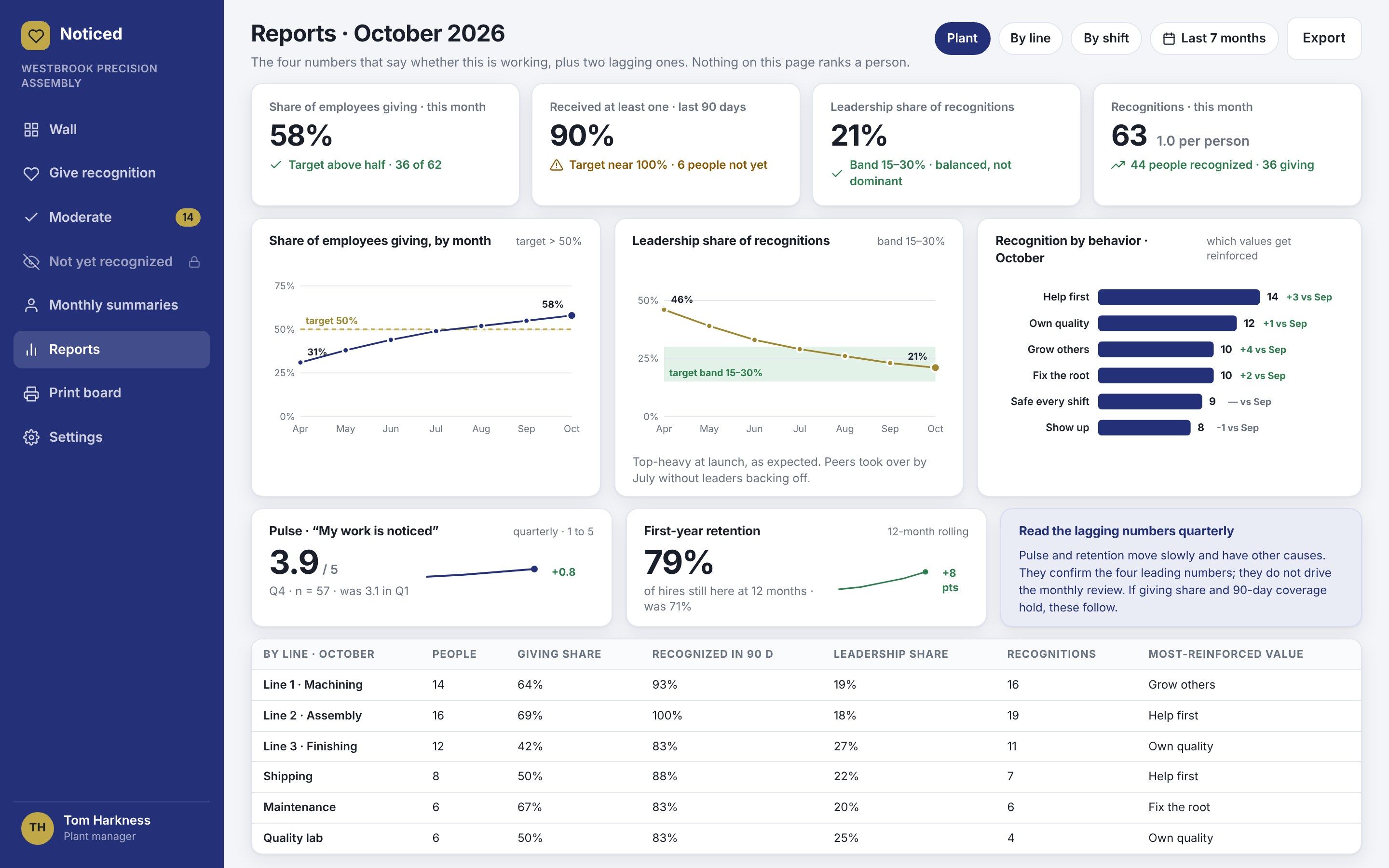
4.4 Four leading numbers for the plant, the line, and the shift. Nothing ranks a person. Image