CNC Quoting Engine: every RFQ arrives already quoted
- Role
- Creator
- Year
- 2026
- Tools
- Proprietary stack
- Processes
- CNC millingCNC turningWire EDM
Overview
Reads the 2D drawing, plans the job setup by setup, prices it with every number traceable, and holds anything it is not sure of for the estimator to decide.
Problem
The quote is the first operation on every job and the last one still done by hand.
Most requests for quote reach a precision shop as a 2D PDF drawing, and only about half come with a 3D model. Every dimension, tolerance, thread, finish, and GD&T frame is read by a person and re-keyed, part by part. Setup and run times come from experience, so two estimators give two prices, and the know-how leaves with them when they do.
The software on the market automates pieces of this: a price from a 3D model, a quote workflow, a drawing reader that pulls dimensions. Planning the job and defending the number are still manual, or hidden inside a black box the estimator cannot argue with.
Approach
Read the drawing the way an estimator does, plan the job the way the shop would, and show the work behind every number.
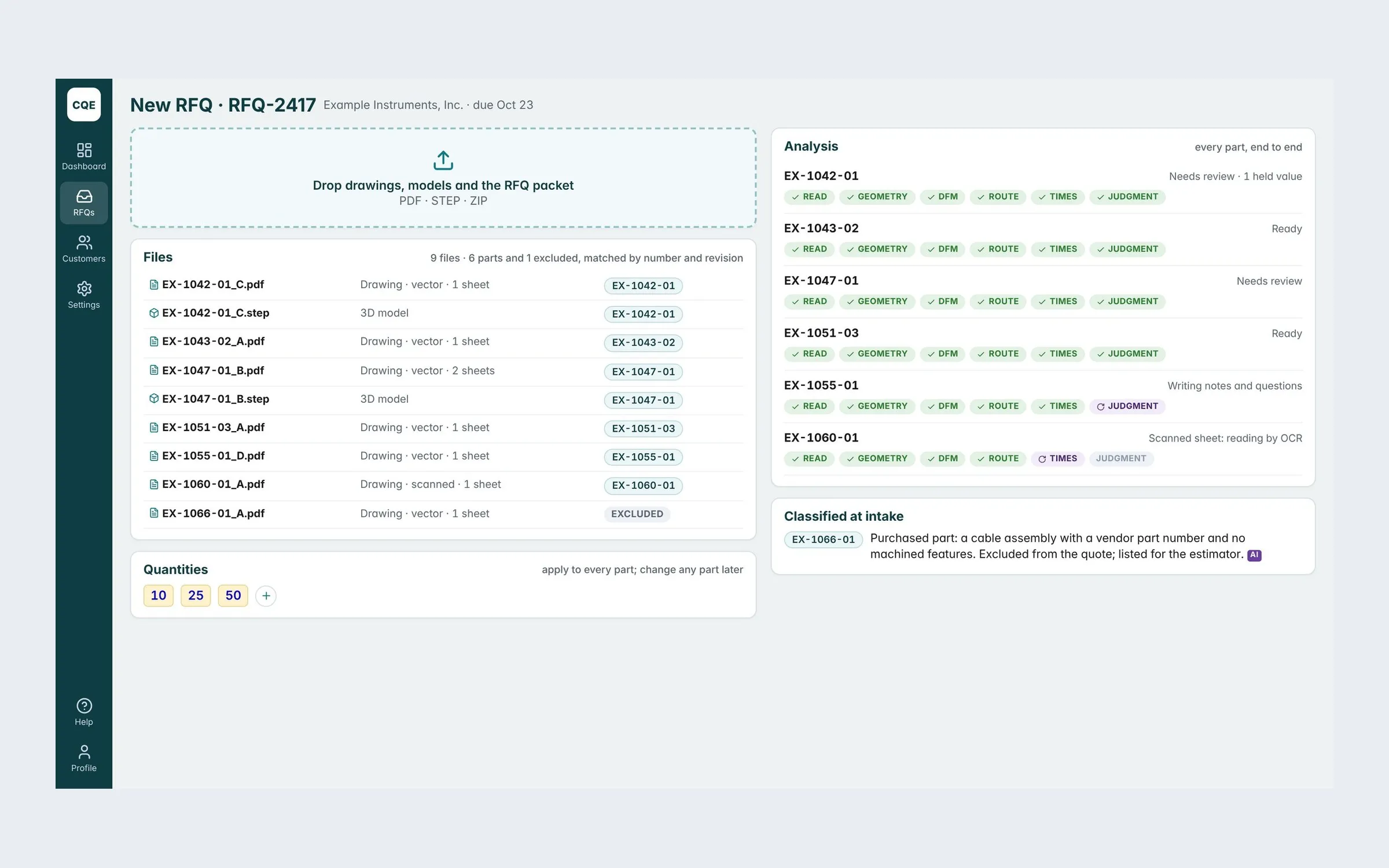
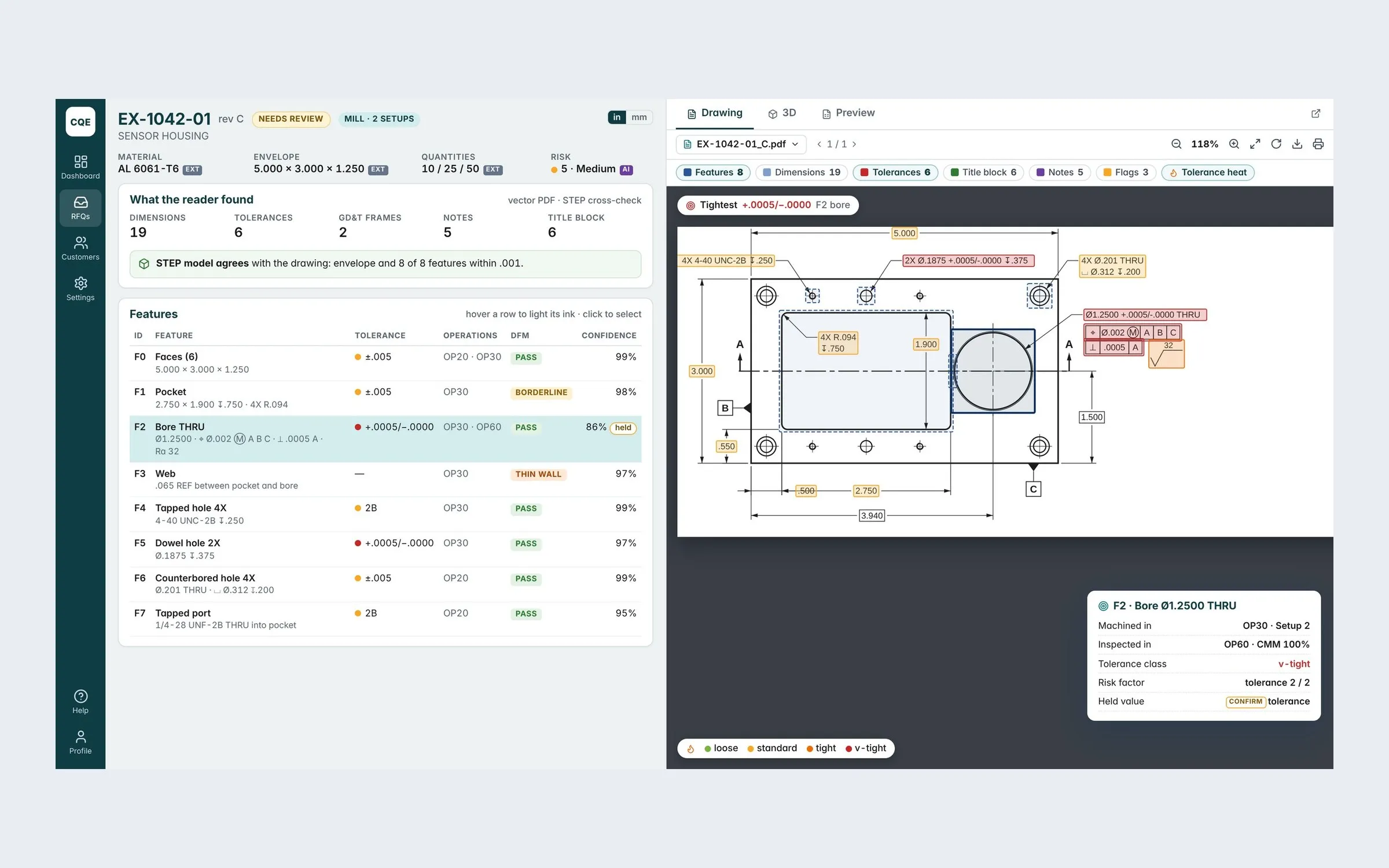
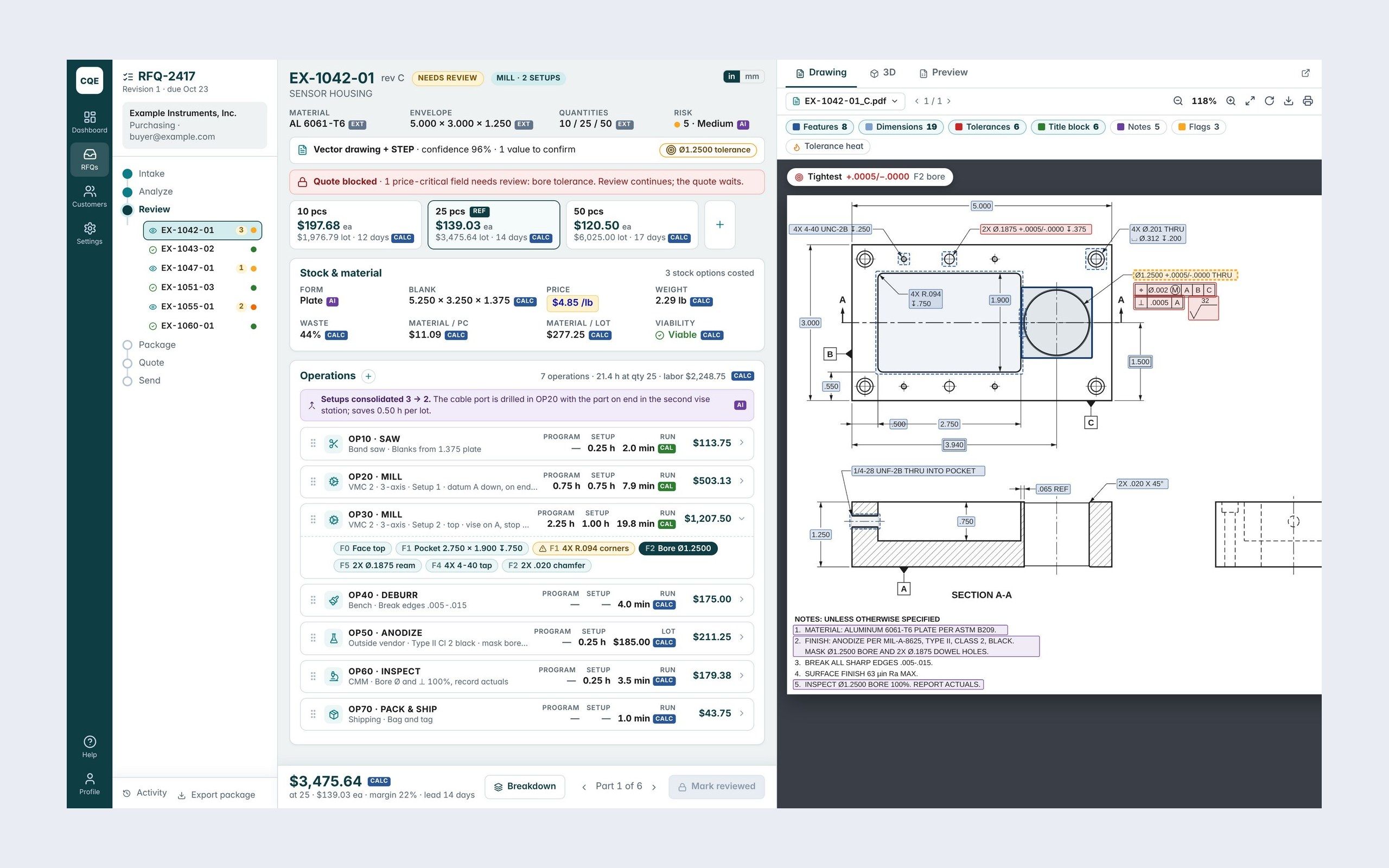
Drawings, models, and the RFQ packet go in together, matched to parts by number and revision. A vector drawing is read natively rather than as a picture of the page, so each callout lands on its feature with its tolerance class; scans go through OCR, and any value the reader is not sure of is held beside its ink for a person to confirm. When a STEP file comes with the drawing, the two are compared, and a disagreement is raised rather than silently resolved. Purchased items in the packet are recognized and excluded, with the reason shown.
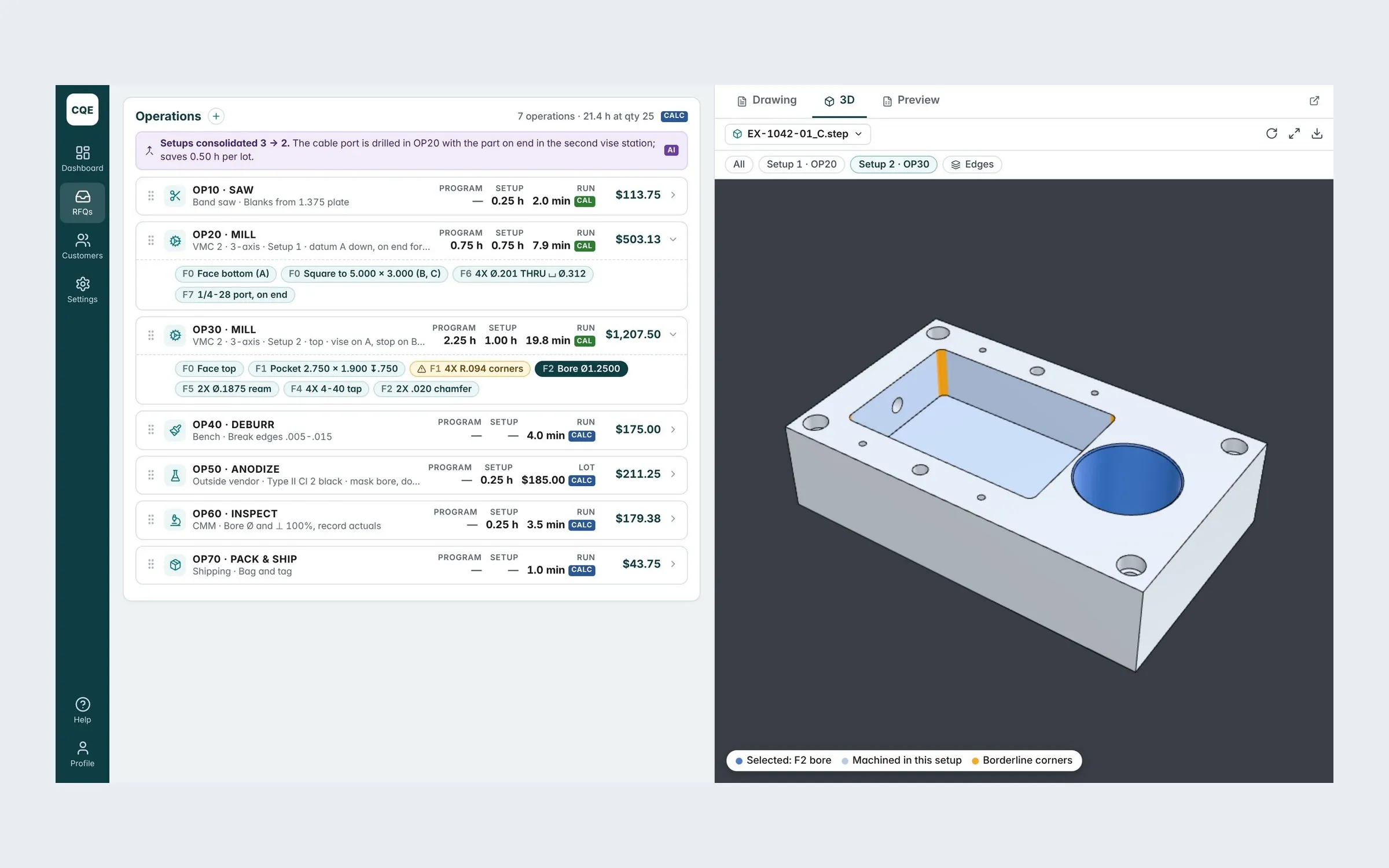
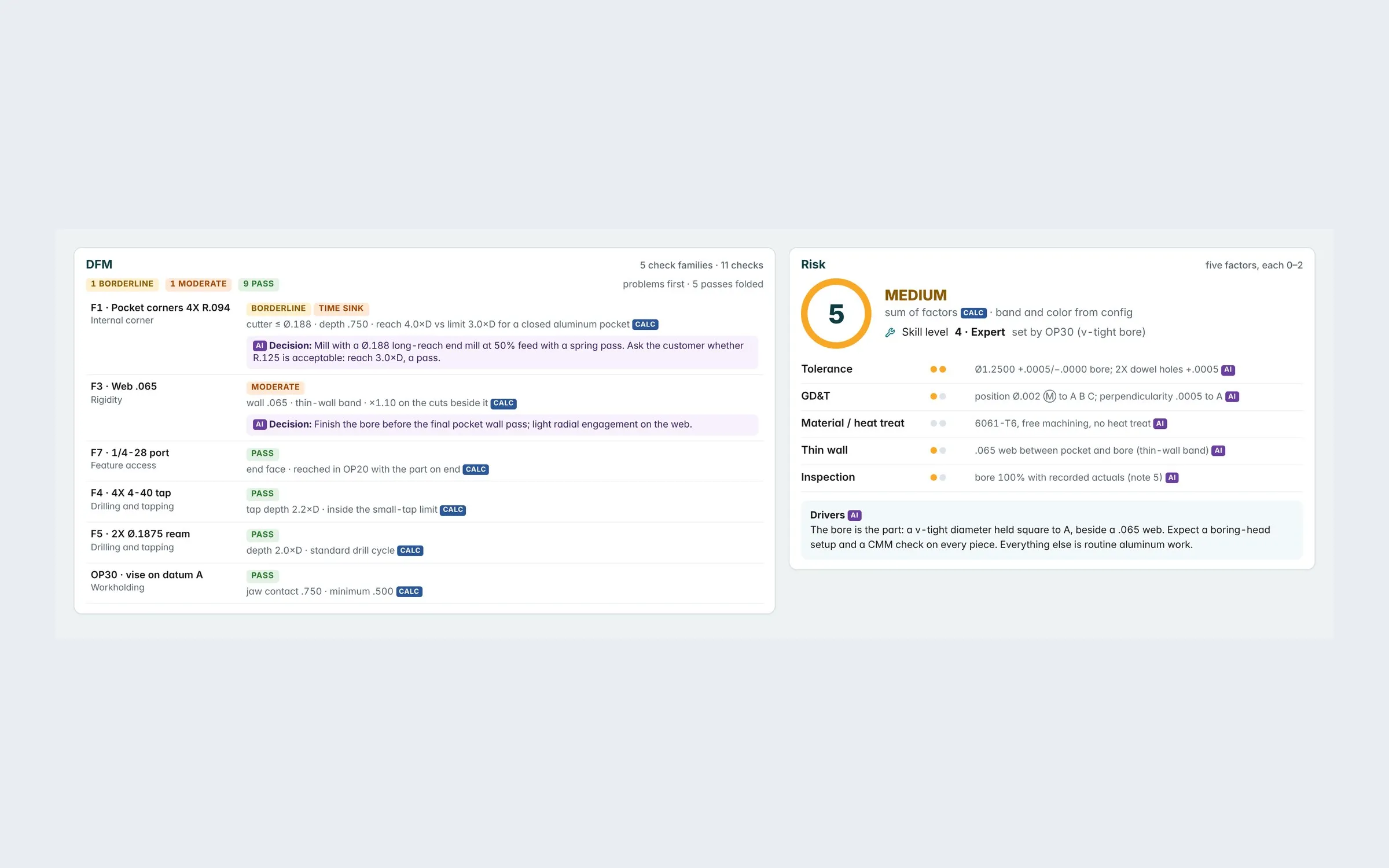
From the features the engine builds a real routing: operations, machines, workholding, and the features cut in each setup, consolidated to the fewest setups that will hold the part. Programming, setup, and run times are built feature by feature from engineered models and then calibrated to the shop’s own job history. Manufacturability is checked on every feature, each borderline one gets a stated process decision and the question to ask the customer, and the part gets a risk score with the evidence behind it and the skill level the job needs.
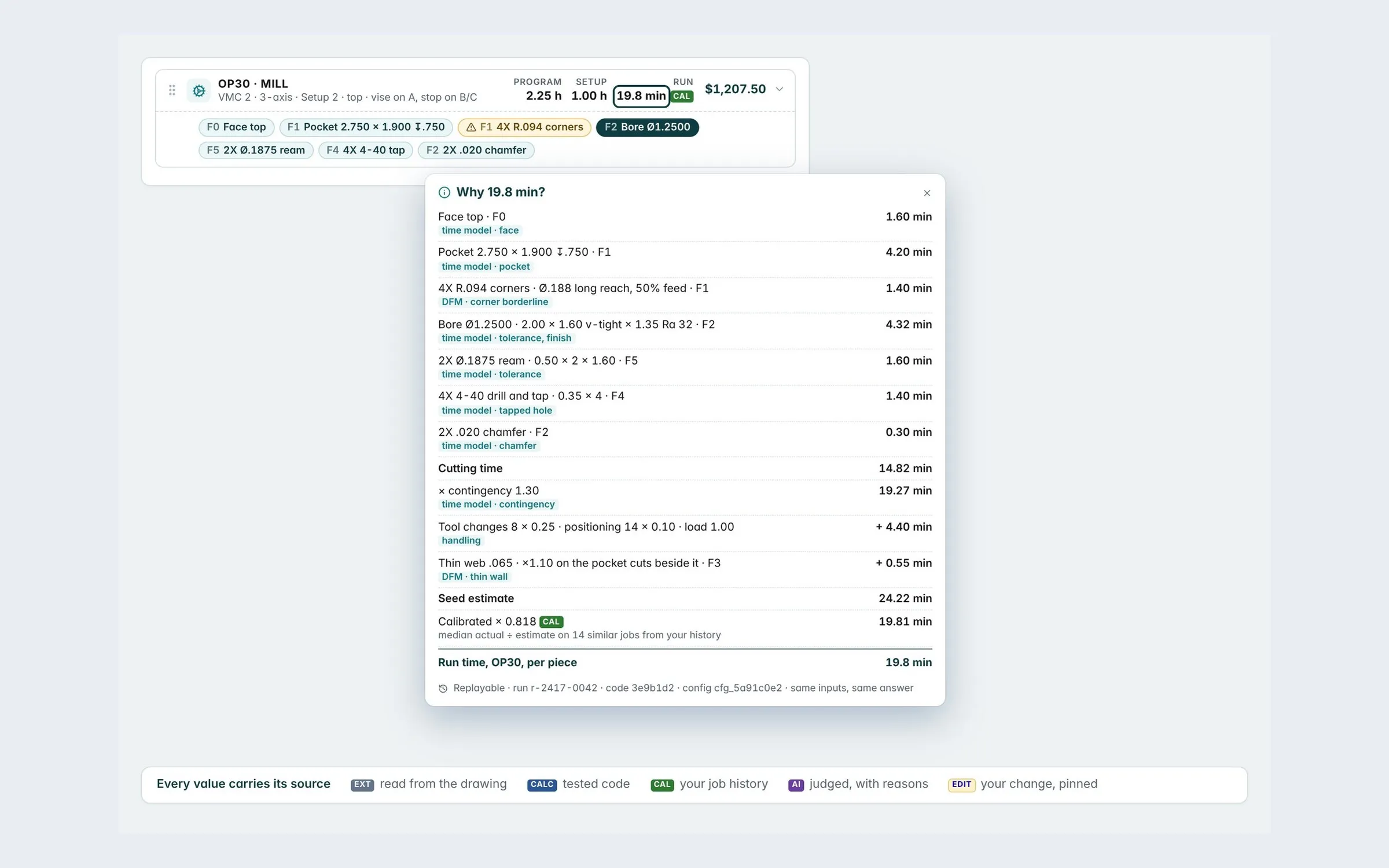
The division of labor is strict and enforced in the architecture. Code computes every number: geometry, checks, stock, times, labor, margin, and price tiers. AI judges like a senior estimator: it reads notes and GD&T for intent, chooses among routings code has already costed, writes the concerns, customer questions, and traveler notes, and critiques the finished quote. The model never does arithmetic. Any value on screen opens to the calculation that produced it, with the rule and the setting each step used, and every estimate records the code, settings, and model versions it ran with, so the same inputs give the same answer a year later.
The estimator stays in control. Edits are pinned and no recompute or AI pass moves them; code re-prices instantly after every change; AI changes arrive as diffs to accept or reject; and an uncertain price-critical value blocks the quote, never the review.
Outcome
| Metric | Result |
|---|---|
| Input | A 2D drawing, with or without a model |
| Output | Routing, times, price, questions |
| Every number | Traceable to its rule and source |
| Division of labor | AI judges, code computes |
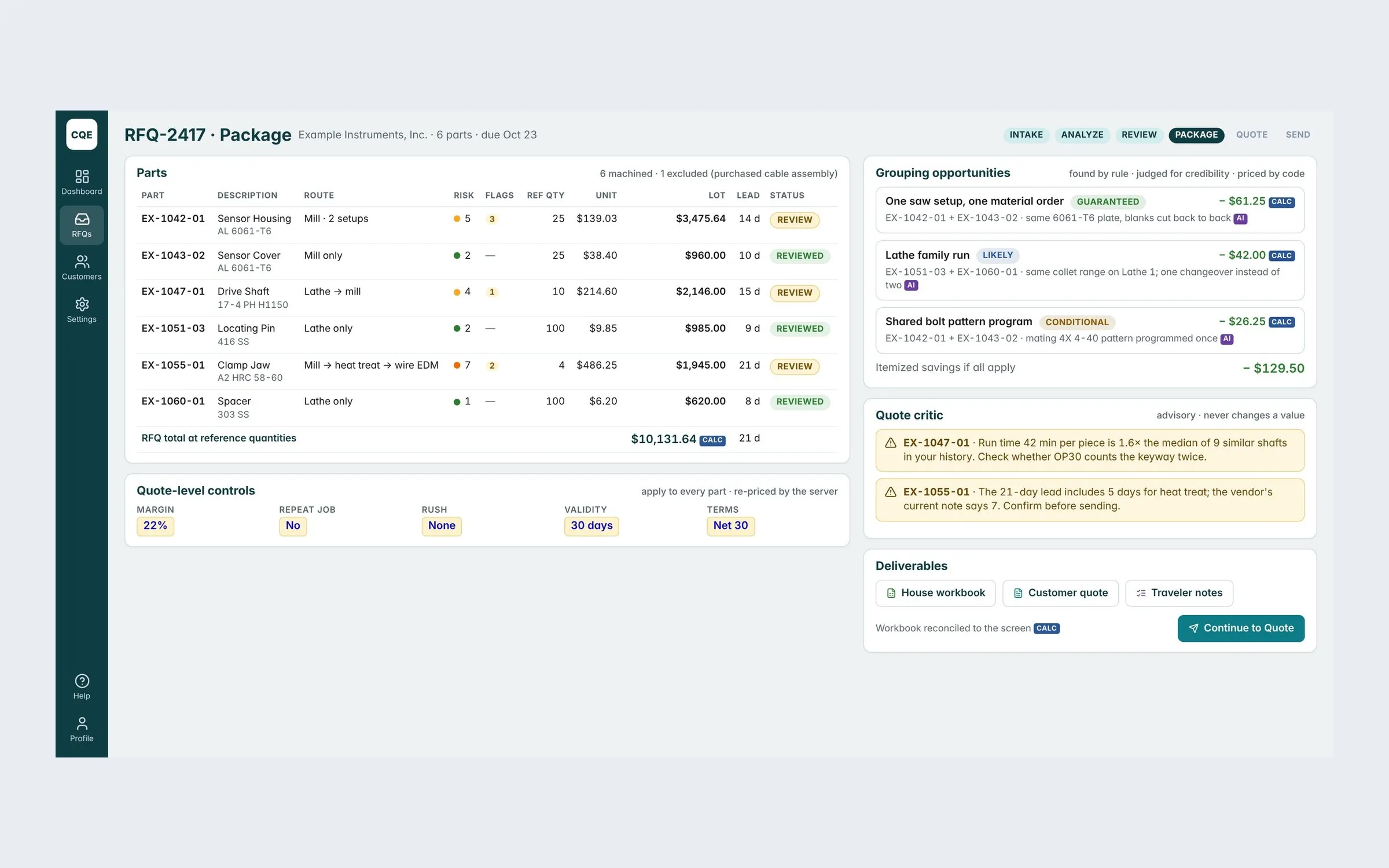
A drawing goes in and a routed, costed, explained quote comes out, with the estimator’s judgment applied where it matters and nowhere else.
The estimator’s day moves from data entry and arithmetic to review and judgment. Reading is done and anchored, with people confirming only what was held. Times are built per feature and tuned to the shop’s actual hours instead of recalled from memory. Problems that used to surface on the floor after the order are raised at quote time as DFM findings, risk, and written questions. The method itself becomes data: every rate, allowance, and threshold is a setting the shop can see and change, rules are tested against the shop’s written methodology, and every correction an estimator makes is recorded as signal.
What it is not: a price in seconds from a 3D model with no reasoning behind it. Every number shows its work, and the quote waits for the person who has to defend it.
Gallery
-
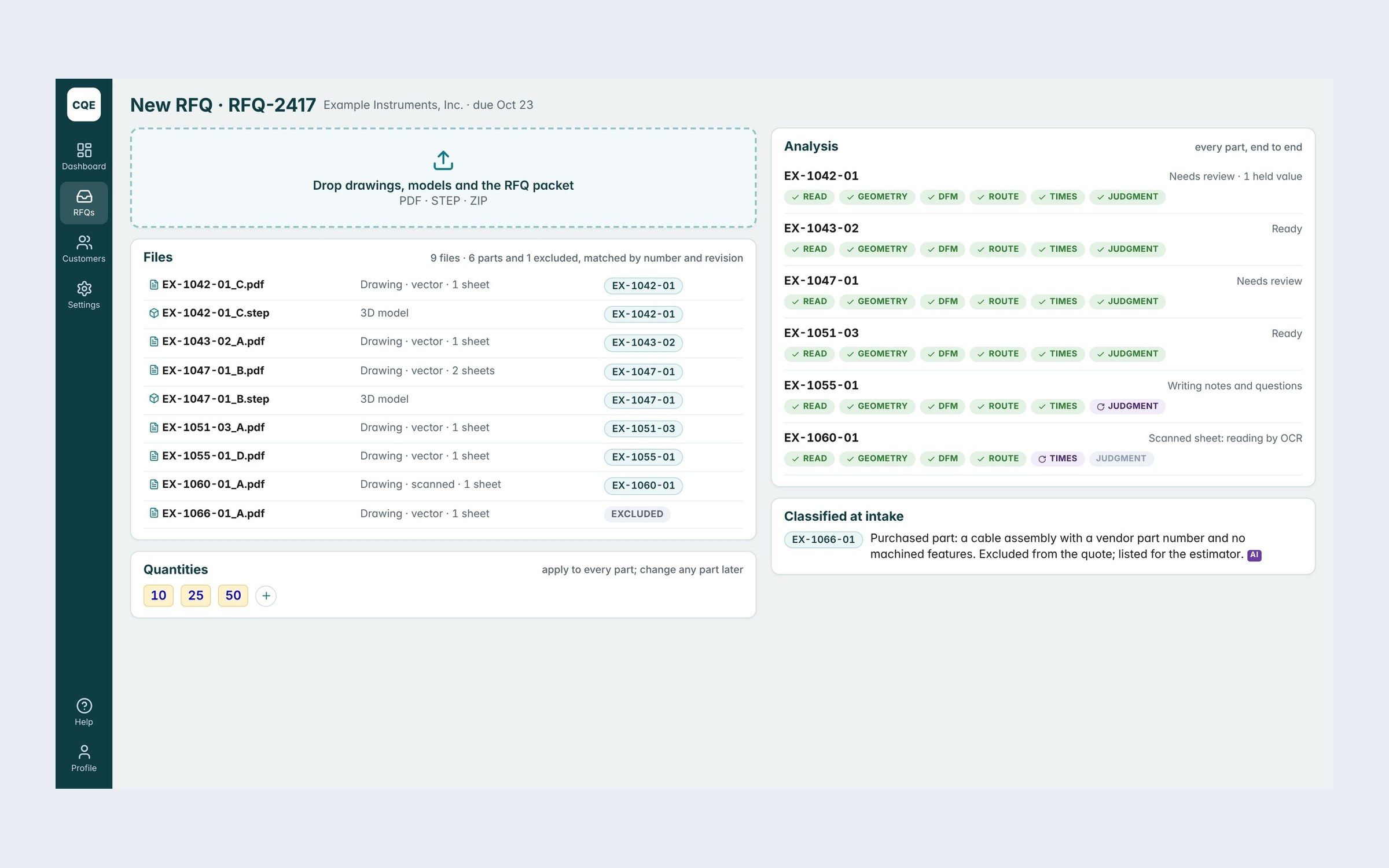
4.0 Drop the packet. Files are matched to parts by number and revision, and every part runs read, geometry, DFM, routing, times, and judgment on its own. Image -
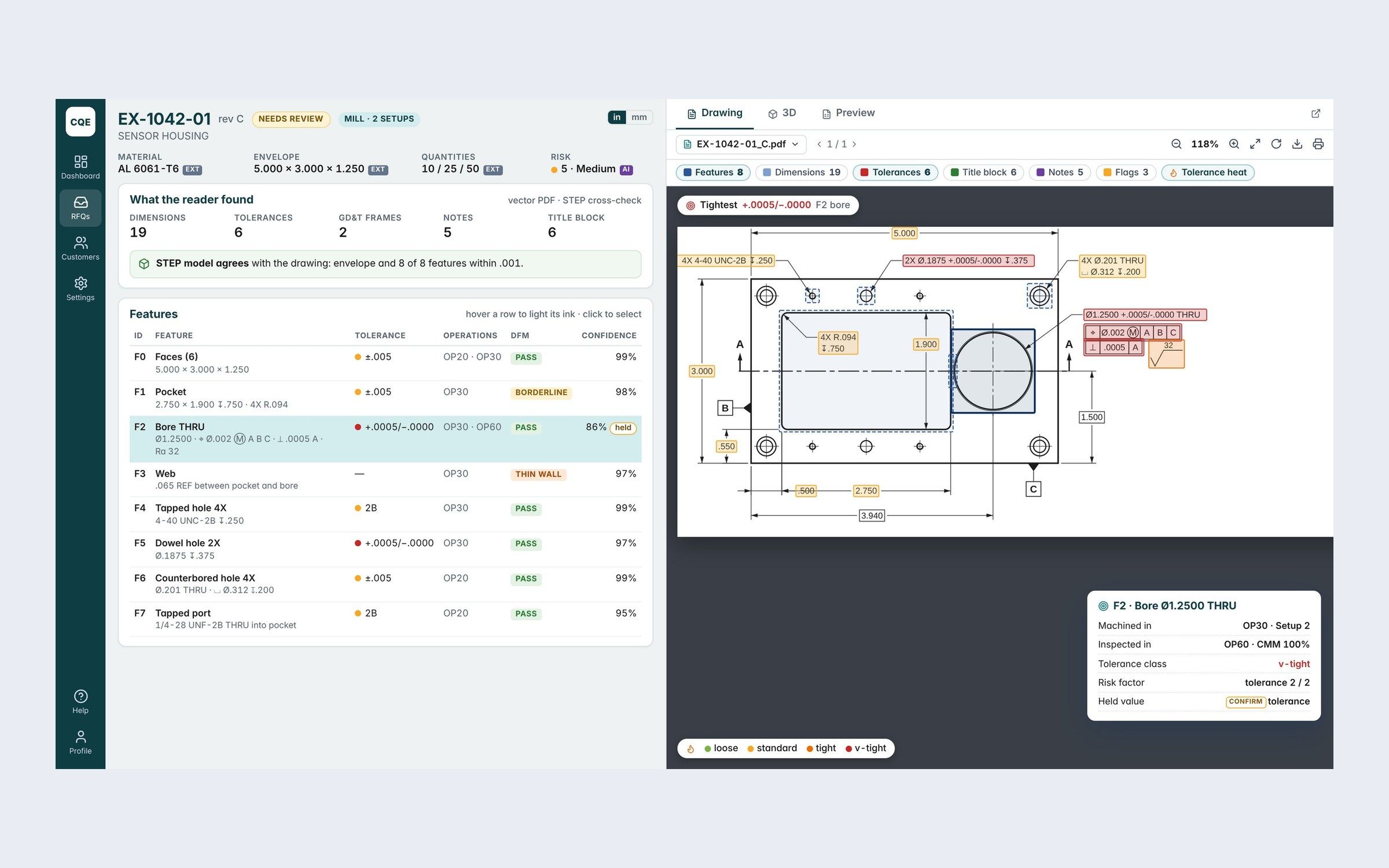
4.1 It reads the drawing the way an estimator does. Every callout lands on its feature; select the bore and see its setup, inspection, and tolerance class. Image -
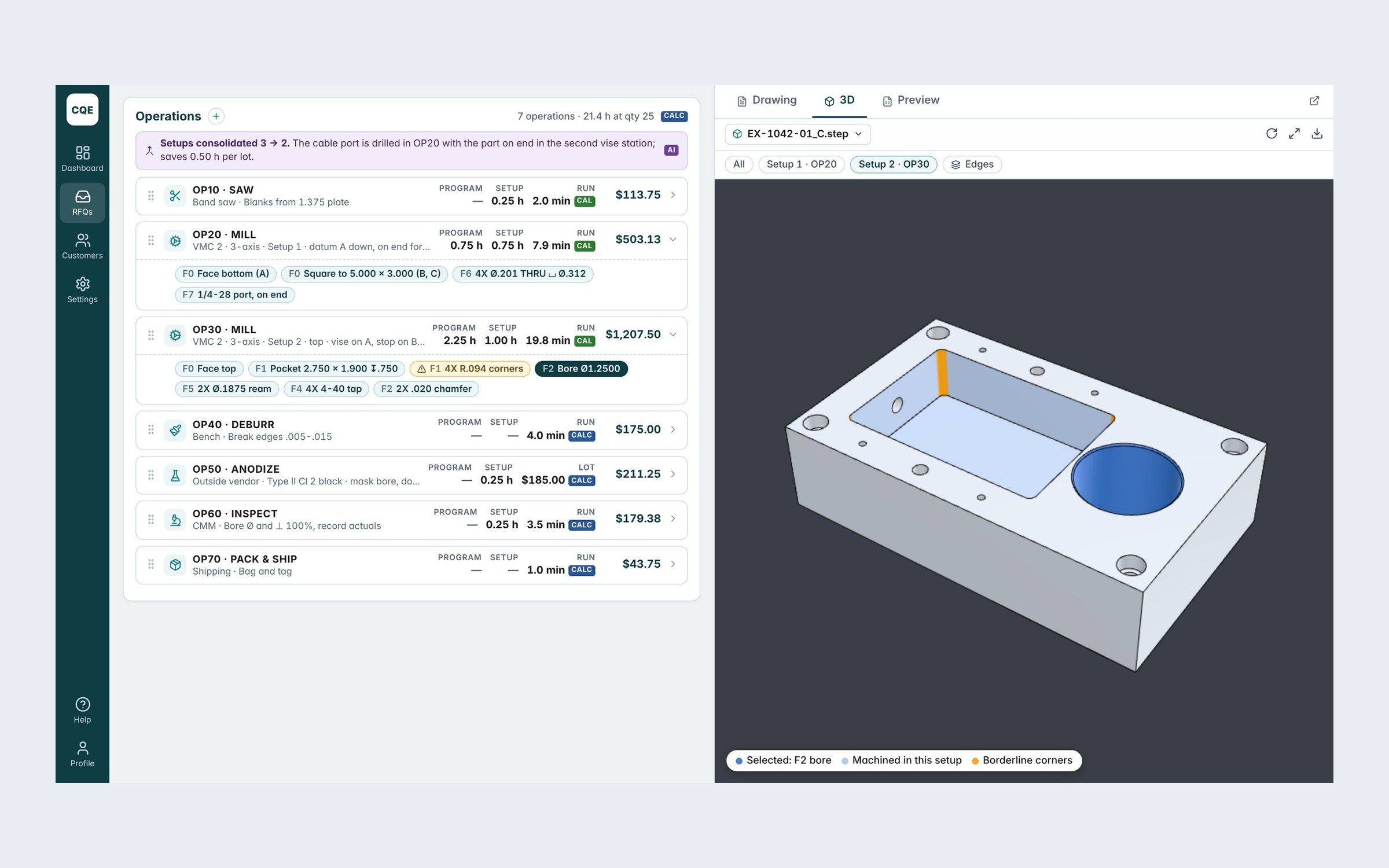
4.2 A real routing, operation by operation, with the features each setup cuts. The 3D view lights the features of the selected setup. Image -
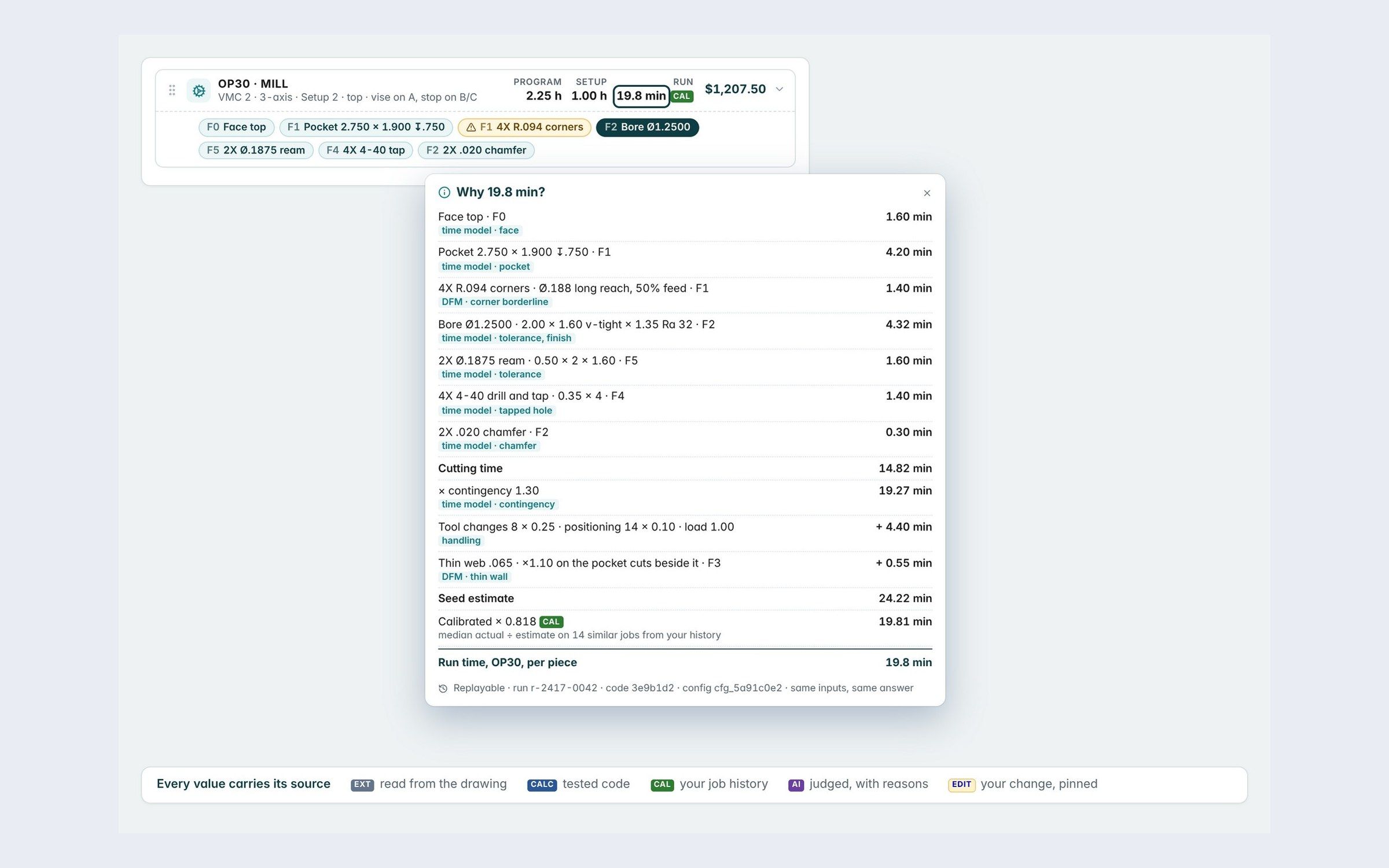
4.3 Click any number. The run time opens into the line items behind it, down to the calibration against the shop's own history. Image -
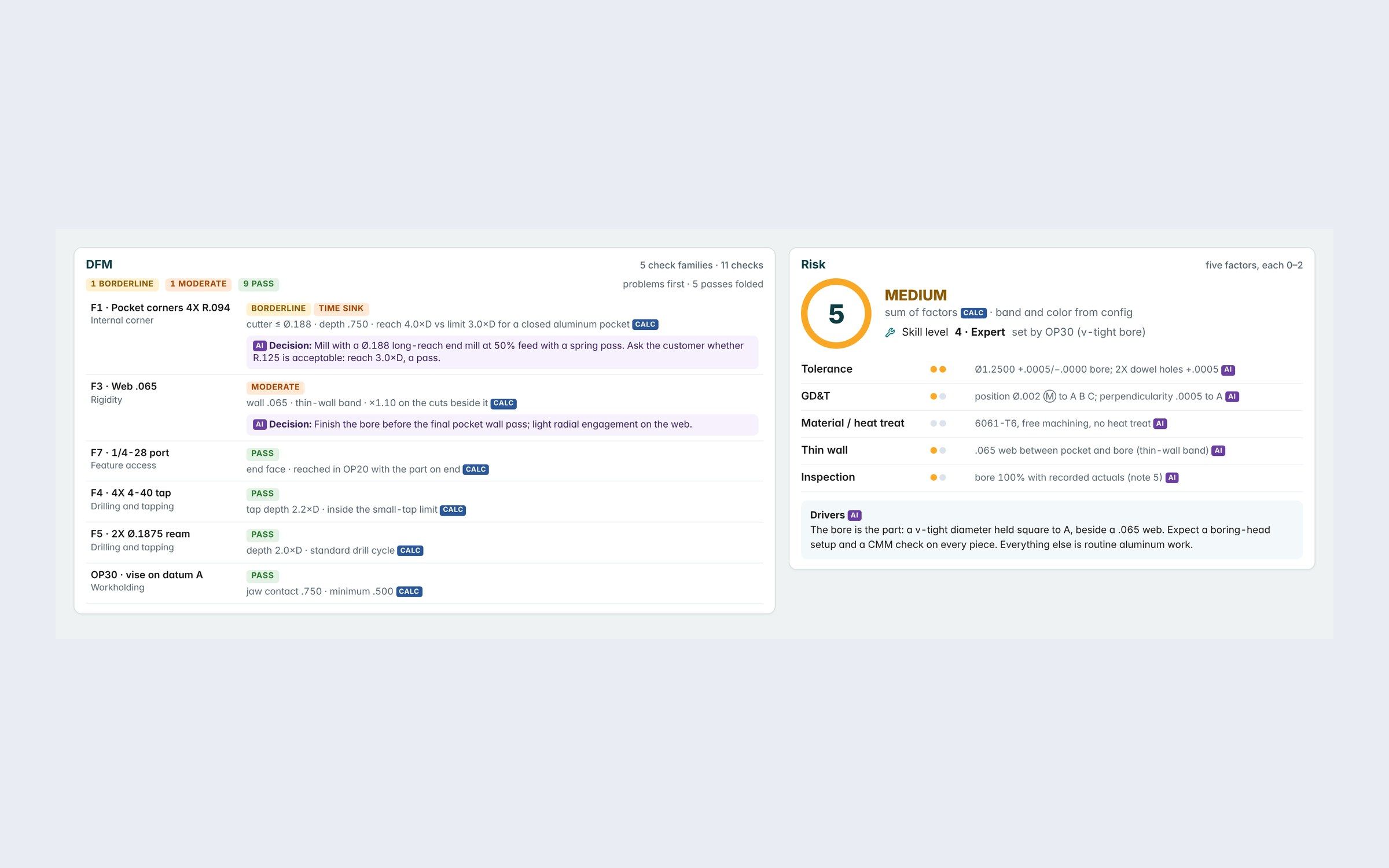
4.4 Manufacturability checked feature by feature, with a decision rather than a flag, and a risk score a shop can read. Image -
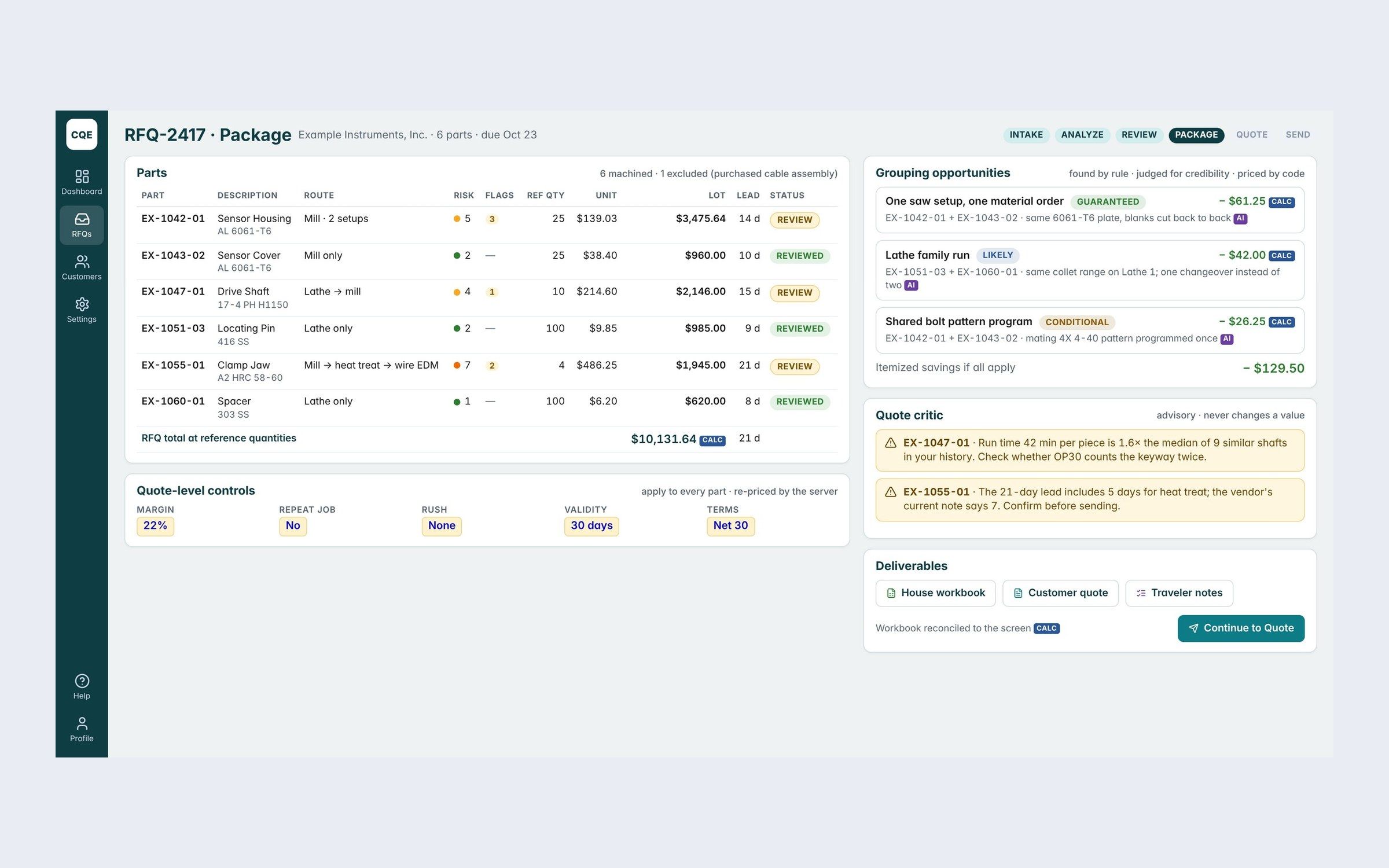
4.5 The whole RFQ priced as a package, with savings across parts, a second check against history, and the documents ready to send. Image